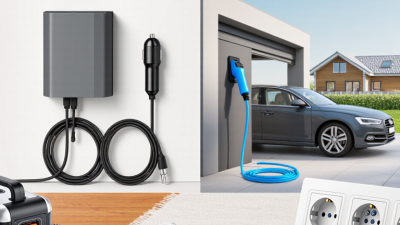
China has become a major source of home charging equipment, serving homeowners, installers, and vehicle brands worldwide. Choosing a Home Car Charging Point involves more than comparing prices. Charging output, cable reach, connector options, weather protection, and app reliability can all shape the daily experience. Small details matter.
This guide introduces ten Chinese manufacturers active in the residential charging market. It considers product ranges, manufacturing experience, technical capabilities, and customer support, rather than treating a polished product page as proof of quality. Buyers should verify current certifications, warranty terms, service coverage, and compatibility with their vehicle and electrical system. Specifications can change. Ask for current documents.
A driveway installation may require a longer cable and robust outdoor protection, while a garage setup may call for compact dimensions and load management. Some households value scheduled charging; others prefer simple controls and clear status lights. There is no perfect choice for every home. Supplier information can be uneven, and marketing materials may leave practical questions unanswered. That deserves attention.
The manufacturers in this overview are starting points for comparison, not automatic endorsements. Review installation requirements with a qualified professional, confirm applicable regional standards, and ask how software updates and after-sales support are handled. A dependable Home Car Charging Point should suit the home, the car, and the people using it every day. Often, reliable performance matters more than a long feature list.
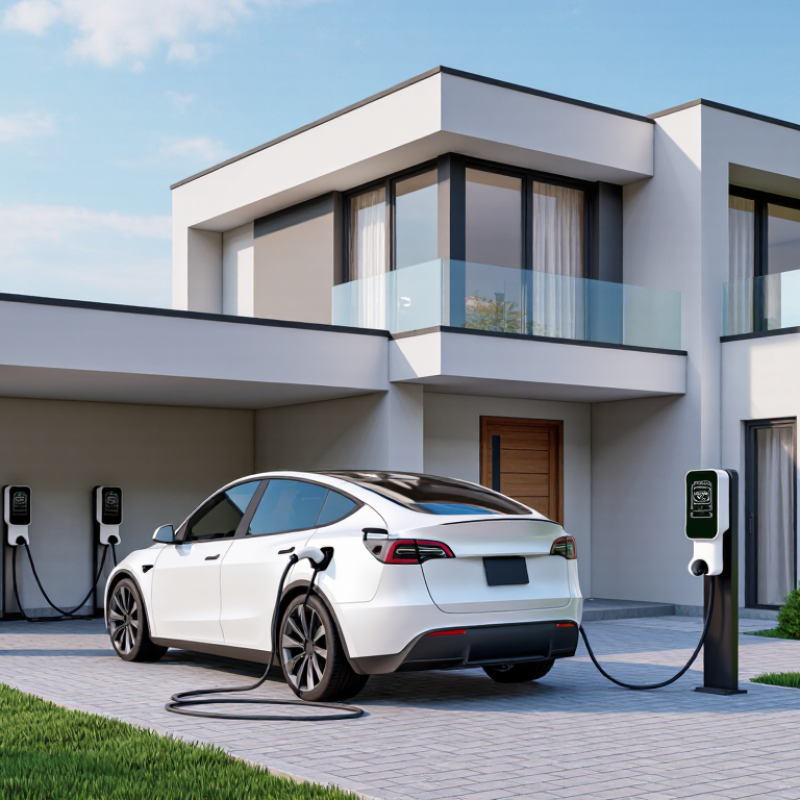
China’s home car charging point market is shaped by how people park, not just by how quickly they want to charge. In many newer residential compounds, drivers have assigned spaces and can request an electrical connection. Older apartment blocks are less straightforward. Shared parking, limited cable routes, and building approval can slow installation. A charger may look simple. The wiring behind it matters more.
Manufacturers serving this market need to account for varied homes and practical installation conditions. Useful features include adjustable charging power, protection against electrical faults, and clear status indicators that remain readable in a dim garage. Remote control can help, but reliable operation should not depend on a phone app. Installers also need accurate site checks: supply capacity, cable distance, grounding, and the property’s rules all affect the final setup. Small details matter.
The market is not one-size-fits-all. A household with a private driveway may prioritize a compact unit, while a high-rise resident may need coordination with a property manager. Local service and replacement parts can be as important as the hardware itself. Price still matters, but the cheapest quote may leave installation requirements unclear. That deserves a second look. Charging habits also vary, and manufacturers should avoid assuming every driver plugs in nightly. Safety and convenience must work together, even when the parking space is awkward.
China’s new energy vehicle sales rose from 1.37 million in 2020 to 12.87 million in 2024, expanding the potential user base for home charging points. These figures indicate market demand context; they are vehicle sales, not home charger sales or installations. Source: China Association of Automobile Manufacturers (CAAM).
Home charging point development begins with practical questions: where will the unit sit, how will cables reach a vehicle, and what electrical supply is available? Engineers turn these needs into a design brief covering power, enclosure size, connector type, and communication features. A wall-mounted prototype may be tested in a garage-like setting, where dust, damp air, heat, and repeated cable handling reveal weaknesses. Small details matter. A stiff cable can frustrate daily use.
Product teams then build prototypes and check electrical performance, temperature rise, insulation, and protection against water and dust. Firmware is tested too, since charging schedules and fault alerts must work predictably. Requirements differ across markets, so manufacturers review applicable technical standards and arrange appropriate independent testing before production. They also assess whether the unit works with common home wiring conditions. A screen may look clear in a bright showroom but be hard to read in a dim garage.
Before full-scale manufacturing, a pilot run helps identify assembly problems. Workers check terminal connections, enclosure seals, labels, and cable strain relief. Automated tests can measure output and detect faults, while sampled units undergo longer operating checks. Not every issue appears in a laboratory; installation feedback can expose confusing instructions or awkward mounting points. That feedback may send a design back for revision, adding time and cost, but skipping it can leave avoidable problems in people’s homes.
When comparing China’s top ten home car charging point manufacturers, look beyond advertised power and price. Check rated output, connector options, and compatibility with the vehicles common in your target market. Ask for current test reports and clear product specifications; vague claims are difficult to verify. A charger installed in a garage may face different conditions from one mounted on an exposed driveway. Review enclosure protection, cable durability, and temperature-control details. Small details matter.
Manufacturing consistency is another useful measure. Request a sample unit, inspect its finish and cable strain relief, and ask how production batches are checked. No scorecard is perfect. A sample cannot reveal every issue that may appear after months of daily use. Also compare warranty terms, spare-part availability, and the response process for technical questions. For connected chargers, ask how software updates are handled and whether installation and troubleshooting instructions are practical. A low quotation can hide missing accessories or limited support, so compare like-for-like configurations and record any unanswered questions before making a decision.
Profiles of China’s Top 10 Home Car Charging Point Manufacturers
The top 10 manufacturer profiles should show how Chinese suppliers turn household electricity into dependable overnight charging. China’s Electric Vehicle Charging Infrastructure Promotion Alliance reported 12.82 million charging facilities nationwide by December 2024, including about 9.23 million private units. These figures describe infrastructure, not home-wallbox sales alone. That distinction matters.
A useful profile compares practical engineering, not promotional claims. Check rated output, connector temperature control, weather protection, cable reach, and app reliability. A 7 kW unit can add useful range during an overnight parking window, though actual charging varies by vehicle and electrical supply. Profiles should also note installation support, warranty terms, and whether the charger records energy use clearly. Small details count. A stiff cable in winter is not a minor issue.
For all ten manufacturers, look for evidence of production scale, quality testing, and after-sales coverage. The International Energy Agency’s Global EV Outlook 2024 documents China’s exceptionally large charging network, but network totals cannot establish individual product quality. Rankings can mislead. Public data on failure rates and household installations remains uneven, so comparisons should identify missing evidence rather than disguise it. One honest gap is better than a polished guess.
Note: The profiles below are anonymized examples of common home AC charger configurations available in the Chinese market. They are not verified profiles of specific manufacturers or a ranked list. Actual specifications, certifications, and compatibility vary by product; check the manufacturer’s datasheet and local electrical requirements.
| Anonymous profile | Typical AC output | Supply configuration | Common use or feature | Connectivity and control | Standards and installation notes |
|---|---|---|---|---|---|
| Profile 1 — Portable entry-level unit | About 3.5 kW | Single-phase, 220 V; current depends on the model and circuit | Portable charging for compatible vehicles; charging speed is limited compared with higher-power AC units | Basic controls; smart features are model-dependent | Check plug, vehicle connector, grounding, and dedicated-circuit requirements before use |
| Profile 2 — Fixed 7 kW residential unit | About 7 kW | Single-phase, typically 220 V | Common home-charging class for overnight charging | May offer scheduled charging or app control | Confirm the electrical service and circuit capacity; connector and compliance requirements depend on the market |
| Profile 3 — Smart connected wallbox | Commonly around 7 kW; other ratings are available | Usually single-phase for this output class | Adds remote status checks and charging schedules where supported | Wi-Fi, Bluetooth, or mobile-app functions may be offered | Wireless features and app availability are product-specific; installation should follow local electrical rules |
| Profile 4 — Access-controlled wallbox | Commonly around 7 kW; rating varies by model | Typically single-phase for residential installations | May restrict charging to authorized users or sessions | Some models support RFID cards or app-based authorization | Authentication options vary; verify that the unit’s connector matches the vehicle and local standard |
| Profile 5 — Dynamic load-management unit | Often in the 7–22 kW range, depending on model and supply | Single- or three-phase versions are available | Can adjust charging current based on measured household load when configured with compatible equipment | May use a meter, current sensor, or energy-management connection | Requires compatible sensing equipment and correct commissioning; load management does not replace circuit protection |
| Profile 6 — Three-phase 11 kW wallbox | About 11 kW | Three-phase; commonly 380–400 V systems, depending on the market | For homes with suitable three-phase supply and a vehicle capable of accepting this AC rate | Basic or connected control, depending on the model | Both the home supply and the vehicle’s onboard AC charger limit the actual charging rate |
| Profile 7 — Three-phase 22 kW wallbox | About 22 kW | Three-phase; supply capacity must support the selected current | Higher-power AC option; the vehicle must support 22 kW AC to use the full rating | Smart control may be available on some models | A 22 kW rating does not guarantee 22 kW charging; supply, installation, and vehicle limits apply |
| Profile 8 — Outdoor-rated residential unit | Commonly around 7 kW; other ratings are available | Single- or three-phase, depending on the model | Designed for installation where exposure to weather may be a consideration | Control features vary by product | Check the specific IP rating, installation instructions, and suitability for the intended location |
| Profile 9 — Tethered-cable wallbox | Common residential ratings include about 7 kW and 11 kW | Supply configuration depends on the charger’s rated output | Attached cable offers convenient day-to-day connection | Smart features are optional and model-dependent | Confirm connector compatibility with the vehicle; cable length and connector type vary by product and market |
| Profile 10 — Socketed wallbox | Common residential ratings include about 7 kW and 11 kW | Single- or three-phase, according to the selected model | Uses a separate compatible charging cable rather than a permanently attached cable | Control and communication features vary by model | Check the socket standard, cable rating, charger protection, and local installation requirements |
When comparing home charging points, look beyond charging speed. Check whether the unit supports adjustable current, scheduled charging, and clear status indicators. A screen or app should show useful details, such as charging power and fault alerts. Cable length matters too; measure from the planned wall position to your usual parking spot. Fit matters.
Safety deserves close attention. Confirm that the product documentation identifies applicable standards, such as IEC 61851, and matches your vehicle’s connector requirements. Standards and approval marks vary by market, so verify them with a qualified electrician or local authority. Ask about built-in residual-current protection, overcurrent safeguards, enclosure ratings, and temperature monitoring.
A high weather-resistance rating is not a substitute for correct wiring. Installation should include an assessment of the home’s electrical capacity and protective devices. Load management can help prevent a charger from overloading a busy household circuit.
Tips: Request the installation requirements before buying. Check warranty coverage, service access, and replacement-part availability. Compare total installed cost, not just the unit price. A polished feature list can look convincing; still, some features may add little for your driving routine. Measure twice. Don’t guess.