How to Choose the Best Home EV Charger for Your Needs?
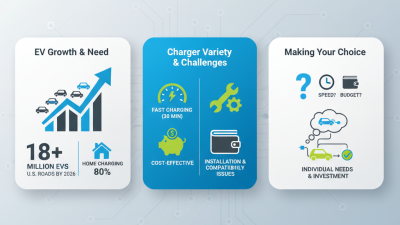
Choosing the best home EV charger can be daunting. With the rise of electric vehicles (EVs), understanding what suits your needs is essential. According to the International Energy Agency, global EV sales reached 10 million in 2022, indicating a growing demand for home charging solutions. However, many potential buyers feel overwhelmed by the options available.
Industry expert, Sarah Thompson, states, "Selecting the right home EV charger can greatly influence user experience and convenience." Her insights resonate with many, as consumers often struggle with choices that range from charging speed to installation requirements. It’s vital to consider your driving habits and the charging capabilities of your vehicle.
Factors like power output and compatibility play a significant role in your decision. A Level 2 charger, for example, can provide up to 25 miles of range per hour, making it a popular choice. Yet, not all homes are equipped to handle this type of charger, which can lead to frustration. Understanding your specific circumstances is key to a successful installation and optimal charging experience.
Understanding the Types of Home EV Chargers: Level 1 vs. Level 2
Understanding the types of home EV chargers is crucial for any electric vehicle owner. There are two main types: Level 1 and Level 2 chargers. Level 1 chargers use a standard 120-volt outlet. They are easier to install but charge the vehicle slowly. Typically, they add about 4-5 miles of range per hour. This makes them ideal for overnight charging if you're not driving long distances.
Level 2 chargers operate at 240 volts and can significantly reduce charging time. They provide around 20-25 miles of range per hour. According to a 2022 industry report, 70% of home EV owners prefer Level 2 chargers. They are more efficient for daily use, especially if you have a longer commute. However, installation costs can be higher, and it may require an electrician.
**Tip:** Consider your driving habits when choosing. If you typically drive short distances, a Level 1 charger may suffice. If you rely on your EV for longer trips, a Level 2 charger is worth the investment.
It's also essential to think about your home’s electrical system. Some homes may need upgrades for Level 2 installations. Monitoring your home energy use can inform your decision. Use apps or smart meters to track your consumption. This adds insight but often requires adjustments. Evaluate your needs carefully to avoid overspending.
Evaluating Your Electric Vehicle's Charging Requirements and Compatibility
When selecting the best home EV charger, understanding your electric vehicle's charging requirements is crucial. Different EV models can have varying battery capacities and charging speeds. For example, a report from the U.S. Department of Energy indicates that most EVs come with a Level 1 charger, which can take over 8 hours to fully charge. In contrast, Level 2 chargers could take just 4 hours, making them a preferred option for many users.
Compatibility is another vital factor. Not all EVs are compatible with every charger type. Often, the connector type varies from model to model. According to a 2022 industry study, around 80% of new EVs use the CCS (Combined Charging System). This can complicate your choice if you don't know your EV's specifications. Ensure that you consult your vehicle’s manual or manufacturer’s website for exact details.
Tip: Consider future-proofing your charger. Higher charging capacities may benefit you as EV technology evolves.
When evaluating your charging needs, think about your daily driving habits. If you only glide around town, a standard charger might suffice. However, for longer journeys, investing in a more advanced unit could save time.
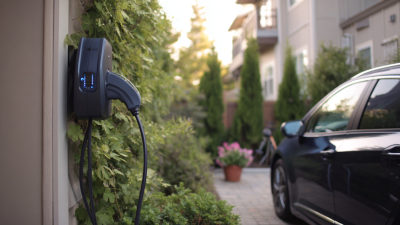
Tip: Install your charger near your parking spot for easy access. This reduces wear and tear on your charging cable. Remember, the right setup can lead to a seamless, convenient charging experience.
Assessing Charging Speed: Average Charging Times for Different EV Models
When choosing a home EV charger, understanding charging speed is crucial. Charging times vary significantly based on the EV model and charger type. For example, Level 1 chargers typically provide 2-5 miles of range per hour. This means an electric vehicle (EV) with a 250-mile range could take over 40 hours to fully charge. It's not practical for daily use.
In contrast, Level 2 chargers deliver 10-60 miles of range per hour. This type can fully charge many EVs overnight. According to the U.S. Department of Energy, using a Level 2 charger can reduce charging time significantly. However, some EV models, like the Tesla Model 3, support faster charging, with Superchargers providing up to 200 miles of range in just 15 minutes.
Tips: Consider your daily driving habits. Are you using your EV for short commutes or long trips? If you drive more than 30 miles daily, a Level 2 charger may be essential. Evaluate your home's electrical system to ensure it can support the charger. Installing a high-capacity charger may require upgrades.
Charging needs fluctuate. Some households may require frequent access to charging capability. Understand that your specific situation is unique. Assess your EV model's charging requirements and ensure the charger meets those needs efficiently. Every household has different energy demands; what works for one may not work for another.
Analyzing Installation Considerations and Costs for Home EV Chargers
When selecting a home EV charger, installation considerations and costs are critical factors. A typical Level 2 charger may cost between $500 and $1,500, depending on the model and features. Installation costs can add another $300 to $2,000. This variance often stems from the complexity of the job. For example, homes lacking an adequate electrical panel may require upgrades, significantly increasing expenses.
According to a report by the U.S. Department of Energy, nearly 80% of EV charging occurs at home. Homeowners should assess their current electrical capacity before committing to a purchase. Some installations may require permits, which can introduce delays and additional costs. In regions with strict electrical codes, hiring a licensed electrician is essential for compliance and safety. This complexity may deter some, but understanding these details ensures a safe and efficient installation.
Furthermore, understanding local incentives can help offset costs. Some states offer rebates for home EV chargers, which could reduce your initial investment. Despite these benefits, the evolving technology may lead to rapid changes in models and features. This makes it wise to choose a charger that can accommodate future EV updates without requiring another installation.
Identifying Key Features: Smart Charging Capabilities and Safety Standards
When selecting a home EV charger, consider smart charging capabilities and safety standards. Smart chargers provide more than just power; they optimize charging times and can reduce electricity costs. According to a report by the International Council on Clean Transportation, smart features can decrease charging expenses by approximately 20% during off-peak hours. You’ll also find that many models offer scheduling options. This allows you to take advantage of lower rates during specific times.
Safety is paramount in EV charging. Look for chargers that meet established safety certifications, such as UL and IEC standards. These standards ensure protection against electrical faults, overheating, and other hazards. A study from the Department of Energy reveals that chargers compliant with safety standards reduce hazards by over 30%. Choosing a charger with built-in safety features, like surge protection and overcurrent protection, should not be overlooked.
While smart capabilities and safety are crucial, remember that not all chargers may meet your needs. Some smart chargers can be complex, and not all homes are equipped for level 2 installations. Evaluate your home’s wiring and electrical capacity. Testing various models can also uncover nuances that ratings might not fully reflect. Balancing advanced features with practical requirements is key to finding a suitable EV charging solution.