Leave Your Message
China’s Home Dc Car Charger market has grown from basic wall-mounted units into a competitive field of smart, high-power charging equipment. This article introduces leading Chinese manufacturers and examines how their products perform in real residential settings. The review considers charging speed, thermal stability, connector quality, software control, installation support, and long-term warranty service.
“Interoperability is the key to the success of e-mobility,” says Claas Bracklo, a well-known charging-industry expert and former CharIN representative. His observation matters because a charger must work reliably with different vehicles, home networks, and energy systems. A polished brochure proves little. A stable charging session at midnight proves more.
The selected manufacturers will be compared through practical indicators. These include factory experience, quality-control procedures, safety certifications, enclosure protection, surge resistance, and after-sales response. Smart load balancing also deserves attention, especially in homes with heat pumps, ovens, and solar inverters. Some suppliers offer impressive specifications but limited local service. Others provide dependable hardware with less refined applications. That difference can become expensive.
This outline is not a claim that one company suits every buyer. Product availability, regional standards, installer skill, and vehicle compatibility can change the ranking. Testing conditions may also be imperfect. That is worth admitting. Readers should verify certification documents, warranty terms, and grid requirements before purchase. The goal is a practical guide to China’s top Home Dc Car Charger manufacturers, not a sales list disguised as research.
China Top Home DC Car Charger Manufacturers?
What Is a Home DC Car Charger and How Does It Work?
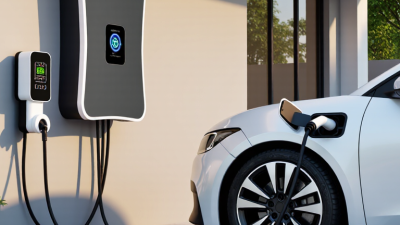
A home DC car charger sends direct current straight to the vehicle battery. It bypasses the car’s onboard AC charger. Inside the unit, a power module converts grid electricity into controlled DC power. The vehicle’s battery management system then checks voltage, temperature, and charging limits. Power rises or falls within milliseconds.
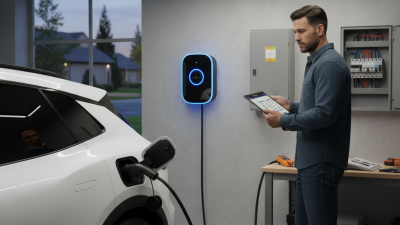
Home DC charging is much faster than ordinary AC charging. A 20–30 kW unit may add useful range during a short evening stop. However, household electrical capacity can become the main barrier. A qualified installer must assess the service panel, cable size, grounding, ventilation, and local connection rules. Heat matters too. Continuous high-power charging can stress both the charger and battery.
The label can mislead.
The International Energy Agency reported more than 14 million electric cars sold worldwide in 2023, increasing pressure for convenient residential charging. Its Global EV Outlook 2024 also notes that home charging remains central for drivers with private parking. China’s charging infrastructure data shows rapid expansion, yet public and private charging needs are not identical. A home DC system may require expensive electrical upgrades, while a 7–22 kW AC charger often suits overnight use. Real charging speed depends on battery temperature, state of charge, cable limits, and vehicle acceptance. I have seen specifications promise maximum output, but daily results are lower. Buyers should compare sustained power, protection functions, warranty terms, and installation conditions rather than headline wattage.
Home DC Charger Technology, Performance, Electrical Requirements, and Selection Criteria
| Data Dimension | Typical Home DC Charger Range or Requirement | How It Works or What It Means | Best-Fit Residential Scenario | Key Selection Check |
|---|---|---|---|---|
| Definition | Direct-current charging equipment installed at or near a residence | The charger converts AC electricity from the building supply into DC electricity and delivers it directly to the vehicle battery through the vehicle's charging control system. | Homes where faster charging is needed than the vehicle's onboard AC charger can provide | Confirm that the vehicle supports DC charging and that the charger uses the correct regional connector. |
| Main difference from home AC charging | DC charger: power conversion is performed outside the vehicle; AC charger: the vehicle's onboard charger performs the conversion. | Bypassing the onboard AC charger can allow higher charging power, but it normally requires more expensive equipment and greater electrical capacity. | Multi-vehicle households, high daily mileage, or residences with limited charging time | Compare the vehicle's maximum DC input power with the proposed charger output. |
| Common DC output classes | Approximately 10–25 kW, 20–40 kW, and 30–60 kW for residential or light-commercial applications | Higher output generally reduces charging time but increases input current, installation complexity, heat management, and equipment cost. | 10–25 kW for selected homes; 20–40 kW for high-use private sites; 50 kW or more is often closer to a commercial installation. | Do not size the charger above the available service capacity or the vehicle's DC acceptance limit. |
| Illustrative 20–80% charging time |
20 kW: about 108 minutes for a 60 kWh battery 30 kW: about 72 minutes for a 60 kWh battery 40 kW: about 54 minutes for a 60 kWh battery 50 kW: about 43 minutes for a 60 kWh battery |
Estimates use 36 kWh of energy, equal to 60% of a 60 kWh battery, divided by charger power. Actual time is longer or variable because of conversion losses, battery temperature, state of charge, and charging-curve limits. | Use the calculation for preliminary comparison rather than as a guaranteed charging time. | Request a charging curve or tested 20–80% result for the specific vehicle and charger combination. |
| Energy delivered during a 30-minute session |
20 kW: approximately 10 kWh 30 kW: approximately 15 kWh 40 kW: approximately 20 kWh 50 kW: approximately 25 kWh |
These are ideal energy values before accounting for electrical and thermal losses. The vehicle may accept less as the battery approaches a high state of charge. | Useful for estimating added driving range during a short stop | Use the vehicle's real-world efficiency rather than a universal range-per-kWh assumption. |
| Typical three-phase input current |
Approximate values at 400 V three-phase input: 20 kW: 29 A 30 kW: 43 A 40 kW: 58 A 50 kW: 72 A |
Values are simplified estimates based on three-phase power relationships and do not fully include power factor, efficiency, voltage variation, or design margin. | Properties with a suitable three-phase electrical service | Have a qualified electrician verify service rating, breaker size, conductor size, voltage, earthing, and local code requirements. |
| Single-phase feasibility | Low-power DC systems may use single-phase input, but medium and high DC power can require very high current. | A 20 kW load at approximately 230 V single-phase is roughly 87 A before allowing for efficiency and installation margin. | Only suitable where the property has adequate single-phase capacity and the local utility permits the load. | Check demand charges, service upgrades, load balancing, and utility approval before selecting a single-phase design. |
| Vehicle connector options | CCS1, CCS2, CHAdeMO, GB/T DC, or another region-specific connector | The connector must match the vehicle inlet and the charging protocol used in the target market. Connector availability differs by country and vehicle generation. | Domestic installations serving one known vehicle or multiple vehicles with the same connector type | Confirm connector type, cable length, locking method, current rating, and compatibility with the vehicle model. |
| Communication and control | Vehicle-to-charger communication, start/stop control, fault reporting, and optional network connectivity | The charger communicates with the vehicle's battery management system to negotiate voltage and current and to stop charging when safety conditions are not met. | Smart homes, managed energy systems, fleet residences, and installations requiring remote monitoring | Check support for local control, mobile applications, OCPP if required, firmware updates, and offline operation. |
| Power factor and efficiency | Modern equipment commonly targets high power factor and approximately 90–96% conversion efficiency, depending on load and design. | Higher efficiency reduces wasted energy and heat, while better power factor can reduce the reactive component of the electrical load. | Frequent charging, energy-conscious households, and sites with limited electrical capacity | Request test conditions and efficiency curves instead of relying only on a single headline value. |
| Protection functions | Overcurrent, overvoltage, short-circuit, overtemperature, ground-fault or residual-current monitoring, emergency stop, and surge protection | Protection systems disconnect or limit power when unsafe electrical, thermal, or communication conditions occur. | All residential installations, especially outdoor or semi-outdoor locations | Verify compliance with applicable electrical codes and the required residual-current protection arrangement. |
| Ingress and outdoor suitability | Outdoor units are commonly specified with an IP rating suitable for weather exposure; the exact rating depends on the enclosure design and installation method. | Ingress protection indicates resistance to solids and water under defined test conditions. It does not replace correct installation, drainage, or cable management. | Driveways, carports, garages with humidity, and shared private parking areas | Review the complete environmental rating, operating temperature, UV resistance, condensation control, and mounting instructions. |
| Operating temperature | Often designed for a broad outdoor range, such as approximately -20°C to +50°C, depending on the model. | Output may be reduced at high or low temperatures to protect power electronics and the vehicle battery. | Cold climates, hot climates, and installations exposed to direct sunlight | Check rated output at the property's actual temperature range, not only the nominal laboratory condition. |
| Installation footprint | Wall-mounted units generally require less space; floor-mounted units usually need a dedicated base and vehicle-side clearance. | DC equipment is typically larger and heavier than a residential AC wallbox because it includes high-power conversion and thermal-management components. | Garages with sufficient wall structure or driveways with a prepared equipment pad | Confirm wall load capacity, service access, cable reach, ventilation clearance, and protection from vehicle impact. |
| Cooling method | Natural convection, forced-air cooling, or liquid-assisted cooling, depending on power level and enclosure design | Cooling removes heat generated by power modules and cables. Higher continuous output generally requires more active thermal management. | Frequent, long-duration charging or warm outdoor environments | Evaluate fan noise, filter maintenance, liquid-cooling service requirements, and continuous-power performance. |
| Load management | Static current limiting, dynamic load balancing, scheduled charging, solar-aware charging, or battery-storage integration | Load management adjusts charger power to keep the total property load within the electrical service limit. | Homes with heat pumps, electric water heaters, solar PV, battery storage, or two EVs | Check whether the system can measure whole-home demand and whether compatible meters or gateways are required. |
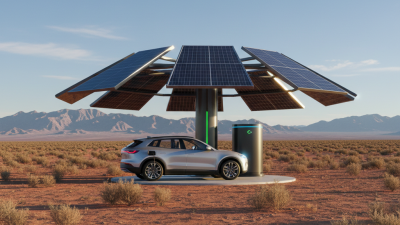
| Energy source integration | Grid-connected operation; some systems can coordinate with solar PV, stationary batteries, or an energy-management system. | Solar or storage integration can shift charging to lower-cost or lower-carbon periods, but it does not automatically provide full-power DC charging from a typical home solar array. | Homes with renewable generation and time-of-use electricity tariffs | Confirm inverter compatibility, export limitations, control interfaces, and whether grid backup is required. |
| Safety and compliance documentation | Applicable product safety certifications, EMC testing, installation instructions, electrical diagrams, and regional approvals | Documentation supports safe installation, regulatory compliance, warranty service, and inspection by the local authority or utility. | New-build homes, permitted electrical upgrades, and installations subject to inspection | Ask for certificates applicable to the exact model and target market, not only generic factory documents. |
| Manufacturer evaluation criteria | Verified output performance, connector compatibility, safety certifications, warranty terms, spare-parts support, firmware policy, and service capability | A suitable manufacturer should provide traceable technical specifications and support the complete product life cycle, including installation and after-sales service. | Residential projects, property developers, installers, and private charging networks | Compare tested performance, total installed cost, service response time, warranty exclusions, and availability of replacement components. |