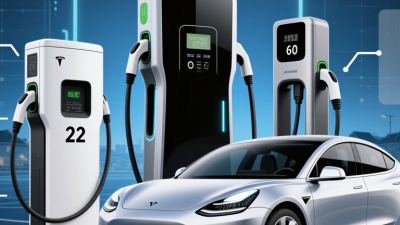
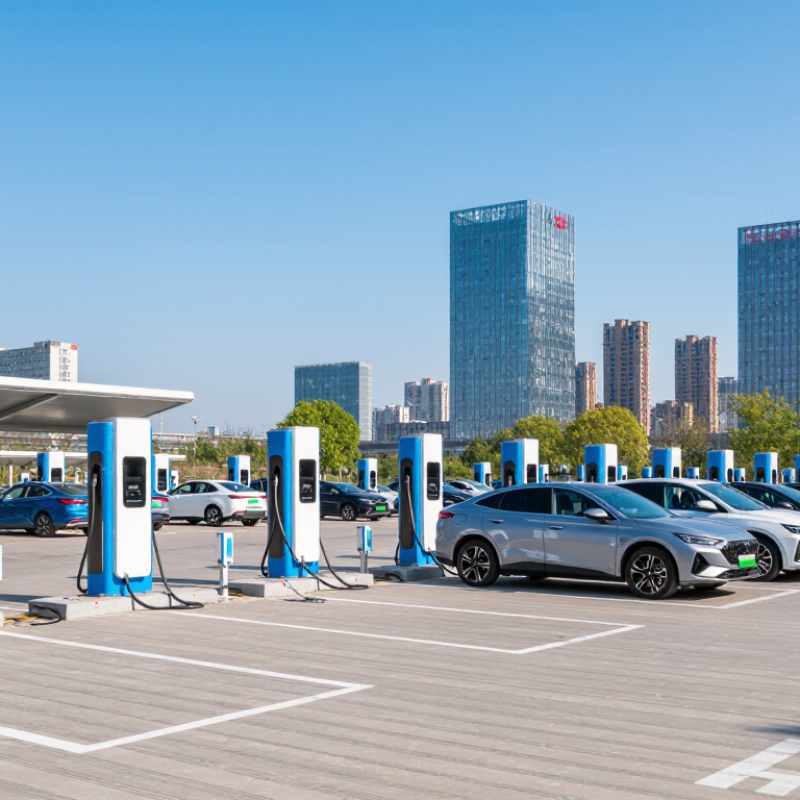
China’s Car Charger market is growing alongside its electric-vehicle industry. The International Energy Agency’s Global EV Outlook 2024 reports nearly 14 million electric cars sold worldwide in 2023. China accounted for almost 60% of those sales. That scale creates strong demand for reliable charging equipment, from home wallboxes to public fast chargers.
The infrastructure figures matter, too. The IEA reports that China added more than 700,000 public charging points in 2023, representing about 70% of global additions. These numbers provide context, not a ranking of manufacturers. A large market does not automatically mean every supplier offers equal safety, performance, or support. Details matter.
This overview examines Chinese manufacturers through practical criteria: product range, charging power, certifications, manufacturing experience, and after-sales service. It focuses mainly on electric-vehicle charging equipment; “Car Charger” can also mean a small in-car USB adapter. That distinction is easy to miss. Company specifications should be checked against current product documents, since models and certifications can change. Public reports rarely compare every supplier using identical tests, so any shortlist involves judgment. Buyers should verify claims independently, especially when choosing equipment for frequent use or fleet installations.
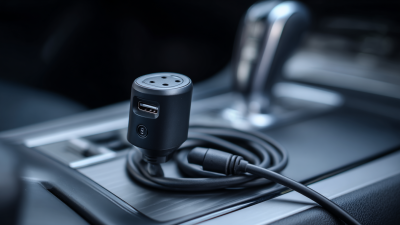
China’s car charger manufacturing industry is supported by a broad electronics supply chain. Component suppliers, tooling workshops, assembly plants, and testing services often operate within connected industrial regions. This proximity can shorten development cycles and make design changes easier to coordinate. Small details matter: a tight-fitting port, a stable cable connection, and a casing that handles heat during long drives. That is where production quality becomes visible.
Manufacturers commonly provide product design, prototype development, and contract production for different vehicle markets. Their capabilities may include USB charging adapters, multi-port units, and charging modules built into vehicle interiors. A capable supplier should explain its power specifications, materials, temperature testing, and quality-control process clearly. Buyers should also check whether product documentation and testing match the requirements of their intended market. A polished sample is not enough.
The industry is competitive, but factory scale alone does not guarantee reliability. Component substitutions, inconsistent inspection, or unclear communication can affect performance between batches. These risks are easy to overlook. Requesting samples from more than one production run can reveal differences in fit, finish, and charging stability. China’s manufacturing network offers flexibility, yet careful supplier evaluation remains essential. Even experienced buyers can miss a detail.

China New Energy Vehicle Production, 2020–2024
Rising NEV production provides context for demand across China’s vehicle-charging supply chain. These figures measure vehicle production, not car charger output or individual manufacturers’ sales.
Source: China Association of Automobile Manufacturers (CAAM); production figures shown in millions of vehicles.
Who Are the Top Car Charger Manufacturers in China?
How to Identify Leading Car Charger Manufacturers
A polished catalog is not proof of a reliable supplier. The China Association of Automobile Manufacturers reported 30.16 million vehicles produced in China in 2023. This scale supports a broad automotive supply base, but it does not guarantee charger quality. Look for documented production controls, traceable components, and test reports covering heat, electrical protection, and connector durability. Small details matter.
Check whether sample units perform consistently under repeated use, not just during a brief demonstration. Ask for test conditions and results, then compare them with your intended vehicle types and charging needs. The International Energy Agency’s Global EV Outlook 2024 estimated nearly 14 million electric car sales worldwide in 2023, about 18% of new car sales. That shift makes compatibility and stable output increasingly important. A supplier’s answer should be specific; vague assurances deserve a second look.
Tips: Request a sample, inspect its labeling and cable strain relief, and test it during a real commute. Confirm production capacity and quality records before discussing large orders. A strong factory may still have weak documentation—worth remembering.
China’s car-charger manufacturers serve a fast-growing electric-vehicle market. The International Energy Agency’s Global EV Outlook 2024 reports that China sold over eight million electric cars in 2023, nearly 60% of global sales. That scale supports suppliers specializing in onboard chargers, which convert grid power for vehicle batteries. Useful profile details include rated power, conversion efficiency, thermal control, and production traceability.
One supplier profile might focus on compact onboard units for passenger cars. Look for clearly stated test conditions, connector options, and evidence of vibration and heat testing. Another may specialize in integrated power modules, combining charging and voltage-conversion functions to save space. Practical questions matter. Can the supplier provide test records? How are failed units traced? A polished sample is not enough.
Export-oriented manufacturers may offer broader voltage ranges and customized housings, while domestic-focused suppliers may prioritize high-volume production. The China Association of Automobile Manufacturers reported 9.587 million new-energy vehicles produced in 2023, a useful indicator of the surrounding supply chain’s scale. These figures describe the market, not any single factory’s capability. Factory audits and independent test reports remain important; product pages rarely show the whole picture. One detail can be missed. Check service support and component-change notices before evaluating a supplier.
Chinese car-charger manufacturers offer products for home, workplace, and public charging. Common options include compact AC wallboxes, portable charging units, and higher-output DC fast chargers. Some suppliers also produce onboard charging components for vehicle makers. The right product depends on the vehicle, available grid capacity, and how often drivers need a charge.
Product design often focuses on power conversion, heat control, and safe operation. DC units may use modular power modules, so technicians can replace a faulty section instead of the entire system. AC chargers commonly include scheduled charging, app-based controls, and dynamic load balancing. These features can help prevent a charger from drawing more power than a building can spare. Useful details include cable reach, enclosure protection, connector options, and clear fault indicators.
Communication technology matters, too. Chargers may support vehicle-to-charger data exchange and remote monitoring, but compatibility should be checked with the actual vehicle and charging network. A feature list can look tidy on paper. Real installations are less tidy: weak network coverage, crowded parking spaces, or limited electrical capacity can change what works. Buyers should compare test records, service arrangements, and local grid requirements—not just the advertised charging speed.
The table below summarizes common product categories and technologies offered by Chinese car-charger manufacturers. Specifications vary by model; confirm ratings, certifications, and compatibility with the manufacturer before purchase.
| Manufacturer Profile | Key Products | Typical Specifications | Key Technologies | Common Applications | Checks for Buyers |
|---|---|---|---|---|---|
| USB Car Charger Specialists | 12 V / 24 V vehicle power-socket chargers with USB-A and USB-C ports | Output commonly ranges from about 12 W to 100 W per device, depending on port configuration and model | USB Power Delivery (PD), USB-A Quick Charge on supported models, multi-port power allocation, overcurrent and overtemperature protection | Charging phones, tablets, navigation devices, and other USB-powered electronics in passenger vehicles | Check the output profile for each port, total shared output, supported charging protocols, and protection documentation |
| Wireless Charging Accessory Manufacturers | Dashboard, vent-mounted, and console-mounted wireless charging holders | Qi-compatible models commonly provide up to 15 W, subject to the phone, charger, and power adapter | Inductive charging, foreign-object detection on supported products, temperature monitoring, adjustable mounting, and alignment features | Hands-free phone mounting and wireless charging during vehicle travel | Verify Qi certification where applicable, phone compatibility, case limitations, mounting stability, and required input power |
| Automotive Electronics OEM / ODM Suppliers | Customized USB charging modules, multi-port assemblies, and integrated charging panels | Port count, connector type, output, housing, and wiring are designed to customer specifications | Custom PCB design, compact DC-DC conversion, thermal design, electromagnetic compatibility engineering, and production testing | Vehicle accessory programs, fleet installations, and integration into dashboards or consoles | Review engineering-change controls, sample validation, traceability, quality procedures, and agreed testing requirements |
| High-Power Multi-Port Charger Manufacturers | Compact chargers with multiple USB-C and/or USB-A outputs | Combined output may reach approximately 100 W or more on some models; individual port output depends on the power-sharing design | USB PD, programmable power supply (PPS) on supported models, power negotiation, and dynamic output allocation | Simultaneous charging of multiple mobile devices and selected USB-C laptops in compatible vehicles | Confirm vehicle-socket current limits, per-port power when multiple devices are connected, and cable capability |
| Rugged and Fleet-Focused Suppliers | Heavy-duty socket chargers and charging accessories for commercial vehicles | Models may support 12 V or 24 V vehicle systems; environmental and electrical ratings vary by product | Input-voltage protection, reinforced housings, vibration-conscious design, and safeguards against short circuit and overheating | Delivery vehicles, trucks, service fleets, and other commercial vehicle environments | Check the stated operating-voltage range, temperature limits, vibration test evidence, and installation requirements |
Note: Output figures are indicative market specifications, not guaranteed ratings for every product in a category. “Car charger” may refer to an accessory for a vehicle’s 12 V / 24 V socket; electric-vehicle traction-battery charging equipment is a separate product category.
A useful comparison of car charger manufacturers starts with the product, not the brochure. Request samples from the same production line you would use for a bulk order. Inspect the USB ports, cable strain relief, casing seams, and printed labels. Then test charging stability under load and check whether the charger becomes unusually hot during extended use. Small details matter. A loose port can become a costly complaint. No single sample proves consistent quality, so request inspection records and ask how defects are handled.
Compliance should match the destination market and the exact product configuration. Ask for current test reports, certificates, and a clear link between each document and the model being quoted. Verify that component substitutions trigger a review, rather than assuming the paperwork covers every revision. Capacity needs similar scrutiny: compare monthly output with actual line space, staffing, equipment, and lead times. Numbers can mislead. Ask how the factory manages peak-season orders and whether it can share a realistic production schedule. A checklist will not catch everything; some judgment remains necessary.