Leave Your Message

China Best Car Fast Charger for Global Buyers?

China has become a major manufacturing base for electric vehicle charging equipment. However, the best Car Fast Charger for global buyers is not always the cheapest model.

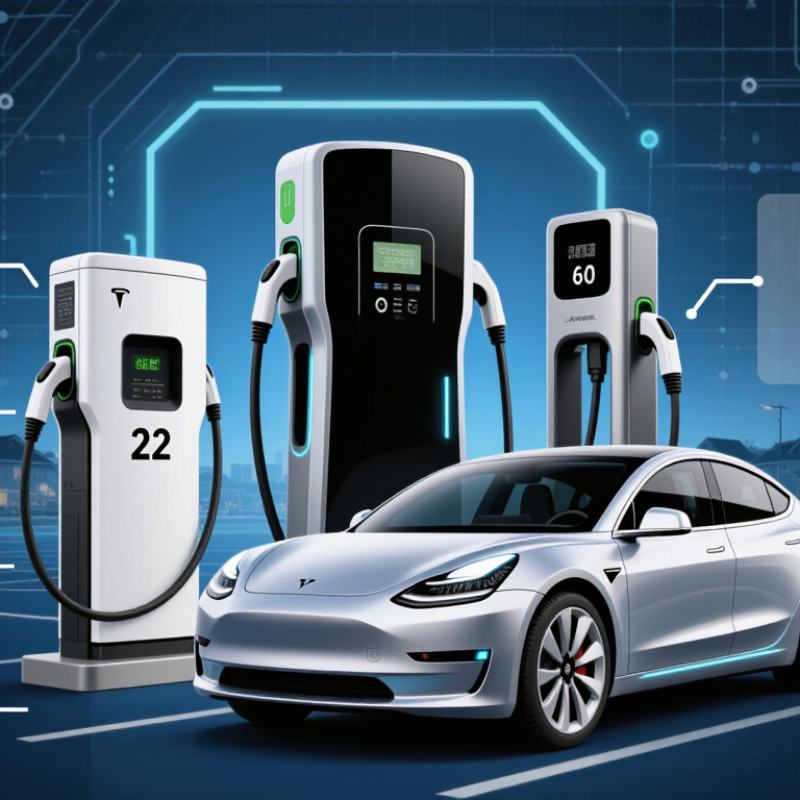
A reliable charger must match local voltage, connector standards, vehicle communication protocols, and installation requirements. Buyers should inspect output power, thermal protection, waterproof ratings, cable quality, and warranty coverage. A compact 22-kilowatt AC unit may suit a home garage. A 60-kilowatt DC charger serves commercial parking areas better. The right choice depends on vehicle compatibility and daily charging demand.

“Interoperability is the key to mass adoption,” says Claas Bracklo, a recognized EV charging specialist and former CharIN chairman. His point matters because a charger can look advanced yet fail with another vehicle or network. Global buyers should request test reports, certification records, factory inspection evidence, and software support details. CE, UL, UKCA, or other approvals may apply, depending on the destination market.

Look beyond the metal casing. Ask how the charger performs at 45°C, during voltage fluctuations, and after repeated daily use. Check whether spare parts are available locally. Confirm remote monitoring, payment functions, and firmware update methods before ordering.

China offers strong engineering, flexible customization, and competitive production capacity. Yet quality varies between suppliers. That is the uncomfortable part.

A low purchase price can hide installation delays, weak after-sales service, or expensive replacements. Samples should be tested before large orders. Independent verification remains valuable, even when supplier documents appear complete. For global buyers, the best Car Fast Charger combines safety, compatibility, transparent support, and dependable performance—not merely impressive specifications.

China Best Car Fast Charger for Global Buyers?

What Makes China a Leading Source of Car Fast Chargers?

China Best Car Fast Charger for Global Buyers?

What Makes China a Leading Source of Car Fast Chargers?

China has become a major source of car fast chargers because its manufacturing network is broad and responsive. Component suppliers, assembly plants, testing laboratories, and logistics providers often operate within the same industrial regions. This shortens communication cycles and supports faster product adjustments. Buyers can request different cable lengths, connector types, housing materials, and mounting methods for specific vehicles.

Practical experience shows that price alone should never guide a purchasing decision. Reliable suppliers usually provide sample testing, production records, electrical safety reports, and clear warranty terms. Engineers also check charging stability, heat control, insulation, water resistance, and protection against overcurrent. Small details matter. A loose connector can create delays, customer complaints, and costly returns.

China’s strength also comes from manufacturing scale and technical learning. Producers can improve designs after testing products in different climates and vehicle conditions. However, not every supplier maintains the same quality level. Some low quotations may reflect weaker materials or limited inspection. Buyers should review factory capabilities, verify documents independently, and test samples before placing large orders. That extra step feels slower, but it can reveal problems hidden behind attractive pricing.

How to Compare Fast Charger Types and Charging Standards

China Best Car Fast Charger for Global Buyers?

Choosing a fast charger starts with power, not appearance. AC chargers commonly deliver 7–22 kW through the vehicle’s onboard charger. DC chargers bypass that limit and can provide 50–350 kW. However, a car rated for 120 kW will not charge faster from a 350 kW unit. Charging curves, battery temperature, and state of charge matter more than the headline number. Slow down after 80%.

The connector must match the vehicle and destination market. Common systems include CCS1, CCS2, CHAdeMO, GB/T, and SAE J3400. Buyers should verify voltage, current, communication protocols, and local grid requirements. An adapter may solve a physical mismatch, but it cannot always support safe high-power communication. That detail is easy to miss.

The International Energy Agency reported more than four million public charging points worldwide by the end of 2023, with public installations growing by over 40% that year.

Infrastructure is expanding, but compatibility remains uneven.

For global purchasing, compare tested output under heat, cable length, ingress protection, and software updates. The charger should also record energy accurately and manage load when several vehicles charge together. The International Council on Clean Transportation notes that charging access and reliability strongly influence electric-vehicle adoption.

A useful question is simple: can this unit deliver stable power at the buyer’s actual site? Not just in a brochure. Country-specific certification, maintenance support, and spare-part availability deserve equal attention. I would still request independent test data; supplier claims can be optimistic.

Which Safety, Quality, and Certification Features Matter?

China Best Car Fast Charger for Global Buyers?

For global buyers, safety and certification deserve more attention than peak charging speed. The International Energy Agency reported nearly 14 million electric cars sold worldwide in 2023. That growth increases demand for dependable home and public charging equipment. A suitable charger should support recognized IEC 61851 and IEC 62196 requirements. These standards address charging communication, connector safety, and electrical protection. Look for overcurrent protection, residual-current detection, surge protection, and temperature monitoring. A cool, stable cable matters.

Quality appears in physical details. Check the enclosure rating for dust and water resistance. Examine connector pins, cable strain relief, and locking performance. Accredited laboratory testing is stronger evidence than a printed compliance claim. Certification should match the destination market, because electrical rules differ between regions. The IEA’s Global EV Outlook 2024 also noted that public charging infrastructure must expand rapidly to support rising electric-car adoption. That pressure can encourage rushed manufacturing. I would not judge a charger by speed alone.

Tips: Request a complete test report, not only a certificate number. Confirm voltage, current, plug type, and vehicle compatibility. Ask whether the charger passed repeated heat-cycle testing. Inspect the warranty terms and local service response. Small details matter. I also prefer transparent documentation, although even good paperwork cannot replace independent inspection. A charger may look excellent and still have weak internal components. That possibility deserves honest attention before purchase.

How to Evaluate Suppliers, Pricing, and Global Shipping

Choosing a China-made car fast charger requires more than comparing wattage and factory prices. The IEA’s Global EV Outlook 2024 reports over four million public charging points worldwide, with the network growing by more than 40% in 2023. This expansion increases demand, but it also exposes weak suppliers. Ask for test reports, production photographs, warranty terms, and evidence of relevant regional certifications. A sample unit should pass repeated charging tests before any large order.

Pricing needs a clear breakdown. Request separate figures for the charger, connector, packaging, inland delivery, export handling, and insurance. A low factory quote may exclude software, spare parts, or port charges. Compare total landed cost, not the first number on a spreadsheet. IEA data also shows that direct-current charging equipment varies widely in power and installation requirements, so identical-looking units may have very different project costs. Small details matter.

Shipping deserves equal attention. UNCTAD’s Review of Maritime Transport 2024 states that maritime transport carries over 80% of global merchandise trade. Route disruptions can extend delivery times and raise freight costs quickly. Confirm the Incoterm, container loading plan, customs documents, and damage policy in writing. Use protective corner foam and moisture barriers; one wet container can erase a promising margin. I would still keep contingency funds. Forecasts can be wrong. Supplier audits, transparent payment milestones, and independent pre-shipment inspections make the process more reliable, though never perfect.

What Should Global Buyers Check Before Placing an Order?

China Best Car Fast Charger for Global Buyers?

Global buyers should check compatibility before comparing price or charging speed. The IEA’s Global EV Outlook 2024 reports more than four million public charging points worldwide at the end of 2023. Almost 40% were added during that year. This growth increases choice, but it also increases technical confusion.

Start with the vehicle’s connector, voltage range, and maximum charging current. A charger supporting one regional standard may not work with another. Request test records for IEC 61851, electromagnetic compatibility, insulation, and leakage protection. Ask for the real output curve, not only the peak rating. A unit advertised at 120 kW may reduce power after several minutes because of heat. Check its performance at 25°C and lower temperatures. Small details matter.

Safety evidence should be traceable. Confirm the certification scope for the destination market, factory quality controls, enclosure protection, and emergency shutdown design. Review warranty terms, replacement parts, remote diagnostics, and software update methods. Support for open communication protocols can simplify fleet management. The IEA estimates that global public charging capacity may need to expand sixfold by 2035. Reliable service will matter as much as initial power.

Ask for a sample unit and inspect the cable, screen, cooling fans, and connector lock. Do not rely on polished brochures. I have seen specifications hide regional limitations. A checklist can still miss installation costs, customs delays, and grid upgrades. Get those figures in writing before placing the order.

China Best Car Fast Charger for Global Buyers? - What Should Global Buyers Check Before Placing an Order?
Evaluation Dimension Common Technical Data What Global Buyers Should Check Recommended Evidence Before Ordering Priority
Charging Type AC charging is commonly used for overnight or long-stay charging. DC fast charging is commonly used for public, fleet, and highway applications. Confirm whether the product is an AC charger, a DC charger, or a combined solution. Check the intended vehicle type and charging scenario. Product specification sheet, application description, and rated charging method. High
Output Power Common DC fast-charger classes include approximately 20–60 kW, 60–180 kW, and 180–350 kW. Actual vehicle charging speed may be lower than the charger rating. Match the charger output to the vehicle battery voltage, maximum charging current, site capacity, and expected traffic volume. Rated power, continuous power, maximum output current, output-voltage range, and a vehicle compatibility test report. High
Input Electrical Requirements Typical three-phase AC supply ranges include 380–415 V at 50 Hz in many markets. Some installations use 200–240 V single-phase or other regional supplies. Verify local grid voltage, frequency, phase arrangement, earthing system, breaker rating, cable size, and available site power. Input-voltage tolerance, frequency range, maximum input current, power factor, efficiency, and installation wiring diagram. High
Vehicle Connector and Communication Common regional connector families include CCS1, CCS2, GB/T, and CHAdeMO. AC connectors may use Type 1 or Type 2 depending on the market. DC communication commonly follows ISO 15118 or DIN SPEC 70121 for compatible systems. Select the connector according to the target vehicle population and local regulations. Confirm whether plug type, cable length, locking method, and communication protocol are supported. Connector specification, pin configuration, protocol list, compatibility matrix, and charging test records with representative vehicle models. High
Safety and Protection Important functions include over-voltage, under-voltage, over-current, short-circuit, over-temperature, residual-current, surge, emergency-stop, and insulation monitoring protection. Check whether protection functions are integrated into the charger and whether external protection devices are required at the installation site. Protection-function list, fault-response description, emergency-stop test, residual-current protection details, and electrical safety test results. High
Environmental Performance Outdoor charging equipment is commonly specified with an enclosure rating such as IP54 or higher. Operating temperature ranges often cover approximately −20°C to +50°C, depending on the design. Consider rain, dust, salt spray, snow, direct sunlight, altitude, humidity, freezing conditions, and cooling requirements at the installation site. IP-rating report, operating-temperature range, humidity limits, altitude limit, corrosion protection details, and derating curve. High
Applicable Standards and Market Approval Relevant requirements may include IEC 61851 for conductive charging systems, IEC 62196 for plugs and vehicle couplers, EMC requirements from the IEC 61000 series, and market-specific electrical safety rules. Certification requirements differ by destination. A document issued for one market may not be sufficient for another market. Declaration of conformity, test reports from an accredited laboratory, safety certificates required by the destination market, and EMC reports. High
Communication and Software Public chargers may support OCPP, commonly versions 1.6 or 2.0.1, for communication with a charging-management platform. Network options may include Ethernet, Wi-Fi, cellular communication, or a combination. Confirm platform compatibility, remote monitoring, user authentication, billing data, firmware updates, diagnostics, cybersecurity controls, and offline operation. Communication-protocol declaration, API or OCPP test result, software demonstration, cybersecurity policy, and data-ownership terms. Medium–High
Charging Efficiency and Power Quality Modern DC chargers commonly target high conversion efficiency, often above 94% at suitable operating load. Power factor and total harmonic distortion vary by design and load. Compare efficiency at different load levels rather than relying only on a peak-value claim. Check the effect of the charger on the local electrical network. Efficiency curve, power-factor data, harmonic-distortion test results, standby consumption, and load-balancing performance. Medium–High
Thermal Management Cooling may be air-based or liquid-based. High-power systems generally require stronger thermal management and may reduce output under high ambient temperatures. Determine whether the charger can maintain the promised output continuously and identify any automatic power derating conditions. Cooling-system description, fan or pump service life, thermal test report, noise level, and output-derating chart. Medium–High
Mechanical Design Important factors include enclosure material, cable-management method, display visibility, accessibility, mounting method, service access, and vandal-resistance features. Ensure the dimensions, weight, foundation, cable reach, screen position, and maintenance access suit the planned location. Mechanical drawings, installation foundation plan, shipping weight, cable dimensions, clearance requirements, and product photographs. Medium
Reliability and Serviceability Reliability depends on component quality, thermal design, protection strategy, software stability, maintenance access, and replacement-part availability. Ask how failures are diagnosed, which modules can be replaced, and how service will be provided after installation. Factory quality-control process, burn-in procedure, failure-history data, spare-parts list, maintenance manual, and service response commitments. High
Warranty and After-Sales Support Commercial warranty periods vary by supplier and market. Coverage may differ for the complete charger, power modules, cables, connectors, display, and software. Clarify warranty duration, exclusions, replacement procedure, remote support, on-site support, and responsibility for labor and shipping costs. Signed warranty terms, service-level agreement, escalation process, spare-parts policy, and training plan. High
Total Cost of Ownership Total cost includes equipment, freight, import duties, installation, civil works, grid upgrades, software, maintenance, electricity losses, and replacement parts. Do not compare suppliers using purchase price alone. Calculate cost per operating year and expected utilization. Itemized quotation, estimated installation cost, energy-efficiency data, maintenance schedule, software fees, and replacement-part pricing. High
Pre-Shipment and Acceptance Testing Testing should cover insulation, grounding, output voltage, output current, emergency stop, communication, connector locking, protection functions, and thermal behavior. Define objective acceptance criteria before production. Use an independent inspection where the order value or project risk is significant. Approved inspection checklist, factory acceptance test report, calibration records, shipment photographs, and signed acceptance protocol. High
Buyer note: Technical ratings are typical market ranges and should not be treated as a guarantee for every model. Final selection should be based on destination-country regulations, local grid conditions, vehicle compatibility, site engineering, and independently verified test documentation.