Leave Your Message

How to Choose a Car Inverter Charger in 2026?

Choosing a Car Inverter Charger in 2026 means matching real power needs to a vehicle’s electrical system—not just buying the highest wattage on the box. The International Energy Agency reported nearly 14 million electric-car sales in 2023, about 18% of global car sales. That figure describes the wider vehicle transition, not the inverter-charger market. Still, it highlights why dependable mobile power matters to more drivers and travelers. IEA Executive Director Fatih Birol described the electric-car shift as “unstoppable.” His comment is useful context, though it is not a technical recommendation for choosing an inverter charger.

Start with the loads you will actually use. A laptop draws little power; a kettle or compressor fridge can demand much more, especially at startup. Check continuous output, surge capacity, battery voltage, charger compatibility, and protection features. Confirm whether the unit produces pure sine-wave output if your equipment requires it. Then examine cable requirements, ventilation, and installation space. A compact unit beneath a seat may look convenient, but restricted airflow can become a practical problem.

This guide compares the specifications that matter, explains common trade-offs, and shows how to avoid paying for capacity you will not use. Product labels can be confusing, and ratings are not always presented consistently. That deserves a second look. Use the manufacturer’s manual and your vehicle’s electrical specifications as the final references; a broad industry statistic cannot tell you whether one specific Car Inverter Charger fits your setup.
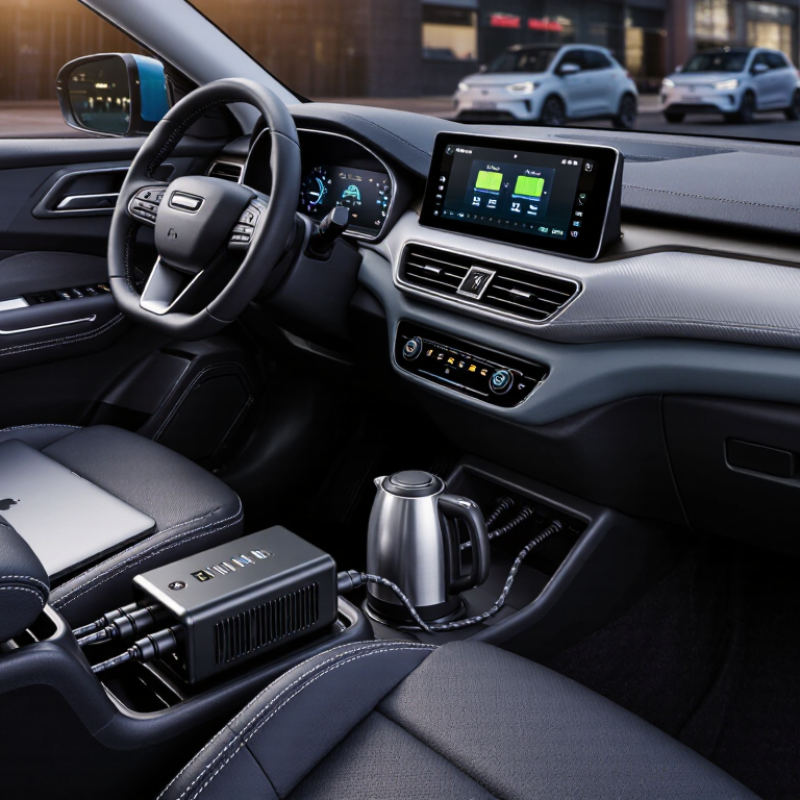
How to Choose a Car Inverter Charger in 2026?

Understand How a Car Inverter Charger Works

How to Choose a Car Inverter Charger in 2026?

A car inverter charger combines two jobs. In inverter mode, it converts a vehicle battery’s DC power into AC power for appliances. When external AC power is available, its charger can replenish a compatible battery; a transfer switch may pass AC power through to connected devices. Check the manual carefully: some units are designed for auxiliary batteries, not direct connection to a starter battery.

The numbers explain why wiring matters. A 1,000-watt AC load draws at least 83 amps from a 12-volt source, even before conversion losses. That is a heavy current for thin cables or loose connections. Match the inverter’s continuous output to your actual loads, and check battery chemistry, charging voltage, ventilation, and low-voltage protection. A kettle and a laptop are not equivalent loads.

Small details matter. A charger’s advertised peak power may not be sustainable. The IEA’s Global EV Outlook 2025 reports that electric car sales were expected to exceed 20 million worldwide that year, underscoring the varied electrical systems now found in vehicles. Still, vehicle voltage alone does not tell you whether a charger is suitable. Confirm the battery and alternator specifications first; I would double-check this rather than assume. Safety is practical, not decorative.
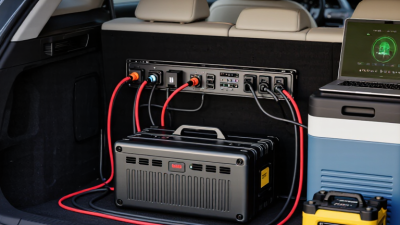
Calculate Your Power Needs and Appliance Loads

How to Choose a Car Inverter Charger in 2026? Calculate Your Power Needs and Appliance Loads

Start with the appliances you will run at the same time. Read each device’s input label, then add its running watts.

A 60-watt laptop, 40-watt LED lamp, and 700-watt coffee maker total 800 watts.

Check motorized appliances separately: refrigerators and pumps can draw much more power briefly when starting. Surges matter.

Next, estimate runtime. An 800-watt load running for one hour needs 800 watt-hours of AC energy.

If you allow for roughly 90% inverter efficiency, the battery must supply about 890 watt-hours, before wiring losses. At 12 volts, that is roughly 74 amps.

This is a substantial draw. Check the vehicle’s electrical-system limits, cable requirements, and inverter specifications; a socket rating alone may not support the load.

EIA’s 2020 Residential Energy Consumption Survey reports average household electricity use of about 10,500 kilowatt-hours per year.

That broad average is useful context, but it cannot size a car system: short, simultaneous peaks matter more than annual use.

I still find estimates imperfect. Measure uncertain loads with a watt meter, and leave capacity for startup surges and small losses. A little headroom helps.

Match Inverter Capacity to Your Vehicle and Battery

A car inverter charger must fit the vehicle’s electrical system, not just the appliances you plan to run. The U.S. Department of Energy’s Alternative Fuels Data Center explains that electric vehicles use a low-voltage auxiliary battery alongside the high-voltage traction battery. Use only a vehicle-approved low-voltage connection; never treat the traction pack as a plug-in power source. Check the battery label, alternator rating, and vehicle manual before choosing capacity.

Estimate current before buying. A 300-watt AC load needs about 28 amps from a 12-volt battery when inverter efficiency is assumed to be 90 percent. That is a substantial draw for a small starter battery. SAE J537 measures battery reserve capacity by how long it supplies 25 amps under a specified test, so the rating can help compare batteries—but it does not guarantee runtime with your inverter. Real results vary with battery age, temperature, and wiring. This estimate is imperfect; measure your actual load if possible.

Tips: Add the wattage of devices running at the same time, then allow headroom for startup surges from tools or compressors. Match the charger’s voltage and charging profile to the battery chemistry. Avoid running high loads with the engine off, and follow the vehicle and battery manuals. A bigger inverter alone will not create more battery capacity.

How to Choose a Car Inverter Charger in 2026: Match Capacity to Your Vehicle and Battery

This chart estimates the nominal capacity of a 12 V battery bank needed to run each inverter at its full continuous rating for one hour. It assumes 90% inverter efficiency and 80% usable battery capacity; actual requirements vary with load, battery chemistry, temperature, and battery condition. Check your vehicle’s available alternator output and the inverter’s surge rating, and use appropriately rated cables and fuses. A vehicle’s starter battery is generally not intended for prolonged deep discharge.

Check Charging Compatibility, Safety, and Installation Requirements

A car inverter charger must match the vehicle’s electrical system and the battery it will charge. Check whether the system is 12 or 24 volts, then confirm the charger supports your battery chemistry and charging profile. Compare its continuous output with your actual loads, not just the peak number on a device label. A kettle and a laptop have very different demands. Check the labels. Also verify that the vehicle’s alternator can support the added charging load; a large charger may draw more current than expected.

Safety depends on more than the charger itself. Use the cable size and fuse rating specified by the manufacturer, with the fuse installed close to the battery. Keep cables short where practical, protect them from sharp metal edges, and secure the unit so it cannot shift during a sudden stop. Allow room for airflow. Heat needs somewhere to go. Never assume a tidy installation is a safe one; inspect connections for looseness and signs of heat after initial use.

Before buying, measure the mounting space and check the manual for required clearances, ventilation, and input wiring. Decide whether the unit will connect to a starting battery or a separate auxiliary battery; the wrong setup could leave the car unable to start. Installation details are easy to overlook, even when the electrical specifications look right. If the wiring or current draw is unfamiliar, ask a qualified vehicle electrician to review the plan. A second check is worthwhile.

Compare 2026 Models by Features, Efficiency, and Warranty

When comparing 2026 car inverter-chargers, check continuous output, surge capacity, charging current, and protection features—not peak wattage alone. A 1,000-watt kettle can overload a unit rated for 800 continuous watts, even if its surge rating looks impressive. Pure sine-wave output suits sensitive electronics; low-voltage cutoff, over-temperature shutdown, and reverse-polarity protection help guard the vehicle battery and equipment. Small details matter.

Efficiency needs context. NREL’s PVWatts technical reference uses 96% as a default inverter-efficiency value for solar modeling. That is not a car-inverter test, but it shows why ratings need a stated test method and load. Compare efficiency at the power levels you actually use, and check idle draw if the unit stays connected overnight. A tidy spec sheet can still mislead.

Warranty comparisons deserve equal care. Check the term, exclusions, repair or replacement process, and whether shipping or labor is covered; a longer warranty is not automatically better. Also compare charging behavior with your battery type and the vehicle’s available wiring. A high-current charger may need thicker cable and careful installation. I would verify these points in the manual, not just the sales listing.