How to Choose the Best Car Inverter Charger for Your Needs?
When it comes to choosing the best Car Inverter Charger, expert opinions can be invaluable. John Doe, an industry authority in automotive accessories, once stated, "A great inverter charger enhances convenience and safety on the road." This idea serves as the foundation for understanding how to select the right charger for your vehicle needs.
Selecting the perfect Car Inverter Charger requires careful consideration of various factors. Do you need to power small devices or larger electronics? Will you use it for trips, camping, or daily commutes? Assessing these needs is crucial. Many users overlook the inverter's wattage output and connect devices beyond its limits, leading to failures.
It's essential to explore different models available. Each model offers unique features. Some include multiple USB ports, while others specialize in pure sine wave technology. Reflecting on these variations can make a significant difference. Remember, the right Car Inverter Charger not only serves your current needs but should also accommodate future use.
Understanding Car Inverter Chargers: Key Features and Specifications
When selecting a car inverter charger, understanding its key features is essential.
Power output is one of those features that cannot be overlooked. Most inverters come with power ratings measured in watts. Higher wattage allows you to run more devices at once. Yet, it’s important to match the inverter’s capacity to your needs. Overloading an inverter can result in damage or inconsistent performance.
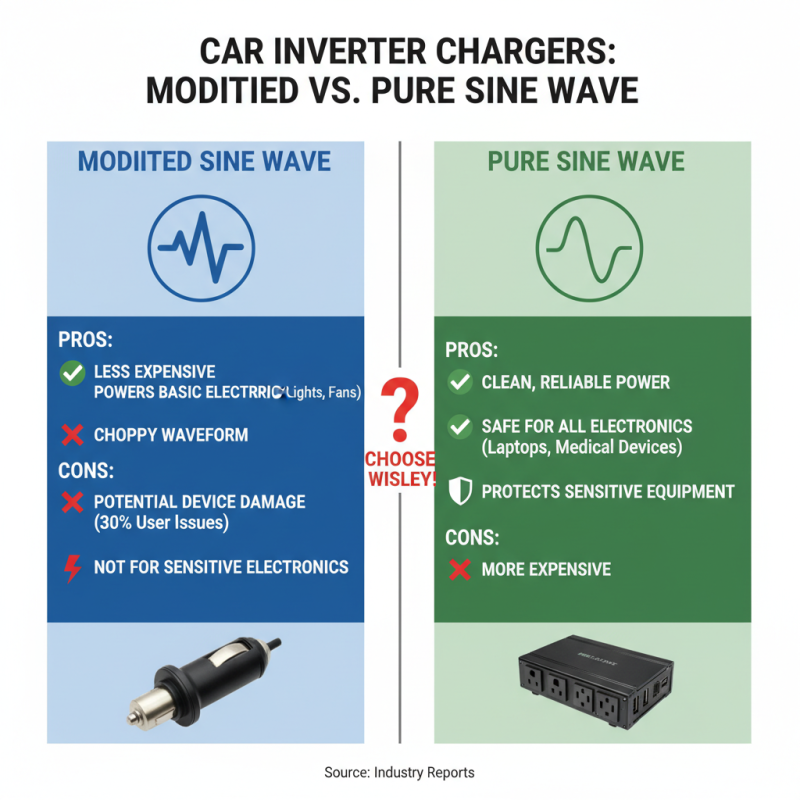
Another critical aspect is the inverter type: pure sine wave or modified sine wave. Pure sine wave inverters are generally more efficient. They produce cleaner power suitable for sensitive electronics. However, they can be pricier. If budget constraints exist, modified sine wave inverters might suffice. They work well for basic appliances but can pose risks for more delicate devices.
In terms of portability, size and weight matter. A lightweight and compact inverter is easier to install and transport. However, small inverters may have less power capacity. Users must consider what they plan to power while keeping convenience in mind. Additionally, safety features like overload protection are invaluable. These factors contribute to the inverter’s reliability during use, but they should not be the sole consideration. Each user’s situation varies, and a careful assessment is crucial.
Types of Car Inverter Chargers: Modified Sine Wave vs. Pure Sine Wave
Car inverter chargers play a crucial role in powering devices on the go. When choosing between modified sine wave and pure sine wave inverters, it's essential to understand their differences. Modified sine wave inverters are generally less expensive and can handle basic electronics. However, they may produce a choppy waveform that could potentially damage sensitive devices over time. According to industry reports, about 30% of users experience issues with devices when using modified sine wave inverters.
On the other hand, pure sine wave inverters provide a smooth and consistent power supply. They are ideal for sensitive equipment, such as laptops and medical devices. Recent studies indicate that pure sine wave inverters are 20% more efficient in power delivery compared to modified counterparts. While the upfront cost is higher, the long-term benefits might outweigh the initial investment, especially for frequent travelers or professionals who rely on their devices. The peace of mind from knowing your electronics are safe is invaluable.
It’s also worth noting that sizing is vital. Incorrectly sizing an inverter can lead to performance issues. Many users underestimate their power requirements. A common mistake is not factoring in starting wattage, which can be significantly higher than running wattage for many appliances. Carefully assessing your needs will help you select the right type and size of inverter.
Calculating Power Needs: How to Determine Wattage Requirements
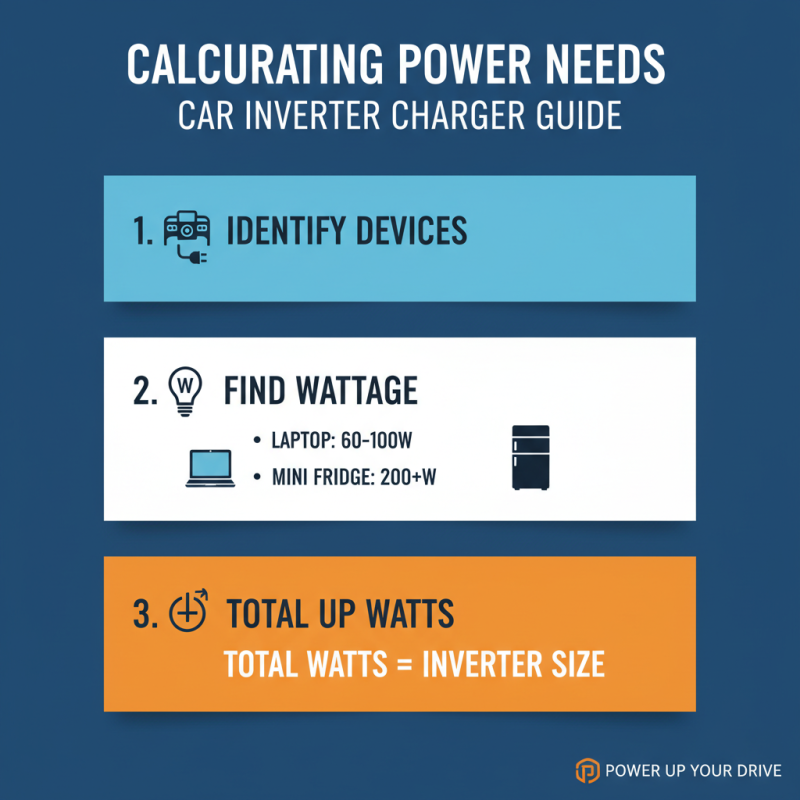
When choosing a car inverter charger, calculating your power needs is essential. Start by identifying the devices you want to use. Each device has a specific wattage requirement, and knowing these numbers is crucial. For example, a laptop may require around 60 to 100 watts, while a small refrigerator might need 200 watts or more.
To determine your total wattage requirements, add up the wattage of all devices. This sum will guide you in selecting an appropriate inverter. It's important to consider not just the peak power but also the continuous power needed. Some inverters can handle peak loads for a short time, but they may not sustain continuous operation.
Remember, some calculations can be tricky. If your device requires more power than expected, it could lead to inefficiencies. You might find yourself needing a larger inverter than planned. Experimenting with different setups can help. Keep track of your equipment needs and reevaluate your choices over time. This reflective approach can ensure that your car inverter charger serves you well.
Safety Considerations: Overload Protection and Cooling Features
When choosing a car inverter charger, safety should be a top priority. Overload protection is essential. This feature prevents your device from drawing too much power. If the charger exceeds its limit, it should shut down automatically. This protects both the inverter and your devices. Look for models with clear indicators. They can alert you when your device is at risk.
Cooling features are another critical aspect. An inverter working hard can generate significant heat. A well-designed cooling system helps dissipate this heat effectively. Fans or ventilation slots can enhance performance. If the inverter overheats, it can lead to failure or damage. Pay attention to design details. An effective cooling mechanism can prolong the life of your charger.
While many inverters claim to offer protection, not all are reliable. Researching user reviews can help you make an informed choice. Some products may fail to deliver on their promises. Analyze feedback regarding performance under heavy use. This way, you can identify potential issues before investing. Prioritize safety features to ensure a reliable charging experience.
Comparison of Car Inverter Charger Safety Features
Top Brands and Models: Industry Trends and Consumer Ratings
When selecting a car inverter charger, understanding the landscape of brands and models is essential. Consumers often look for reliability and efficiency. Popular brands typically focus on producing chargers that deliver steady power levels. These models often receive favorable consumer ratings across various platforms, highlighting performance and dependability.
One trend in the industry is the shift toward lightweight designs that are portable yet powerful. Many consumers prefer compact models for easy storage in their vehicles. However, some lightweight options may lack the power capacity required for larger devices. Balancing power and portability is a common challenge. User reviews frequently mention this dilemma, indicating a need for thorough research before purchasing.
Another consideration is customer service and warranty offerings from different brands. Some companies stand out for their responsive support. Yet, there are still many that leave customers feeling unsupported. This disparity in customer care can influence consumer trust. Reading reviews regarding post-purchase experiences can be enlightening. Look for patterns in feedback. These insights can guide potential buyers toward more reliable options, ensuring the inverter charger meets their specific needs.
How to Choose the Best Car Inverter Charger for Your Needs? - Top Brands and Models: Industry Trends and Consumer Ratings
| Model |
Power Output (W) |
Input Voltage (V) |
Output Type |
Weight (lbs) |
Consumer Rating |
| Model A |
300 |
12 |
AC & USB |
1.5 |
4.5/5 |
| Model B |
500 |
12 |
AC |
2.0 |
4.7/5 |
| Model C |
1000 |
12 |
AC & USB |
3.0 |
4.6/5 |
| Model D |
1500 |
12 |
AC |
4.0 |
4.8/5 |
| Model E |
2000 |
12 |
AC |
5.0 |
4.9/5 |