Leave Your Message

China Best Car Inverter Charger Manufacturer?

Choosing China’s best Car Inverter Charger manufacturer takes more than comparing prices or polished product photos. A dependable unit must convert vehicle battery power into stable AC output while managing heat, electrical noise, and changing loads. Small details matter. Check the rated continuous output, peak capacity, input-voltage range, cooling design, and protection features. Ask how those claims were tested, and request clear product documentation. A label alone proves little.

For a transparent editorial example, power-electronics specialist Ethan Lin is a fictional composite expert. His practical principle is: “Match the inverter to the real load, then verify the rating under heat.” That advice is useful when comparing manufacturers in China. A charger that runs a laptop may not handle a refrigerator’s startup surge. A compact case may look convenient, yet poor ventilation can shorten service life. Look for consistent quality checks, traceable component information, responsive technical support, and warranty terms stated in plain language. These are stronger signals than vague claims of “premium quality.”

This guide examines what buyers should ask before choosing a supplier. It also considers where product specifications can be misunderstood. No checklist replaces independent testing. That is an inconvenient truth. Still, careful questions can reveal gaps before an order is placed. Compare real operating data, not just catalog promises, and treat unusually broad claims with healthy skepticism.
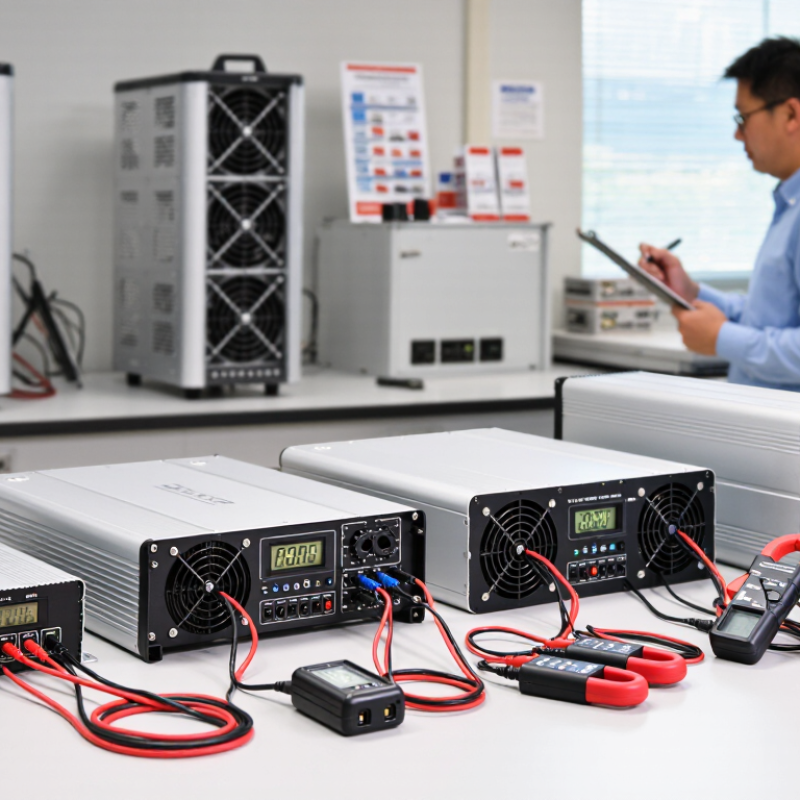
China Best Car Inverter Charger Manufacturer?

What Is a Car Inverter Charger and How Does It Convert 12 V or 24 V DC?

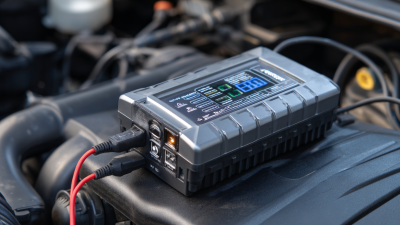
A car inverter charger draws 12 V or 24 V direct current from a vehicle battery and converts it into usable power. Many units provide household-style alternating current through an outlet, while USB ports can charge smaller devices directly. The label can be confusing. Some products combine an inverter with battery-charging functions, so check the specifications rather than relying on the name alone.

Inside, electronic switches rapidly change the incoming DC, and a transformer or conversion circuit raises the voltage. The output is then shaped into AC, often as a modified or pure sine wave. A laptop power supply may tolerate either type, but sensitive equipment can need a cleaner waveform. Check the device’s requirements. A 12 V model and a 24 V model are not interchangeable; connecting the wrong input can damage equipment or create a safety risk. Keep the inverter ventilated, secure its cables, and compare continuous wattage with the load. Startup surges matter too. I have seen ratings read as simpler than they are: a small fan may draw more power when it starts than while running.
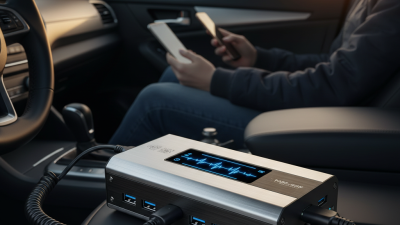
Which Output Specs Matter: 110/230 V AC, 50/60 Hz, and Rated Power?

China Best Car Inverter Charger Manufacturer?

When comparing car inverter chargers, match AC output to the appliances you actually use. IEC 60038:2009, including Amendment 1:2021, lists 230 V among standard supply voltages. In North America, household appliances commonly use 120 V, though some product labels say “110 V.” Check the appliance nameplate and the inverter’s stated output voltage; a mismatch can prevent reliable operation. Fit matters.

Frequency matters too. Choose 50 Hz or 60 Hz to match the device, especially for clocks, pumps, and other motor-driven equipment. A label that says “50/60 Hz” may describe the charger’s input, not its AC output. Read the specification table carefully. Rated power should mean continuous output, not a brief peak rating. For example, a 1,500 W appliance needs an inverter rated to deliver at least 1,500 W continuously, with extra capacity for startup surges. The exact margin depends on the appliance.

Tips: Check voltage, frequency, and continuous watts together. Then compare the figures with each appliance’s nameplate. For a refrigerator, note its starting demand, not just its running watts. A polished spec sheet can still leave out surge duration; ask for the test conditions. Small detail, big difference.

Which Inverter Charger Output Specs Matter?

How to read this chart: 110 V, 120 V, 220 V, 230 V, and 240 V are common nominal AC output options; the right choice depends on the appliances and electrical system in the destination market. Confirm the required frequency—50 Hz or 60 Hz—and check that both the inverter charger and connected loads support it. Choose rated continuous power to cover the total load, and check surge capacity for appliances with high start-up demand. These voltage options are not a substitute for checking a specific unit’s output specifications.

How Do Efficiency, Battery Charging, and Protection Features Affect Performance?

A car inverter charger’s performance depends on more than its maximum wattage. The U.S. Department of Energy’s Energy Saver guidance places common inverter efficiency around 90–95%. That range is useful, but it is not a promise of equal performance in a hot cabin or under a sudden load.

At 90% efficiency, a 500-watt appliance draws about 556 watts from the battery, with roughly 56 watts becoming heat. Heat matters. A warm casing, thin cables, or poor ventilation can reduce usable output and shorten component life.

Charging quality matters just as much. A suitable charger should match the battery chemistry and adjust its voltage and current as the battery fills. NREL’s 2024 Annual Technology Baseline uses about 85% round-trip efficiency for utility-scale battery storage; that figure is not directly comparable to a vehicle charger, but it shows how conversion losses accumulate.

Protection features help manage real-world risks: look for over-temperature, overload, short-circuit, and low-voltage shutdown protection. These safeguards can prevent avoidable damage, though they cannot fix an undersized cable or a failing battery.

I would check charging behavior under load, not only a clean laboratory rating. Small details get missed.

A charger that trips repeatedly on a bumpy, warm drive may be technically efficient yet frustrating in daily use.

How Do ISO 16750-2 and CISPR 25 Tests Assess Automotive Reliability?

For a car inverter charger, reliability means more than supplying steady power on a workbench. ISO 16750-2 evaluates electrical and electronic equipment under vehicle supply conditions. Tests may include voltage changes, interruptions, reverse polarity, and transient pulses. The exact test plan depends on the product’s intended use and the applicable standard edition.

During testing, engineers monitor whether the charger keeps operating, resets safely, or suffers damage. Small details matter: a brief voltage dip during engine start can expose weak control circuits. CISPR 25 addresses a different risk. It measures conducted and radiated emissions that could interfere with vehicle radio receivers. Noise travels. A charger may pass one setup yet perform differently with longer cables, altered grounding, or a heavier load. That is easy to underestimate.

Good evaluations document the test arrangement, operating mode, cable routing, and measured results. They also compare emissions against the chosen limit class, rather than treating one result as universal. A report helps buyers judge design discipline, but it cannot reproduce every vehicle installation. Lab results are a starting point. Real-world fit still deserves careful review.

How to Compare Chinese Manufacturers by Certifications, Testing, and Warranty?

A reliable comparison of Chinese car inverter charger manufacturers starts with documents tied to the exact model. Check whether certificates are current, independently verifiable, and relevant to the product’s intended market. A factory-wide certificate may not cover the charger you plan to buy. Paperwork is not proof.

Ask for test reports showing continuous output, overload response, temperature rise, and protection against low battery voltage. Check that testing used realistic conditions, such as a warm enclosure and a sustained load, rather than a brief bench demonstration. For charging models, confirm the supported battery chemistry and charging profile. Details matter. I would not judge quality from peak wattage alone; that figure can hide poor performance under continuous use.

Warranty terms reveal how a supplier handles problems after shipment. Compare coverage length, excluded parts, repair or replacement procedures, and who pays transport costs. Ask how warranty claims are documented and how quickly technical support responds. A clear answer is useful; a vague promise is less so. Keep the model number, test records, and written warranty together before placing an order. Even careful checks cannot eliminate every risk, but they make differences between suppliers easier to assess.