How to Choose the Best Ev Wall Charger for Your Needs?
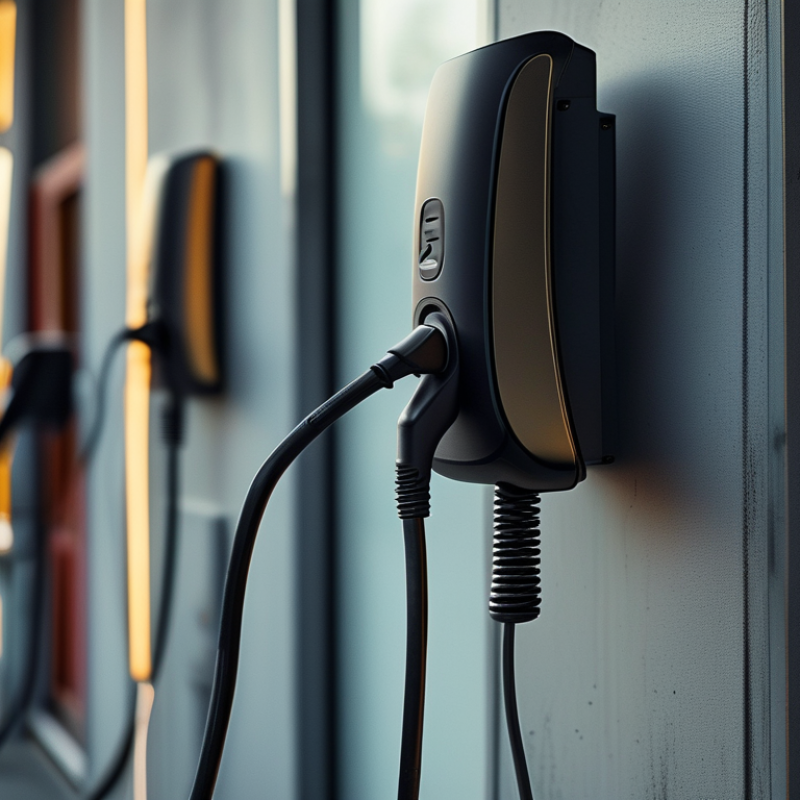
Choosing the right EV Wall Charger can significantly impact your electric vehicle experience. With more options available, the decision may feel overwhelming. A well-chosen charger meets your daily needs and ensures convenience.
Consider compatibility with your vehicle. Not all chargers work with every model. Researching specifications helps you avoid the frustration of purchasing an incompatible unit. Look for reputable brands that deliver reliable performance. Reviews from experienced users can guide your choice.
Think about your charging speed requirements. Fast chargers save time, but they may cost more. A slower charger might suffice for overnight charging. Reflect on your habits and driving patterns. Ultimately, finding the perfect EV Wall Charger requires a balance of features and budget. Your choice will shape your EV journey.
Factors to Consider When Choosing an EV Wall Charger
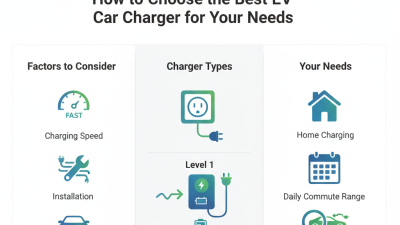
When selecting the right EV wall charger, consider several key factors. Start with charging speed. Look for the charger’s power rating. A higher rating means quicker charging times. Check the compatibility with your electric vehicle. Some chargers work better with specific brands and models. This detail is crucial for optimal performance.
Location plays a major role too. Evaluate where you’ll install the charger. If it’s outdoors, ensure it has weatherproof features. Indoor installations need to consider available electrical outlets. Think about the current wiring in your home; older systems may require upgrades to handle new chargers.
User experience is another important aspect. Read reviews from other EV owners. Their feedback can reveal common issues or benefits. Installation is often overlooked, yet it heavily impacts usability. Poorly installed chargers can lead to inefficiencies and safety problems. Reflecting on these factors can help guide your decision.
How to Choose the Best EV Wall Charger for Your Needs?
| Feature |
Description |
Importance Level (1-5) |
| Charging Speed |
The speed at which the charger can replenish your vehicle's battery based on its power output (measured in kW). |
5 |
| Compatibility |
Ensure the charger works with your electric vehicle make and model. |
4 |
| Installation Type |
Consider whether you need a hardwired or plug-in charger, and the electrical infrastructure available at your location. |
3 |
| Smart Features |
Some chargers come with Wi-Fi connectivity for smart scheduling, monitoring, and integration with home energy management systems. |
4 |
| Safety Features |
Look for features such as surge protection and automatic shut-off to enhance safety during charging. |
5 |
| Warranty and Support |
Longer warranties can provide assurance of the product's reliability and the company's customer support responsiveness. |
4 |
| Cost |
Evaluate the total cost including installation, to find a charger that fits your budget. |
5 |
Understanding Charger Types: Level 1 vs. Level 2 Options
When choosing an EV wall charger, understanding charger types is crucial.
Level 1 chargers use standard household outlets. They are easy to install and require no special equipment. However, they charge slowly. A full charge could take over eight hours.
This option is suitable for those who have ample overnight charging time.
Level 2 chargers are more powerful. They connect to a 240-volt outlet, allowing faster charging. A full charge may only take three to six hours.
This choice is ideal for daily commuters or households with multiple EVs.
While installation might cost more, the time saved is significant.
Tips: Consider your routine. If you're often on the go, a Level 2 charger could be beneficial.
Also, calculate installation costs. Sometimes, it's worth investing in faster charging capabilities.
Look for user reviews to gauge reliability and performance before making a decision.
Choosing the right type can greatly affect your EV experience.
Evaluating Charging Speed: kW Rating and Its Impact on Charging Time
When choosing an EV wall charger, one crucial aspect to consider is the charger’s kW rating. The kW rating directly impacts how quickly your vehicle charges. A higher kW rating generally means faster charging times, which can be significant for busy users. For example, a 7 kW charger might fully charge a typical EV in 4-6 hours, while a 22 kW charger could do it in 1-2 hours. However, keep in mind that your vehicle needs to support higher charging speeds for maximum efficiency.
Tips: Look for your vehicle’s maximum charging capacity. This ensures that you select a charger that complements your EV. Also, think about your daily driving habits. If you usually drive short distances, a lower kW charger might be sufficient. A balance between speed and power capacity is essential.
Another detail to evaluate is the power source available at your location. If your home’s electrical system can’t handle higher loads, investing in a high kW charger could be a waste. The right choice depends on various factors. Sometimes, a simpler solution is better for your needs. Always weigh your options carefully before committing to a purchase.
Assessing Installation Requirements and Electrical Compatibility
When selecting an EV wall charger, understanding installation requirements and
electrical compatibility is crucial. A study from the Electric Power Research Institute shows that
75% of homeowners do not know their electrical capacity. This lack of knowledge
can lead to improper charger selection. It's essential to check your electrical panel capacity before choosing a charger.
Most chargers require a 240-volt outlet, but many homes only have 120-volt outlets.
Installation can also vary significantly. Some chargers may need dedicated circuits or upgrades to electrical panels.
Depending on your home's wiring, you might face additional costs. About 40% of homeowners
are unaware of these potential changes. It's wise to consult a certified electrician for accurate assessments.
They can help determine if your wiring meets the requirements of the charger.
Different locations may pose unique challenges. If your garage lacks adequate space, consider chargers with flexible installation options.
Some models offer wall-mounted configurations. Flexibility can save space and reduce clutter. Additionally, the National Renewable
Energy Laboratory estimates that 30% of potential charger users do not prioritize these factors.
This oversight can lead to unsatisfactory charging experiences. Evaluating your specific needs and installation capabilities is
paramount for a successful EV charging setup.
Cost Analysis: Initial Investment vs. Long-Term Savings in Charging Costs
When considering an EV wall charger, one must weigh the upfront investment against long-term savings. A reputable analysis shows that the initial cost for home chargers typically ranges from $500 to $2,000. While this may seem steep, understanding potential savings is crucial. According to a recent study, charging an EV at home can be up to 60% cheaper than traditional gasoline costs over time.
A detailed report from the Department of Energy outlines that homeowners with EVs save nearly $800 annually on fuel compared to gasoline vehicles. The average EV owner drives about 13,500 miles per year. With electricity rates averaging around $0.13 per kWh, the total annual charging cost can be as low as $500. In contrast, gasoline costs can significantly exceed this during volatile oil market conditions.
However, the calculation isn’t always straightforward. Depending on your location, local electricity rates might change the equation. Additionally, the longevity of the charger itself should be considered. Some EV chargers may require replacement after a decade, leading to unanticipated costs. Balancing these factors is essential to make an informed decision about the best wall charger for your needs.