How to Choose the Best Car Fast Charger for Your Needs?
Choosing the right Car Fast Charger can be challenging. With multiple options available, it’s vital to understand your needs. According to automotive expert John Smith, “The right charger can enhance your driving experience significantly.” His insight highlights the importance of selecting a charger that fits your vehicle and lifestyle.
Many factors come into play when choosing a Car Fast Charger. Charging speed, compatibility, and portability matter greatly. If you often drive long distances, a high-wattage charger can be beneficial. Conversely, for daily commutes, a compact charger might suffice. People often overlook these specifics, leading to frustration when their charger doesn’t meet expectations.
Understanding your driving habits is essential. Not all vehicles are compatible with every charger. Careful consideration helps ensure you make the right choice. Remember, investing time in research can save you from potential mistakes. A good Car Fast Charger should simplify your charging experience rather than complicate it.
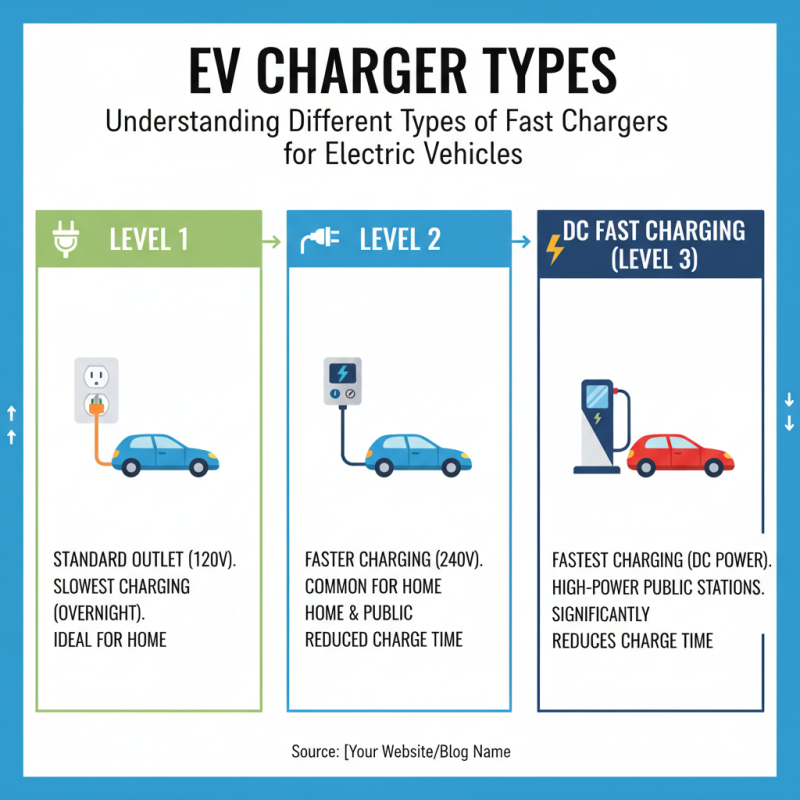
Understanding Different Types of Fast Chargers for Electric Vehicles
Choosing the right fast charger for your electric vehicle can be daunting. There are various types available, each with unique features. Level 1 chargers offer basic charging through a standard outlet. They are suitable for overnight charging but can be slow. Level 2 chargers are a step up, delivering more power and reducing charge time. They’re commonly used at home and public charging stations.
DC fast chargers are another option. These can recharge a vehicle to 80% in about 30 minutes. However, they require specialized installation and may not be available everywhere. Understanding these options is crucial. It’s essential to consider where you will most frequently charge your vehicle. Not every charging solution fits all drivers.
Many users might find their charging needs are not fully met by one type. For example, someone with a short commute might benefit from a Level 1 charger. Yet, a long-distance traveler may require the speed of a DC fast charger. Take time to assess your daily driving habits. Consider installation costs and access to charging stations. Balancing convenience with charging speed is key to making an informed decision.
Assessing Charging Speed: Watts, Amps, and Voltage Explained
When choosing a car fast charger, understanding charging speed is crucial. Charging speed is often expressed in watts (W), amps (A), and voltage (V). Watts are a product of amps and voltage, providing a clear picture of the charger's capability. For example, a 240W charger operating at 120V will provide 2 amps of current. The higher the wattage, the faster your car will charge.
In general, the optimal charging speed for electric vehicles is typically around 7.2 kW. According to the Electric Vehicle Charging Association, this level allows for efficient charging without overwhelming the vehicle's battery system. It's important to check your vehicle’s specifications. Not all cars can handle high-speed charging. Overloading a system can reduce battery life. Care and caution are paramount.
Factors influencing charging speed also include cabling and connector types. A poor-quality cable can lead to significant power loss. Regular maintenance of your charging equipment is essential. Ongoing performance assessment helps ensure that your charger is functioning effectively. Investing in reliable technology can prevent inconvenient breakdowns in your charging routine, making your overall electric vehicle experience much smoother.
How to Choose the Best Car Fast Charger for Your Needs? - Assessing Charging Speed: Watts, Amps, and Voltage Explained
| Charger Type |
Power (Watts) |
Current (Amps) |
Voltage (Volts) |
Compatibility |
| Level 1 Charger |
120W |
10A |
120V |
Most EVs |
| Level 2 Charger |
240W |
20A |
240V |
Most EVs and Plugin Hybrids |
| DC Fast Charger |
480W+ |
Rapid Charging |
400V-900V |
Compatible EVs with DC Fast Charge Capability |
| Wireless Charger |
Up to 7.7W |
Variable |
Varies |
Select EVs with Wireless Charging Capability |
Key Features to Look for in a Car Fast Charger: Safety and Compatibility
Selecting a car fast charger requires careful consideration of several key features. Safety must be a top priority. Look for chargers that include built-in protection against overcharging, overheating, and short circuits. A recent industry report indicates that nearly 30% of charger-related incidents stem from inadequate safety measures. High-quality fast chargers should adhere to recognized safety standards, such as UL or CE certifications.
Compatibility is another crucial factor. Many chargers are designed to work with specific vehicles and battery types. Ensuring that the charger is compatible with your car's model can prevent potential damage. A study by the Electric Vehicle Association found that mismatched chargers can lead to reduced efficiency and, in some cases, voided warranties. Verify the voltage and current ratings. Chargers with intelligent distribution systems can adapt to your vehicle's needs.
Consider the cord length and design as well. Some users prefer longer cables for convenience. However, longer cables can sometimes lead to power loss. This means less efficient charging, which is frustrating during long trips. Think about your charging habits. Are you often in a hurry? If so, investing in a high-quality, reliable car fast charger can save you time and trouble.
Battery Charge Times of Different Charger Types
Evaluating Cost vs. Performance: What You're Getting for Your Budget
When selecting a car fast charger,
cost and performance are key factors.
A lower-priced model might appeal to your budget, but it often lacks quality.
For instance, cheaper chargers can have slower charging times.
This delay can negate the convenience a fast charger should provide.
Prioritize chargers that offer a balance of speed and efficiency.
Consider investment in a charger that enhances your driving experience.
The materials used in construction also matter. High-quality chargers tend to have better durability.
Look out for reviews that discuss real-world performance. Some models might promise fast charging but underdeliver.
Pay attention to compatibility with your vehicle.
Not every charger works with every car model.
Researching user experiences can give you a better understanding of what to expect.
Reflect on your charging needs.
Do you often take long trips or require quick top-ups during short stops?
Your driving habits will influence your choice.
Spending a bit more for a charger with robust performance can save time in the long run.
Make informed decisions, and don’t settle for less just to save a few dollars.
User Reviews and Industry Ratings: Finding the Best Options Available
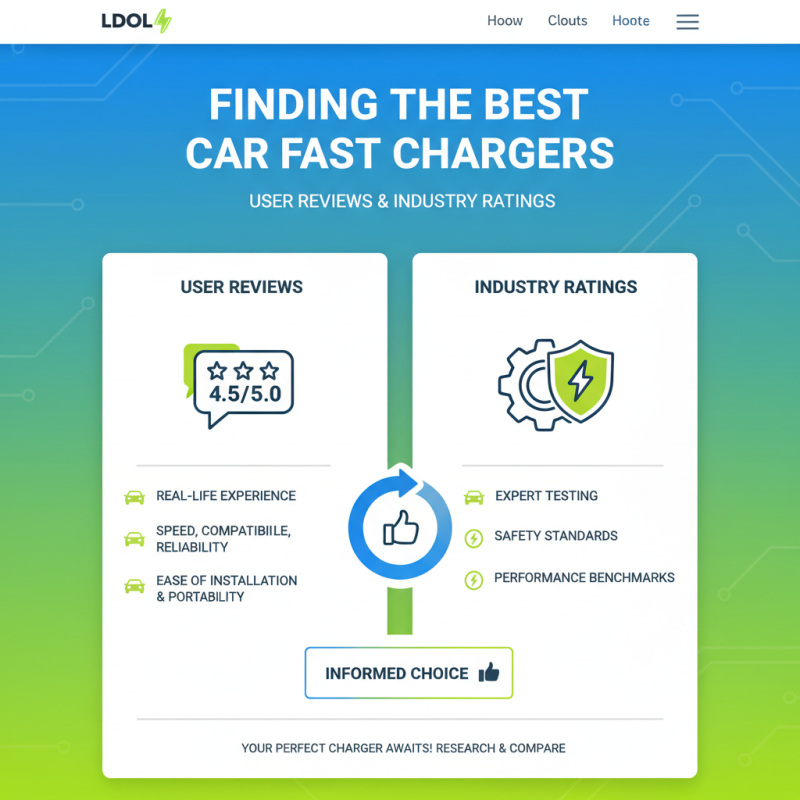
When selecting a car fast charger, user reviews can be invaluable. Many drivers express their real-life experiences online. They discuss speed, compatibility, and reliability. A charger that works well for one vehicle may not be ideal for another. Checking reviews helps narrow down options that suit your specific needs. Users often highlight practical aspects, such as ease of installation and portability.
Industry ratings also play a significant role in your decision-making process. Professional evaluations consider factors like safety, charging speed, and durability. These ratings provide insights backed by testing and expertise. However, not all ratings are created equal. Some might focus on performance, while others prioritize cost-effectiveness. Balancing both perspectives is essential for making a sound choice.
It's worthwhile to reflect on mixed feedback from users. Sometimes, a highly-rated charger may have critical flaws. Users cite issues like overheating or inadequate customer service. These aspects should not be overlooked. Pay attention to recurring themes in reviews. They often reveal deep insights into long-term performance and user satisfaction.