How to Choose the Best EV Home Charger for Your Needs?
Choosing the right EV home charger can feel overwhelming. There are many options available, and each has unique features. Your decision should reflect your specific needs and driving habits.
Understanding your electric vehicle (EV) is crucial. Different EVs have different charging requirements. For instance, some models charge faster than others. This aspect impacts which EV home charger is best for you.
Consider your home's electrical system as well. Not every charger is compatible with every electrical setup. It's essential to assess your home's capacity. This can help prevent overloading circuits. While this choice seems simple, the wrong decision can lead to frustration and inefficiency. So take your time and weigh the options carefully.
Understanding Your Electric Vehicle Charging Needs
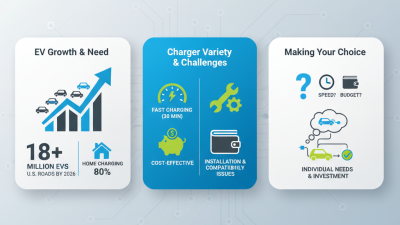
When choosing an electric vehicle (EV) charger, it's vital to understand your unique charging needs. The average American driver travels about 30 miles per day. For most EVs, that means an overnight charge at home can be sufficient. However, if your daily commute is longer, a faster charging option may be necessary. According to a report by the U.S. Department of Energy, home charging stations can often deliver between 3.7 kW to 22 kW. This range allows flexibility depending on your vehicle's requirements and battery size.
Consider the charging speed you need. Level 1 chargers are simple but slow, with a charging rate of about 4 to 5 miles of range per hour. Level 2 chargers can add around 25 miles of range in an hour, making them more suitable for daily needs. The International Energy Agency projects that global EV sales could reach 23 million by 2030, emphasizing the growing demand for home charging solutions.
Installation also matters. Calculate the electrical capacity of your home. A common challenge is finding sufficient power supply to support faster chargers. Additionally, local regulations may impact installation options. Some homeowners have faced permit issues, leading to delays. This underscores the importance of planning and consulting with professionals before making a purchase.
Types of Home EV Chargers: Level 1 vs Level 2
When considering home EV chargers, understanding the types is crucial. Level 1 chargers use a standard 120-volt outlet. They are accessible and easy to set up. However, they charge slowly, typically adding a few miles of range per hour. This may not meet the needs of daily EV drivers.
Level 2 chargers operate at 240 volts, offering much faster charging times. They can provide up to 25 miles of range per hour. This makes them more suitable for regular use, especially for those with longer commutes. Installation may require professional help, increasing initial costs. Still, the convenience can be worth it.
Selecting between these options depends on daily driving habits and necessity for speed. Some users might find Level 1 sufficient. Others may reflect on the time they spend waiting for a charge with a Level 1 option. Weighing costs against time saved is essential. A well-considered choice can enhance the EV experience significantly.
How to Choose the Best EV Home Charger for Your Needs? - Types of Home EV Chargers: Level 1 vs Level 2
| Charger Type |
Charging Speed |
Voltage |
Amperage |
Installation Cost |
Best Use Case |
| Level 1 Charger |
2-5 miles per hour |
120V |
12-16A |
Low ($0-$300) |
Occasional use or hybrids |
| Level 2 Charger |
10-60 miles per hour |
240V |
16-80A |
Moderate to High ($300-$1,500) |
Daily drivers and fast charging |
Assessing Charger Compatibility with Your EV Model
When selecting an EV home charger, compatibility with your vehicle is crucial. Different electric vehicle models may require specific charger types. Understanding the charging standards is essential. Most EVs use Level 2 chargers for optimal charging speeds. However, some may support only standard Level 1 options. You should thoroughly check your car's specifications.
Another significant detail is the connector type. There are various connector formats, like J1772 for most models and CCS or CHAdeMO for fast chargers. Ensure your EV’s charging port matches the selected charger. Misalignment can result in delays and inconveniences. Sometimes, car manufacturers can change connector types, leading to confusion.
Installation location also matters. Consider where you park. Ideally, your charger should be near your parking space for easy access. That said, running extensive wiring might complicate installation. Reflecting on these details helps make an informed choice. You may find yourself revising decisions as you learn more about your EV and its charging needs. Engaging with local EV communities can also provide insight into common charging challenges.
Evaluating Installation Requirements and Costs
When choosing an EV home charger, it's crucial to assess installation requirements and costs. An estimated 75% of homeowners will need a dedicated circuit for optimal performance. This involves understanding local regulations and potentially upgrading your electrical panel to support a Level 2 charger, which can provide faster charging speeds. Reports indicate that installation costs can range from $800 to $2,500, depending on electrical infrastructure. Homeowners should consider these factors seriously.
In many cases, unexpected challenges arise during the installation process. For instance, the distance from the electrical panel to the charging location can significantly impact costs. Installation might require trenching or running conduit, which adds to the expense. According to a survey by the Electric Vehicle Association, about 30% of customers regretted not researching installation details beforehand. To avoid similar pitfalls, consult with a licensed electrician who has experience with EV chargers. This not only ensures compliance with safety standards but also helps in receiving accurate cost estimates tailored to your home.
Exploring Smart Features and App Integration
When selecting an EV home charger, consider smart features and app integration. Many chargers now offer Wi-Fi connectivity. This allows for easier monitoring of charging progress. Users can view real-time data on their smartphones. This feature enhances user control and convenience.
Stay alert for chargers with scheduling options. You can program the charger to operate during off-peak hours. This can lead to significant savings on energy bills. Some apps also provide notifications when charging is complete. This helps users manage their time better.
Tip: Look for chargers that integrate with smart home systems. This can make managing your energy usage more efficient. Explore user reviews for insights into the usability of features. Remember, not every feature may suit your needs. You may find some functions unnecessary over time. Reflecting on your priorities will guide your final choice.