Leave Your Message

10 Best EV Charging Points for Global Buyers

Choosing an Ev Charging Point is not just a matter of finding the highest charging speed. A unit that works well in one home, apartment block, or fleet depot may be unsuitable elsewhere. Electrical supply, connector standards, climate, installation options, and local service coverage all affect the decision. Details matter.

This guide introduces ten charging points for buyers comparing options across global markets. It considers practical factors such as charging capacity, smart features, cable design, compatibility, warranty information, and support availability. A clear display, a sturdy cable, and dependable app controls can make everyday charging simpler. But specifications alone do not tell the whole story. A powerful charger may bring little benefit if a vehicle cannot use its full output or a property’s electrical system needs costly upgrades.

Availability and product versions can change by region, so buyers should confirm current specifications with manufacturers and qualified installers. They should also check that equipment meets applicable local requirements before purchase. This comparison is a starting point, not a substitute for site-specific advice. Some details are hard to compare fairly. Warranty terms and after-sales service, for example, may matter more than a feature-rich app. The best choice is usually the one that fits the vehicle, property, budget, and daily routine—not simply the one with the longest feature list.

10 Best EV Charging Points for Global Buyers

Understanding EV Charging Points and Their Main Types

An EV charging point is the equipment that transfers electricity to a vehicle, but the term can describe different setups. A home unit may sit beside a garage wall, while a public charger stands in a parking lot. The important distinction is how each point delivers power.

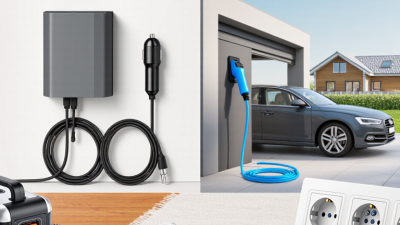
AC charging points supply alternating current, which the vehicle converts for its battery. They are common at homes, workplaces, and places where cars remain parked for hours. A compact wall-mounted unit might suit overnight charging, but available power depends on the building’s electrical supply.

Slow and steady.

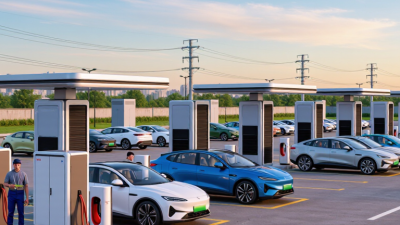
DC fast chargers convert power before it reaches the vehicle, enabling higher charging rates at compatible cars. They can be useful on long trips, though actual speed varies with the vehicle, battery temperature, and state of charge. Connector types and electrical standards also differ by market, so buyers should check local compatibility before purchasing.

That detail is easy to overlook. A charger’s advertised output alone does not guarantee faster charging; the vehicle’s own limits matter too. Installation requirements deserve equal attention, and I would not assume every site can support the same equipment.

How Charging Standards and Connectors Differ Around the World

Choosing an EV charging point for international use starts with the connector, not the advertised charging speed. AC charging commonly uses Type 1 or Type 2 connectors, while DC fast charging may use CCS1, CCS2, CHAdeMO, GB/T, or other regional formats. Availability varies by country and vehicle model. A plug that looks compatible may still deliver limited power if the car’s onboard charger supports a different rating.

The electrical supply matters too. Grid voltage, current limits, and installation requirements differ across markets, so a charging unit suitable in one country may need a different configuration elsewhere. Check the vehicle inlet, charging unit connector, and rated output together. Also confirm whether the charger supports local payment methods and networks. These details are easy to overlook. A connector adapter can help in some cases, but it does not guarantee safe or full-speed charging; verify compatibility with the vehicle and a qualified installer.

Tips: Before buying, photograph the vehicle’s charging inlet and compare it with the charger specifications. Ask about regional versions, cable length, and certified installation. Keep a little room for uncertainty: published compatibility lists may not cover every vehicle variant, and standards continue to evolve.

Key Factors for Choosing an EV Charging Point

Choosing an EV charging point starts with the vehicle, not the charger’s advertised speed. Check the car’s connector type and maximum AC charging rate. A faster unit may add little value if the vehicle cannot use its full output. Measure your daily driving distance and typical parking time. For many households, overnight charging is enough.

Check the electrical supply before comparing features. Ask a qualified installer to assess available capacity, wiring condition, and installation costs. A long cable may look convenient, but it can cross a walkway or fail to reach the parked car. Measure twice. Outdoor units also need suitable weather protection and a durable enclosure, especially where rain, dust, or freezing temperatures are common.

For global buyers, confirm that the charger matches local voltage, frequency, connector standards, and service support. Requirements vary by market, so verify details with the installer and vehicle documentation. Consider safety protections, clear fault alerts, and a warranty with accessible maintenance. Smart scheduling can shift charging to preferred hours, but only if the controls are simple enough to use. It is easy to overvalue an app and overlook cable reach, repair access, or a confusing display. A clear status light may matter more on a dark driveway.

10 Best EV Charging Points for Global Buyers

10 Best EV Charging Points for Global Buyers

The best charging point is not always the one with the highest power rating. Global buyers should compare connector compatibility, charging speed, weather protection, payment options, and remote monitoring. These details shape everyday use, from a driver plugging in during rain to an operator checking a fault from another city. The International Energy Agency’s Global EV Outlook 2023 reported that public charging points grew by 55% in 2022. Its 2024 edition reported another 40% increase in 2023. The market is moving quickly, but access and charging habits still vary widely between regions.

Small details matter. For homes and workplaces, a modest AC unit can suit cars parked for hours. Busy public sites may need DC fast charging, but buyers should check grid capacity and installation costs before choosing high output. Compare safety certification against local requirements, and confirm that software supports clear pricing and useful fault alerts. A shortlist should also include warranty terms, spare-part availability, and service response times. IEA figures show growth, not reliability at every location. There is no universal winner; real site data can overturn a tidy product comparison. That is worth admitting. A low-cost unit may look best on paper, yet become a poor choice if repairs take weeks.

10 Best EV Charging Points for Global Buyers

These are common rated power tiers for AC and DC EV charging equipment, not a brand ranking. Actual charging speed depends on the vehicle, charger, installation, and local power supply.

Comparing Installation, Safety, and Smart Features

For global buyers, an EV charging point should fit the site, not just the vehicle. A home unit may need a short cable run, while a shared car park often needs load management and user access controls. Ask an installer to check circuit capacity, earthing, wall strength, and cable reach before comparing prices. Small details matter. A charger that looks compact in a brochure may block a narrow walkway.

Safety features deserve close attention. Look for clear fault alerts, temperature monitoring, weather protection, and certification accepted in the installation country. Requirements differ, so a familiar label is not automatically sufficient everywhere. The International Energy Agency’s Global EV Outlook 2024 counted about four million public charging points in 2023. It reported 40% growth that year, with fast chargers increasing 55%. That expansion makes reliable installation and maintenance more important, not less. Smart scheduling can shift charging to quieter hours; dynamic load balancing can reduce strain when several cars charge together. Yet apps and connectivity add complexity. I would compare offline operation, software support, and data controls, too. No feature list can fully predict an older building’s wiring or a flaky network, so leave room for a site-specific inspection.

10 Best EV Charging Points for Global Buyers — Comparing Installation, Safety, and Smart Features
No. Charger Type Typical Power and Supply Typical Connector Installation Considerations Key Safety Considerations Common Smart Features Best Fit
1 Portable AC charger About 1.8–3.7 kW; usually single-phase household supply, depending on voltage and current Vehicle-side Type 1 or Type 2; supply-side plug varies by country Uses a compatible, properly rated outlet; avoid extension leads unless specifically approved for the charger and installation. Use a charger with suitable built-in protection; the outlet circuit must have correctly rated overcurrent and residual-current protection. Basic models may show charging status; some offer current selection or a timer. Occasional charging, travel, or locations where a fixed wall unit is impractical.
2 Entry-level single-phase wallbox About 3.7 kW at 230 V and 16 A, or similar locally rated output Type 2 in many markets; Type 1 is used on some vehicles and installations Fixed circuit from the distribution board; installation should be assessed by a qualified electrician. Confirm grounding, circuit protection, enclosure rating, and any required residual-current or DC fault protection under local rules. Often includes scheduled charging; app control is model-dependent. Overnight home charging with modest daily driving needs.
3 32 A single-phase home wallbox Up to about 7.4 kW at 230 V and 32 A; actual rate may be limited by the vehicle or supply Type 2 or Type 1, depending on vehicle and region Requires a suitable dedicated circuit and enough available electrical capacity; a load assessment may be needed. Protection and wiring must be sized for the continuous load; verify local requirements for residual-current and DC leakage protection. Scheduling, remote start/stop, and energy-use records are common on connected versions. Private homes with single-phase service and regular overnight charging.
4 Three-phase 11 kW wallbox About 11 kW at 400 V three-phase and 16 A; vehicle onboard charger may limit power Type 2 in many markets; connector standards vary globally Needs a compatible three-phase supply and a dedicated installation; confirm the vehicle supports three-phase AC charging. Check phase protection, grounding, residual-current arrangements, and compliance with local electrical codes. Many connected units support schedules, usage reports, and remote controls. Homes or workplaces with three-phase service and vehicles that can use it.
5 Three-phase 22 kW wallbox Up to about 22 kW at 400 V three-phase and 32 A; the car may accept less Type 2 in many markets; confirm vehicle and regional compatibility Requires adequate three-phase capacity, appropriately sized cabling, and professional installation; not every site can support the load. Electrical protection, earthing, and load capacity must be verified for the installation; follow local standards. May include timed charging, access control, and dynamic load management. Homes or shared facilities with three-phase power and compatible vehicles.
6 Solar-aware smart wallbox Typically 3.7–22 kW AC, depending on supply, configuration, and vehicle Usually the regionally appropriate AC connector, such as Type 2 or Type 1 May need a compatible meter or energy monitor and a data connection to coordinate charging with household generation. Solar control does not replace required circuit protection; installation and settings should meet local electrical rules. Solar-surplus charging, scheduled charging, and adjustable charging current may be available. Properties with solar generation that want to use more on-site electricity.
7 Shared or apartment AC charging point Commonly 3.7–22 kW AC per outlet, subject to shared site capacity Connector depends on region and vehicle fleet; Type 2 is common in many markets Requires building approval, cable routing, metering arrangements, and planning for multiple users and future expansion. Use professionally designed circuits and suitable outdoor protection where exposed; access and emergency procedures should be clear. User identification, usage tracking, billing support, and shared load management are common requirements. Apartment buildings, offices, and other locations serving multiple drivers.
8 Compact DC fast charger Typically about 20–50 kW DC; delivered power varies with vehicle battery limits and charging conditions CCS or another regional DC standard; compatibility must be checked for the vehicle and market Requires a suitably capable electrical connection, site assessment, and typically more installation work than an AC wallbox. DC equipment uses dedicated electrical safeguards and should be installed and maintained by qualified personnel; provide clear user instructions. Network connection, remote monitoring, payment options, and fault reporting are common. Small public sites, fleets, or destinations needing faster top-ups than AC charging.
9 Public DC fast charger Typically about 50–150 kW DC; actual vehicle charging speed varies with battery state, temperature, and vehicle capability CCS or the applicable regional DC connector standard Needs substantial site power, civil works, accessible parking layout, and coordination with the utility and local authorities. Requires purpose-designed protection, equipment inspection, and a clear process for reporting faults or damage. Network status, remote diagnostics, user authentication, and payment support are commonly expected. Public destinations and routes where drivers need a relatively quick charging stop.
10 High-power DC charging station Typically about 150–350 kW DC; vehicles may accept substantially less, especially at higher battery charge levels Usually a regional high-power DC standard, such as CCS; confirm vehicle compatibility Often requires major grid capacity, utility coordination, engineered foundations, and careful site planning. Must meet applicable electrical, fire, accessibility, and equipment standards; routine maintenance and clear emergency procedures are important. Network management, live availability, remote diagnostics, payment, and power allocation across dispensers may be supported. High-turnover highway and commercial charging locations.
Comparison note: These are representative charger types and typical power ranges, not product-specific ratings. Charging speed depends on the vehicle, electrical supply, installation, and operating conditions. Connector availability, safety requirements, and grid standards vary by country; confirm compatibility and local code requirements before purchase or installation.