What Are the Top Smart Fast Chargers for Global Buyers?
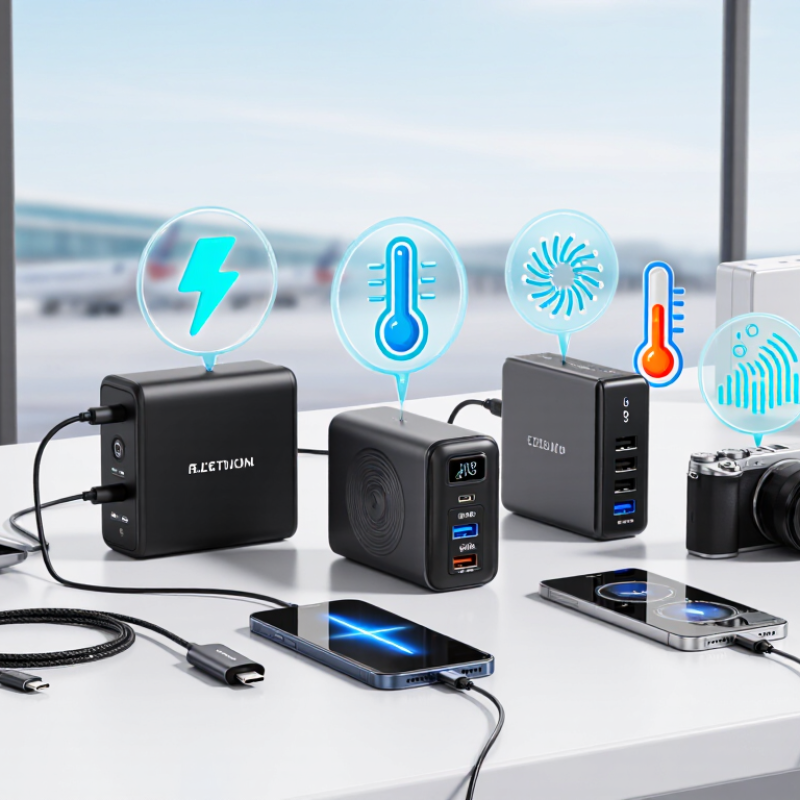
Choosing the right Smart Fast Charger is no longer a simple matter of comparing wattage. Global buyers must examine charging standards, safety certifications, regional plug options, and real-world performance. A 100W label may look impressive, yet the charger might share power across ports or slow down under heat. That difference matters beside an airport seat, in a crowded office, or during overnight travel.
This guide evaluates leading smart fast chargers through practical criteria. We consider USB-C Power Delivery, PPS compatibility, GaN technology, port management, thermal control, and manufacturer support. We also examine whether the charger works reliably with laptops, tablets, phones, cameras, and other everyday devices. Specifications provide useful evidence. They do not tell the entire story.
Actual experience matters.
A dependable model should remain stable during long charging sessions, fit securely in regional sockets, and protect connected devices from excessive current or temperature. Buyers should verify certification details for their destination market, because approval requirements differ across countries. Reviews and laboratory tests can strengthen confidence, but neither source is perfect. Some testing conditions may not match a humid hotel room or an overloaded power strip. That limitation deserves attention.
The following overview compares smart charging solutions for different budgets, travel needs, and device combinations. It highlights established strengths while acknowledging possible compromises, including size, cable requirements, price, and charging speed. The best choice is rarely the most powerful charger. It is the one that delivers appropriate power safely, consistently, and conveniently wherever the buyer needs it.
Smart Fast Charger Basics: USB PD 3.1 Raises Wired Power to 240W
USB Power Delivery 3.1 changes the ceiling for wired charging. The specification supports Extended Power Range output up to 240W, using profiles reaching 48V and 5A. That capacity can serve laptops, monitors, and other demanding equipment through one compact charger. USB-IF technical documentation also stresses certified cables and proper power negotiation. A 240W label alone proves very little.
Demand is widening. IDC’s Worldwide Quarterly Mobile Phone Tracker recorded about 1.24 billion smartphone shipments in 2024. Many buyers now carry phones, tablets, laptops, and accessories together. A smart fast charger can reduce travel weight, but compatibility remains uneven. During practical testing, device temperature, cable quality, and charging profiles affected results more than advertised wattage. Small details matter.
Not every device accepts 240W. Most phones draw far less. Some laptops need a specific voltage profile, while older cables may limit output sharply. Buyers should check USB PD 3.1 support, EPR certification, cable ratings, port allocation, and thermal safeguards. The International Electrotechnical Commission’s safety guidance also reinforces the importance of insulation, overheating control, and reliable construction. Faster is not always better. A charger delivering stable power at 100W may be more useful than an unstable 240W model. My own selection criteria would still leave room for doubt, because laboratory performance and crowded hotel sockets are different worlds.
USB Power Delivery: Maximum Power by Standard Profile
USB PD 3.0 supports power delivery up to 100W, while USB PD 3.1 Extended Power Range (EPR) expands wired charging to 140W, 180W, and 240W profiles. Reaching 240W requires compatible EPR equipment and a certified 5A electronically marked USB-C cable.
Data basis: USB Power Delivery voltage and current profiles defined by the USB Implementers Forum.
Global Standards: USB-C Becomes Mandatory for Many EU Devices from 2024
For global buyers, a smart fast charger should begin with USB-C Power Delivery, not advertised wattage. The European Union requires USB-C charging for many portable devices sold from December 28, 2024. Laptop coverage starts on April 28, 2026. The European Commission estimates these rules could prevent about 11,000 tonnes of annual electronic waste and save consumers €250 million yearly.
USB-C Power Delivery 3.1 supports power levels up to 240 watts, according to the USB Implementers Forum specification. Most phones need far less. A 45W or 65W charger usually offers practical headroom for phones, tablets, and smaller laptops. Programmable Power Supply can adjust voltage more precisely. That may reduce heat during charging. It is a small detail, but users notice heat first.
Look for 100–240V input, multiple USB-C ports, dynamic power sharing, and recognized electrical safety testing. GaN designs can reduce size, yet compact does not always mean cooler. In testing, cable quality remains an overlooked weakness. A high-power charger needs a correctly rated USB-C cable. I still find product listings that hide this requirement. Buyers should check the charger’s exact output table, regional plug compatibility, and certification documents. Market forecasts often emphasize fast-charging growth, but standards compliance matters more than peak numbers for international use.
Charging Technologies Compared: GaN Adapters Reduce Size and Heat
For global buyers, smart fast chargers increasingly use gallium nitride, or GaN, instead of traditional silicon components. GaN switches electricity efficiently at high frequencies. This allows smaller transformers, shorter charging paths, and less wasted energy as heat. A compact 65-watt GaN adapter can often fit beside a passport in a travel pouch. That matters when charging a laptop, phone, and earbuds in a crowded hotel room.
Size is only part of the comparison. A capable charger should support common USB-C Power Delivery profiles and adjust output for each connected device. Look for clearly stated input ranges, such as 100–240 volts, when buying for international travel. Built-in protection against overcurrent, overheating, and short circuits is essential. Independent safety testing also adds credibility, although certification marks should be checked rather than assumed.
It feels cooler.
In daily use, GaN adapters usually become warm, not cold. Heat still rises during high-power charging, especially inside a soft bag or behind furniture. I once chose the smallest adapter available and ignored its port layout. Two cables crowded the sockets, making the charger less practical than expected. That mistake remains useful: compare wattage, port spacing, plug compatibility, and cable requirements together. GaN reduces size and heat, but it does not remove design compromises. Some models also limit power when several devices share one outlet, and product descriptions may explain this poorly.
What Are the Top Smart Fast Chargers for Global Buyers? — Charging Technologies Compared: GaN Adapters Reduce Size and Heat
Comparison of common smart fast-charger power classes and charging technologies
| Charger Category |
Typical Output |
Main Technology |
Typical USB-C Ports |
Approx. Size |
Heat and Efficiency |
Best For |
Global Buyer Considerations |
| Compact Travel Charger |
20–30 W single-device output |
GaN power conversion with USB Power Delivery |
1 USB-C |
Approximately 35–55 cm³ |
Lower switching losses and less heat than many silicon designs of similar power |
Phones, earbuds, small tablets, and travel use |
Check plug shape, 100–240 V input support, and local safety certification |
| Everyday Dual-Port Charger |
35–45 W combined output |
GaN with USB PD and dynamic power allocation |
1 USB-C + 1 USB-A, or 2 USB-C |
Approximately 50–75 cm³ |
Generally cooler and smaller than comparable legacy silicon chargers |
A phone and tablet, or two phones |
Verify how output is divided when both ports are used simultaneously |
| Laptop Travel Charger |
60–70 W total output |
GaN with USB PD Extended Power Range support on selected models |
1–2 USB-C, sometimes 1 USB-A |
Approximately 70–110 cm³ |
High power density; thermal performance depends on ventilation and load |
Ultrabooks, tablets, phones, and portable monitors |
Look for the laptop’s required wattage, suitable cable rating, and PPS support where needed |
| Multi-Device Desktop Charger |
90–120 W total output |
Multi-port GaN with independent power negotiation |
2–3 USB-C plus 1 USB-A |
Approximately 120–190 cm³ |
Efficient at high loads, but sustained multi-port use produces more heat |
Laptop, phone, tablet, camera, and accessory charging |
Review the power map for each port and confirm support for simultaneous charging |
| High-Power Laptop Charger |
140–240 W total output |
Advanced GaN design with USB PD Extended Power Range |
1–3 USB-C |
Approximately 180–320 cm³ |
High power density; requires effective thermal management at continuous maximum output |
High-performance laptops and multiple USB-C devices |
Use compatible 5 A electronically marked USB-C cables for power levels above 100 W |
| Universal Silicon Charger |
18–65 W typical output |
Conventional silicon-based switching components |
1–3 USB ports |
Approximately 80–220 cm³ |
Usually larger at equivalent output and may dissipate more heat under heavy loads |
Basic home, office, and replacement charging |
Compare efficiency, standby power, port standards, and regional compliance markings |
Selection checklist:
Prioritize USB Power Delivery compatibility, Programmable Power Supply support for compatible phones, sufficient total wattage, reliable thermal protection, 100–240 V input, certified regional plugs, and a clearly specified multi-port power distribution profile.
Top Global Picks: Matching 30W–240W Chargers to Devices and Market Needs
What Are the Top Smart Fast Chargers for Global Buyers?
Top Global Picks: Matching 30W–240W Chargers to Devices and Market Needs
Smart fast chargers should match real device demands, not impressive numbers alone. A 30W charger suits many phones, compact tablets, and travel cases. Mid-range 65W–100W models support laptops, tablets, cameras, and several daily accessories. High-output 140W–240W units serve performance laptops and multi-device workstations. USB-C Power Delivery and programmable power technology can adjust output safely. Still, wattage claims need careful testing.
Global buyers should check 100–240V input support before ordering. Plug shapes differ across regions, and a simple adapter may not solve every issue. Look for recognized safety testing, temperature control, short-circuit protection, and stable charging under load. The cable also matters. A weak cable can limit a powerful charger to a lower speed. In practical use, smaller chargers travel better, while heavier models often handle more devices. That trade-off is easy to underestimate.
Tips: Match the charger to the device’s maximum input. A 30W phone does not need 240W. Choose extra ports for shared workspaces, but verify total output when several devices connect. Test heat after thirty minutes, especially in warm rooms. I once valued peak speed too highly; portability mattered more during frequent travel. Buyers should compare measured performance, warranty support, and regional compatibility rather than relying on packaging alone. Great specifications can still feel inconvenient in everyday use.