Top Tips for Choosing EV Charging Equipment for Your Needs?
Selecting the right EV charging equipment can be a daunting task. As the electric vehicle market expands, the options increase. According to Mark Johnson, an expert in EV infrastructure, "Choosing the right charging station is crucial for optimal performance." His insight highlights the importance of consideration in your decision.
When exploring EV charging equipment, factors like charging speed, installation location, and compatibility must be at the forefront. Some individuals may overlook the importance of future-proofing, which is essential for technological advancements. You need to think about where your equipment will be used.
The market offers various types of chargers, each with unique features. Yet, sometimes users find themselves overwhelmed by choices. It’s necessary to reflect on personal needs versus marketed benefits. Personalization plays a key role. It’s easy to make a hasty choice without understanding long-term implications.
Understanding Your Electric Vehicle Charging Needs
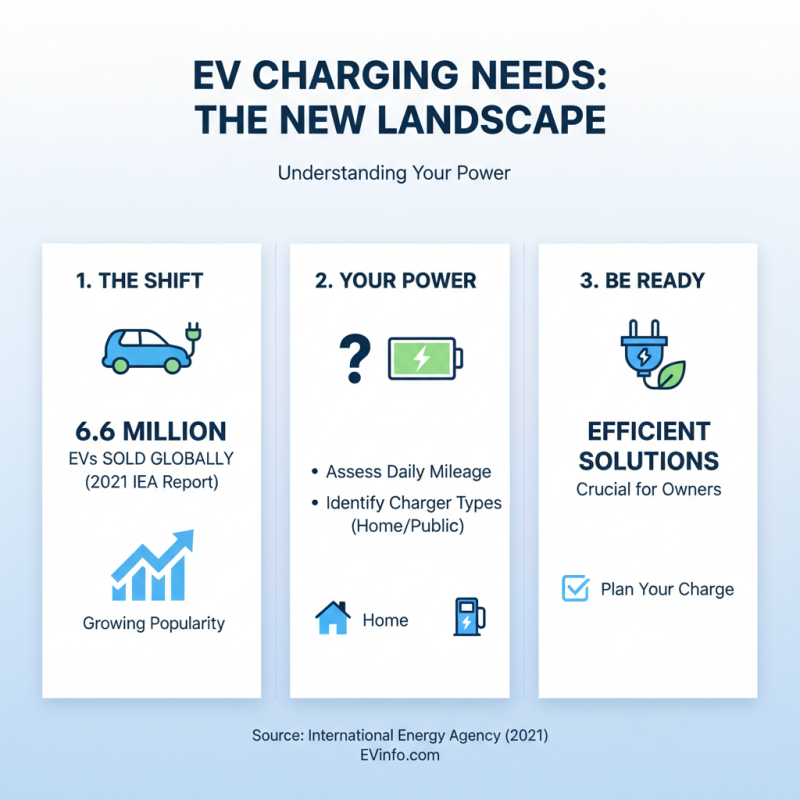
Understanding your electric vehicle charging needs is crucial in today's shifting landscape. The growing popularity of EVs indicates a rising demand for efficient charging solutions. A report by the International Energy Agency suggests that global EV sales reached 6.6 million units in 2021. This trend urges potential owners to assess their charging requirements carefully.
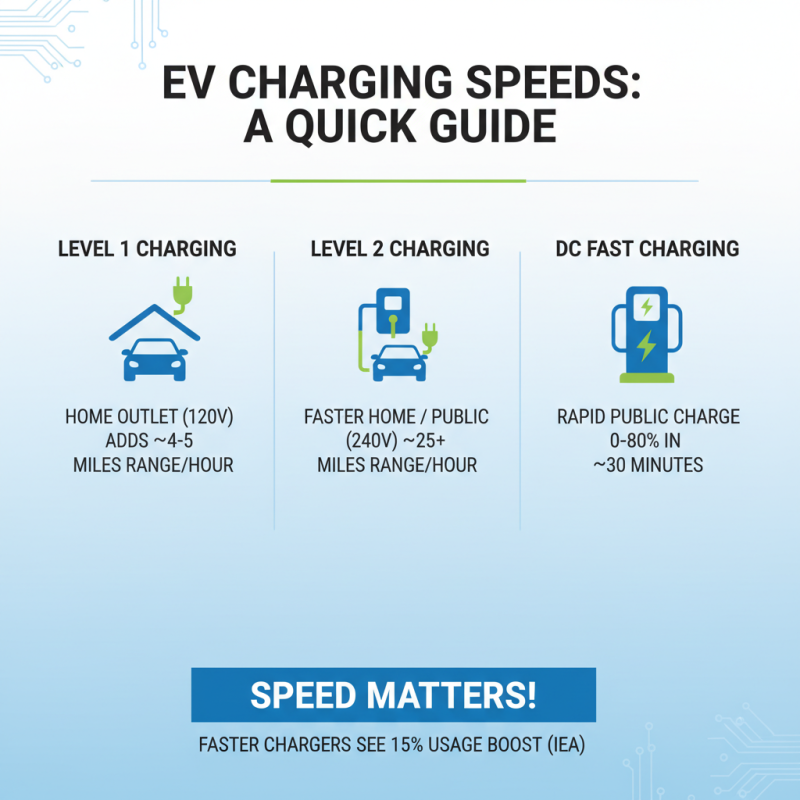
When considering charging equipment, think about your daily driving habits. If you only drive short distances, a Level 1 charger may suffice. These chargers typically deliver 4-5 miles of range per hour. On the other hand, if you frequently take longer trips, you might need a Level 2 charger, providing 20-30 miles of range per hour. In contrast, fast-charging options can replenish up to 80% of your battery in about 30 minutes. Understanding your driving patterns helps in making informed decisions about charging types.
However, even with advanced options, some drivers face challenges. Not all homes have the infrastructure for faster charging solutions. For instance, upgrading electrical systems can be costly and require professional evaluation. Furthermore, charging station availability may vary, creating inconvenience for some users. A balance between need and practicality is essential to avoid unforeseen expenses and frustrations.
Types of Electric Vehicle Chargers Available
When considering EV charging equipment, it’s crucial to understand the different types of chargers available. There are three main categories: Level 1, Level 2, and DC fast chargers. Level 1 chargers are the simplest. They plug into a standard household outlet. However, they are the slowest option, taking up to 24 hours for a full charge.
Level 2 chargers are a popular choice for home and public use. They require a dedicated 240-volt outlet. These chargers can provide a full charge within 4 to 8 hours. They strike a balance between speed and convenience. On the other hand, DC fast chargers can fully charge some vehicles in under an hour. They are found along highways and in urban centers. Though they are fast, they are typically more expensive to install and use.
Consider your driving habits when choosing a charger type. If you drive short distances, a Level 1 charger may suffice. For those with longer commutes, a Level 2 option offers more practicality. Ultimately, the right choice depends on your specific needs, budget, and lifestyle. And remember, not all chargers are equal. Researching local infrastructure is essential to ensure reliability.
Types of Electric Vehicle Chargers Available
This bar chart illustrates the charging speeds of various types of electric vehicle chargers, ranging from Level 1 home chargers to fast charging solutions like Tesla Superchargers.
Evaluating Charging Speed and Compatibility
When selecting EV charging equipment, evaluating charging speed and compatibility is crucial. Charging speed varies widely. Level 1 chargers provide about 4-5 miles of range per hour. In contrast, Level 2 chargers can offer 25 miles or more per hour. Fast DC chargers can add up to 80% of range in just 30 minutes. According to the International Energy Agency, faster charging stations see a 15% boost in usage, highlighting the importance of speed.
Compatibility is another significant factor. Not all EVs charge with the same equipment. Many vehicles use different connectors. Tesla's proprietary connector differs from the widely adopted CCS and CHAdeMO standards. This results in a mismatch for some users. Reports indicate that about 20% of EV owners experience compatibility issues at charging stations. This inconsistency can lead to frustration and wasted time.
Investing in a universal charging solution may seem practical. However, users must consider their vehicle's specific requirements. Flexibility is vital. Charging infrastructure is continually evolving. The growth of different technologies makes choices more intricate. Researching compatibility with your vehicle can save time and energy in the long run. Remember, today's choice may not fit tomorrow's advancements.
Assessing Installation Requirements and Costs
When considering EV charging equipment, installation requirements play a crucial role. Assessing space is vital. Most home chargers require a dedicated circuit, typically rated at 240 volts. Installation can vary greatly depending on the existing electrical system. A report by the Electric Vehicle Association indicates that upgrading a home’s electrical panel can cost between $1,500 and $3,000. This can add significant expenses to your project.
Moreover, positioning is essential. Charging equipment should be installed in a convenient location to enhance user experience. A survey by the Department of Energy revealed that 40% of EV owners prefer chargers located in garages. Ease of access is a common consideration that can influence your satisfaction. Remember to factor in long-term usage. If you plan to charge multiple vehicles, investing in a higher-capacity charger may be necessary.
Understand the costs involved. Not just the equipment, but also labor for installation. Electricians typically charge between $50 and $100 per hour. Complex installations may take 6-8 hours or more. On the flip side, cheaper installations might lead to issues later. Low-cost options can lack essential safety features. Paying upfront may save regrets down the road.
Considering Smart Features and User Interface Options
When selecting EV charging equipment, smart features and user interfaces play a crucial role. A good interface should be easy to navigate. Look for touchscreen options and responsive designs. Think about your comfort level with technology. Some users prefer simple displays, while others enjoy advanced controls.
Consider the benefits of smart features. These can enhance your charging experience immensely. Features like scheduled charging can save you money. Real-time monitoring helps in understanding energy consumption. Notifications about charging status can keep you updated. However, not all smart features are necessary for every user.
Even the best systems can have drawbacks. Compatibility issues may arise with different vehicle models. A complicated user interface can frustrate users rather than help them. Reflect on what you really need from your charging station. Prioritize features that align with your lifestyle and usage patterns. Smart does not always mean better for everyone.
Top Tips for Choosing EV Charging Equipment for Your Needs - Considering Smart Features and User Interface Options
| Charging Equipment Type |
Power Output (kW) |
Smart Features |
User Interface Options |
Price Range ($) |
| Level 2 Charger |
7.2 - 22 |
Wi-Fi Connectivity, App Control |
Touchscreen Display, App Integration |
500 - 1,200 |
| DC Fast Charger |
50 - 350 |
Remote Monitoring, Dynamic Pricing |
Mobile App, RFID Reader |
15,000 - 50,000 |
| Portable Charger |
3.6 - 10 |
Basic Charging, Some with Wi-Fi |
LED Indicators, Minimal Control |
200 - 800 |
| Smart Charger |
11 - 22 |
Grid Management, Scheduling |
Voice Control, Smartphone App |
700 - 2,000 |