What is an Ev Fast Charger and How Does it Work?
As the world shifts towards electric vehicles, understanding the mechanics of an Ev Fast Charger becomes essential. Experts like Dr. Emily Jones, a leading authority in electric vehicle technology, emphasize, "Fast chargers play a critical role in making EVs practical for everyday use." This highlights the importance of these chargers in the evolving automotive landscape.
Ev Fast Chargers are designed to recharge electric vehicles much quicker than standard chargers. They can replenish an EV's battery up to 80% in about 30 minutes, drastically reducing downtime. Such technology is essential for long-distance travel, making EVs a more viable option for consumers.
However, the transition to a widespread network of fast charging stations is not without challenges. Issues like interoperability between different EV models and access to charging infrastructure remain concerns. As the industry expands, learning from these hurdles will be crucial for future innovations. The journey of integrating Ev Fast Chargers into mainstream society still requires reflection and adaptation.
What is an EV Fast Charger?
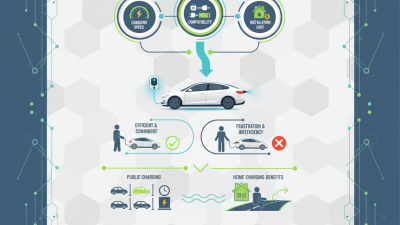
An EV fast charger is a crucial component for electric vehicle (EV) owners seeking convenience. These chargers deliver high power levels, significantly reducing charging times compared to standard chargers. Typically found in public places, they provide a quick and efficient way to replenish your vehicle’s battery. For many EV drivers, they are an essential part of their travel plans.
Fast chargers utilize direct current (DC) to quickly charge the batteries. Unlike traditional chargers that use alternating current (AC), DC fast chargers bypass the vehicle’s onboard charger. This means that energy flows directly into the battery, allowing for speeds of 80% charge in about 30 minutes or less for many EV models. However, the availability of these chargers can be inconsistent. In some areas, finding a reliable fast charger might pose a challenge.
Despite their benefits, fast chargers are not without drawbacks. The high energy demand can lead to higher costs for both users and operators. Furthermore, frequent use may impact battery longevity. It's important to strike a balance between convenience and battery health. As the EV market grows, improvements in fast charging technology and infrastructure are crucial to making electric driving more accessible for everyone.
EV Fast Charger Charging Speeds
This chart illustrates the charging speeds of various EV fast chargers categorized by their power output in kilowatts (kW). The data shows how different charging rates affect the time it takes to charge an electric vehicle to approximately 80% capacity.
Understanding the Technology Behind EV Fast Charging
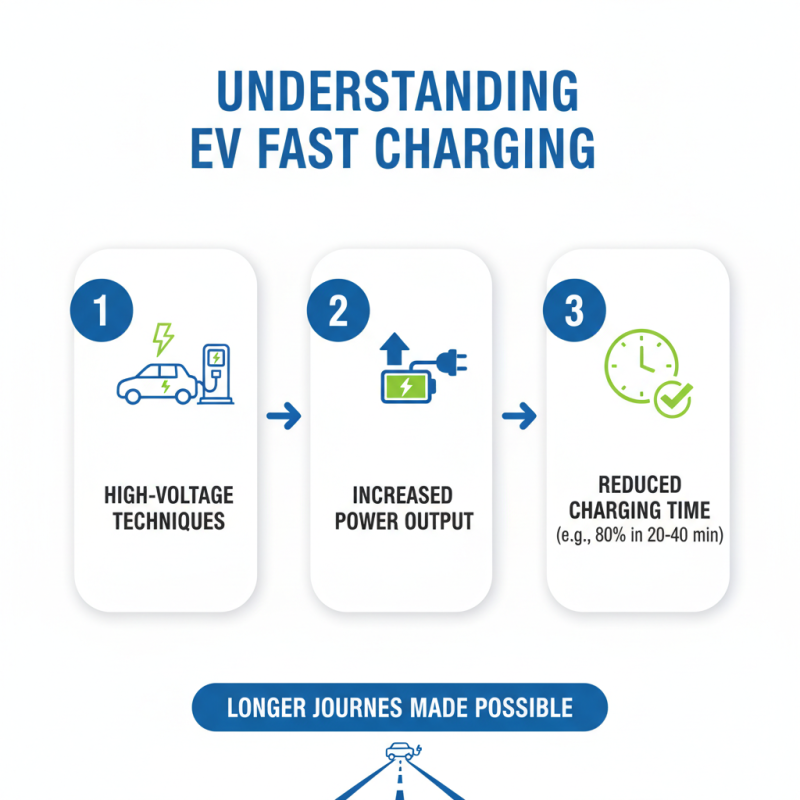
Electric Vehicle (EV) fast chargers represent a breakthrough in sustainable transportation. These chargers use high-voltage techniques to reduce charging time significantly. By increasing the power output, they can deliver a significant charge in just a short period, making long-distance travel more feasible for EV users.
The technology behind EV fast charging involves advanced connectors and intelligent power management systems. These systems communicate with the vehicle to ensure that the right voltage and current are supplied. The process must be seamless to avoid damaging the battery. However, not all EVs are compatible with every fast charger. This can lead to inconvenience for drivers who need charging options on the go.
Despite the efficiency of EV fast charging, there are challenges. Not every location is equipped with fast chargers. Infrastructure can lag behind demand, causing frustration. Additionally, the environmental impact of producing energy for these chargers is also worth considering. Balancing speed, accessibility, and sustainability remains an ongoing struggle in the world of electric mobility.
Different Types of EV Fast Chargers Explained
Electric vehicle (EV) fast chargers play a crucial role in the transition to sustainable transportation. They significantly reduce charging time compared to standard chargers. There are three main types of fast chargers: Level 2 AC chargers, DC fast chargers, and ultra-fast chargers. Level 2 chargers typically deliver about 10 to 20 miles of range per hour. These are commonly found in public locations and home installations.
DC fast chargers provide rapid charging speeds, offering up to 80% charge in as little as 30 minutes. They utilize a direct current that bypasses the vehicle's onboard charger. This efficiency is vital as the number of EVs on the road grows. According to the International Energy Agency, the number of public fast chargers is expected to reach over 1 million by 2030. This projection emphasizes the increasing demand for accessible charging solutions.
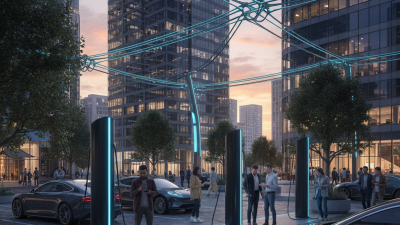
Ultra-fast chargers, which can deliver over 300 kW, are emerging as the technology evolves. These chargers are designed for strategic locations along highways, facilitating long-distance travel for EV users. However, integrating such infrastructure poses challenges. Not every EV can accept ultra-fast charging due to varying battery capabilities. As the industry develops, ensuring compatibility and reliability remains a concern for manufacturers and consumers alike.
How EV Fast Chargers Work: The Charging Process
Electric Vehicle (EV) fast chargers play a crucial role in the charging landscape. They are designed to provide a high-voltage current to EV batteries quickly. The typical charging process begins when a driver plugs the vehicle into the charger.
Within minutes, energy flows from the charger to the car. This rapid charging can refill a battery to about 80% in as little as 30 minutes.
The electrical components in fast chargers utilize advanced technology. They convert alternating current (AC) from the grid into direct current (DC). This conversion is vital because most EVs store energy in the form of DC. Additionally, fast chargers can communicate with the vehicle to optimize charging speed and efficiency.
However, the complexity of this process can sometimes lead to inefficiencies. For instance, not all chargers are compatible with every EV, causing frustration.
While fast chargers promote convenience, there are some areas for improvement. The infrastructure may not yet be widespread enough in some regions.
This uneven distribution can create charging deserts. Planning for future growth in EV technology and charging solutions is essential. Proper installation and maintenance play a significant role in ensuring reliability and safety.
Benefits of Using EV Fast Chargers for Electric Vehicles
Electric vehicle (EV) fast chargers are essential for modern EV users. They provide a quick and efficient way to recharge batteries. Using these chargers can significantly reduce downtime compared to standard options. This is especially beneficial for drivers on long trips or those who need quick turnarounds during busy days.
The benefits of using EV fast chargers are vast. They can deliver a full charge in about 30 minutes, compared to several hours with regular chargers. This means more time on the road and less time waiting. Additionally, fast chargers are often located in convenient public places, making them accessible for many drivers. However, not every fast charging station is equally reliable. Some may be out of service or overloaded during peak hours, which can be frustrating.
For EV owners, the ability to charge quickly is empowering. It expands driving range and eases range anxiety. Still, challenges exist in ensuring a well-distributed network of chargers. Cities may lack adequate infrastructure, leaving some drivers searching for available stations. The implementation of more reliable and widespread charging options will enhance the EV experience further.