What is Ev Dc Fast Charger and How Does It Work?
Electric vehicles are changing the landscape of transportation, and the need for efficient charging solutions is growing. An expert in this field, Dr. Sarah Lopez, once stated, “The future of electric mobility depends on the seamless integration of Ev Dc Fast Chargers.” This highlights the importance of these chargers in supporting electric vehicle adoption.
Ev Dc Fast Chargers provide quick charging capabilities, significantly reducing the time EVs spend connected to the grid. Unlike traditional chargers, they can deliver high power in a short period. This rapid charging option is essential for urban environments and long-distance travel. However, challenges remain. The installation of these chargers requires careful planning and collaboration among stakeholders.
The technology behind Ev Dc Fast Chargers is complex and constantly evolving. As the market grows, the infrastructure must adapt to meet increasing demand. Keeping pace with advancements can be overwhelming for some areas. Ultimately, addressing these challenges will determine how effectively we transition to electric mobility in the future.

What is an EV DC Fast Charger?
An EV DC fast charger is a critical technology for electric vehicle owners. Unlike standard AC chargers, DC fast chargers provide direct current to the vehicle's battery. This allows for much quicker charging times, often reaching 80% charge in as little as 30 minutes. These chargers can deliver power levels from 50 kW to over 350 kW, making them essential for long-distance travel.
The technology behind EV DC fast chargers is complex. They use advanced power electronics to convert AC from the grid into DC power. The connection is typically made via CCS or CHAdeMO standards, ensuring compatibility across many electric vehicles. However, the availability of DC fast chargers can be inconsistent. Some locations may have multiple chargers, while others may have none.
This gap in infrastructure can lead to frustration for EV users. It's essential for drivers to plan their routes carefully, considering the locations of these chargers. Better coordination and investment in charging networks could help improve this situation.
The Technology Behind DC Fast Charging
DC fast charging technology has revolutionized electric vehicle (EV) charging. Unlike traditional chargers, DC fast chargers deliver power directly to the vehicle's battery. This process significantly reduces charging time. A typical fast charger can replenish an EV's battery from 20% to 80% in about 30 minutes. However, this speed comes with certain complexities.
The technology relies on high-voltage direct current, which bypasses the vehicle's onboard charger. This means that DC fast chargers provide the necessary voltage and current to allow rapid charging. An intricate cooling system is often employed to manage heat during the charging process. Some users have noted that frequent fast charging could impact long-term battery health. It's a trade-off: convenience versus potential battery longevity.
Moreover, not all EVs support high-speed charging, limiting the benefits for some drivers. Charging infrastructure also varies widely. In certain areas, fast chargers are rare, causing range anxiety for EV owners. Accessibility and reliability of these stations remain significant challenges. Observing these limitations encourages reflection on the overall efficiency of the charging network. Establishing a robust DC charging ecosystem is crucial for broader EV adoption.
How DC Fast Chargers Work in Electric Vehicles
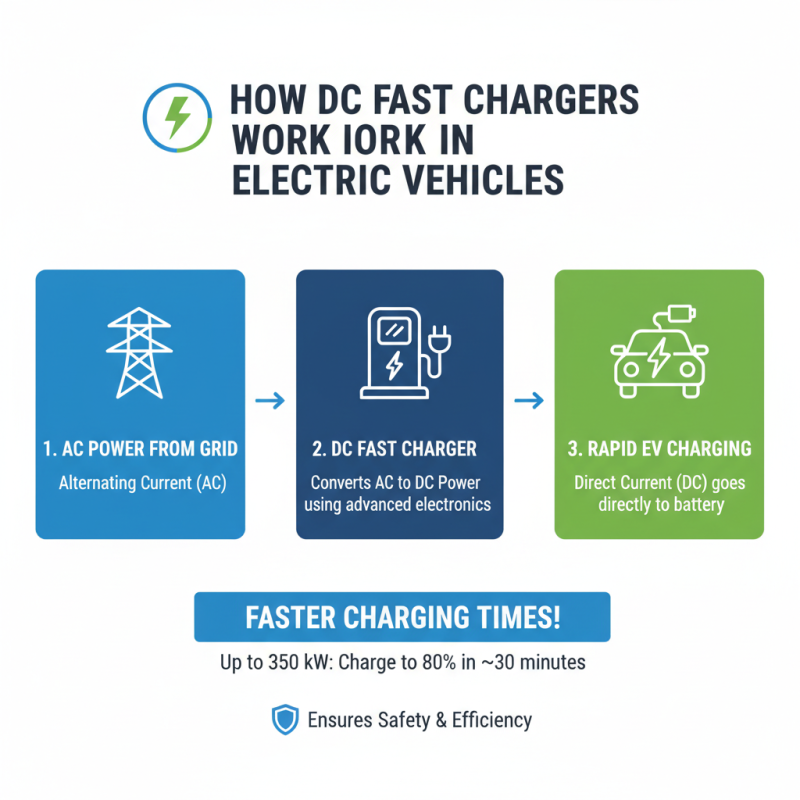
DC fast chargers play a crucial role in electric vehicle (EV) infrastructure. They convert alternating current (AC) from the grid into direct current (DC), allowing for rapid charging of EV batteries. This process significantly reduces charging time. For example, it can deliver up to 350 kW, charging a typical EV to 80% in just 30 minutes. The conversion process involves advanced power electronics that ensure efficient transfer while maintaining safety protocols.
Data from the International Energy Agency indicates that the number of DC fast chargers is growing rapidly. In 2022, there were approximately 45,000 fast chargers worldwide, a 30% increase from the previous year. Despite this growth, challenges remain. The availability of DC charging stations can be inconsistent, causing range anxiety among users. Furthermore, the installation of these chargers requires substantial investment in both infrastructure and technology, which can be a barrier to wider adoption.
The reliability of DC fast chargers also requires scrutiny. Charging speeds can vary based on battery condition and temperature, leading to unpredictable experiences for drivers. Maintenance of infrastructure is essential to ensure that these chargers function effectively. Some reports suggest that up to 20% of charging stations may be out of service at any given time. Continuous improvements and monitoring are crucial to enhance user trust in the EV charging ecosystem.
Advantages of Using DC Fast Chargers
DC fast chargers are a significant advancement in electric vehicle (EV) charging technology. One of the primary advantages of using these chargers is the speed at which they can recharge a vehicle's battery. In contrast to standard chargers, which may take several hours, a DC fast charger can deliver an 80% charge in as little as 30 minutes. This rapid charging capability is highly beneficial for long-distance travel, enabling drivers to maximize their time on the road.
Another notable benefit is accessibility. Many DC fast chargers are installed at convenient locations, such as highway rest stops and urban centers. This enhances the EV ownership experience by offering easy access to charging stations during trips. However, the availability of these chargers might not meet the growing demand, especially in certain regions, causing potential inconvenience for drivers.
While the technology is efficient, it also comes with considerations. The higher output of DC fast chargers can lead to quicker battery degradation if overused. It's essential for EV owners to balance the use of fast chargers with regular charging to maintain battery health. Therefore, while DC fast chargers offer impressive benefits, a thoughtful approach is necessary for optimal long-term use.
What is Ev Dc Fast Charger and How Does It Work? - Advantages of Using DC Fast Chargers
| Dimension |
Description |
Advantages |
| Charging Speed |
Typically charges an EV to 80% in 20-30 minutes. |
Significantly reduces downtime for drivers. |
| Power Output |
Usually between 50 kW to 350 kW. |
Handles high energy requirements for faster charging. |
| Connector Types |
Includes CCS, CHAdeMO, and Tesla connectors. |
Compatible with various EV models. |
| Location |
Commonly found in public charging stations, highways, and commercial locations. |
Convenient for long-range travel and urban use. |
| Cost |
Installation and equipment costs vary, typically higher than Level 2 chargers. |
Long-term savings on fuel and increased convenience. |
Installation and Usage Considerations for DC Fast Chargers
The installation of DC fast chargers demands careful planning. A comprehensive site assessment is essential for ensuring optimal charger functionality. Factors such as site access, electrical capacity, and environmental conditions need to be evaluated. According to industry reports, over 40% of charging stations fail due to inadequate electrical supply or poor placement. Choosing the right location can significantly impact user experience and overall efficiency.
Ease of use is another consideration. In 2022, surveys indicated that user-friendly interfaces improved the likelihood of repeat usage by nearly 30%. Installation should prioritize intuitive design, allowing users to charge their vehicles quickly and effectively. There's a growing emphasis on educating users about charging processes. Misunderstandings about charging speeds and times can lead to frustration.
Maintenance is equally critical for the ongoing reliability of DC chargers. Regular checks can prevent malfunctions, as over 25% of stations regularly report issues. Moreover, keeping software updated helps in maintaining compatibility with new electric vehicle models. A proactive maintenance approach not only extends the lifespan of chargers but also enhances overall user satisfaction.