How to Choose the Right EV Charging Equipment for Your Home?
As the demand for electric vehicles (EVs) rises, choosing the right EV charging equipment becomes crucial for homeowners. According to the International Energy Agency, the number of electric cars on the road reached 10 million in 2020, doubling the count from the previous year. This surge amplifies the need for adequate at-home charging solutions. Expert in the EV charging industry, John Smith, states, “Selecting the appropriate EV charging equipment is essential for maximizing your vehicle's efficiency.”
When considering EV charging equipment, factors like power output, compatibility, and installation space are critical. Many homeowners underestimate these aspects, which may lead to frustrating charging experiences. For instance, not all chargers are compatible with every EV model, leading to potential connectivity issues. A report from Navigant Research indicates that over 50% of new EV owners express dissatisfaction due to inadequate charging infrastructure at home.
In addition, installation costs vary significantly. Some may find that their home’s electrical capacity limits charging power, resulting in longer charge times. Reflecting on the critical nature of this decision reveals the importance of thorough research. The journey towards sustainable transport begins with informed choices about EV charging equipment.

Understanding the Different Types of EV Charging Equipment
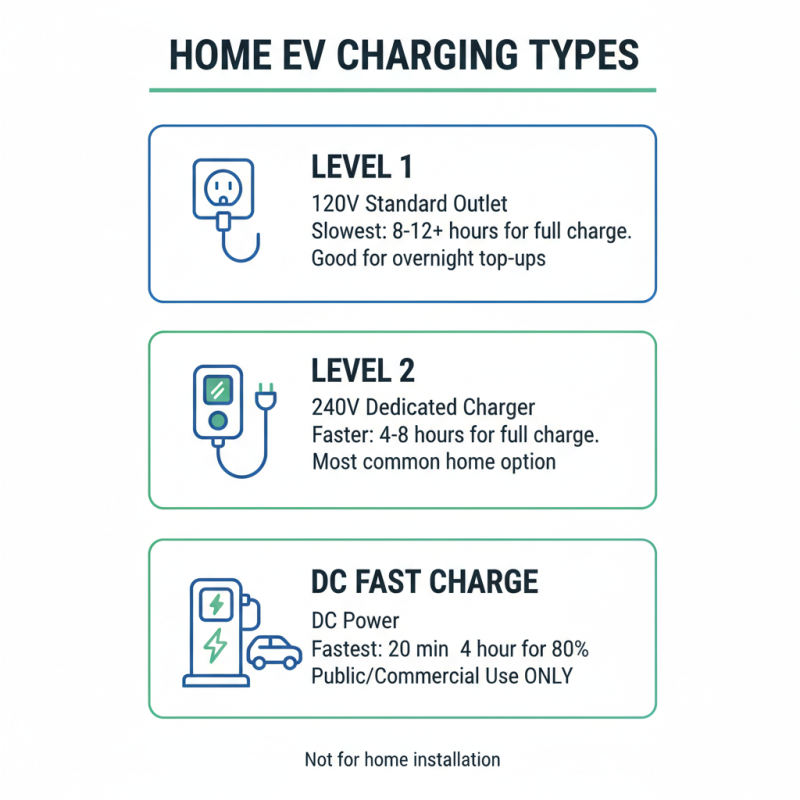
When considering EV charging equipment for home use, it's essential to understand the types available. There are three main categories: Level 1, Level 2, and DC fast chargers. Level 1 chargers use a standard 120-volt outlet. They are slow, often taking 8-12 hours to fully charge an electric vehicle. This option may seem convenient, but it's not ideal for everyone. Many users find themselves frustrated by slow charging times, especially if they need their EV frequently.
Level 2 chargers are a popular choice. They connect to a 240-volt outlet and significantly reduce charging time, often providing a full charge in 4-6 hours. According to industry reports, over 80% of EV owners prefer Level 2 chargers. However, installation can be costly, and not all homes have the required electrical infrastructure. This type of equipment tends to be more suitable for those who drive EVs regularly.
DC fast chargers offer the quickest charging experience, taking only 30 minutes for an 80% charge. They are typically found at public charging stations rather than in residential settings. The demand for DC fast chargers is rising, with figures projecting a growth rate of around 35% annually until 2025. Yet, many potential home users may find themselves weighing the cost against the infrequent need. It's important to assess driving habits before choosing the right charger for your home.
Assessing Your Home's Electrical Infrastructure for EV Charging
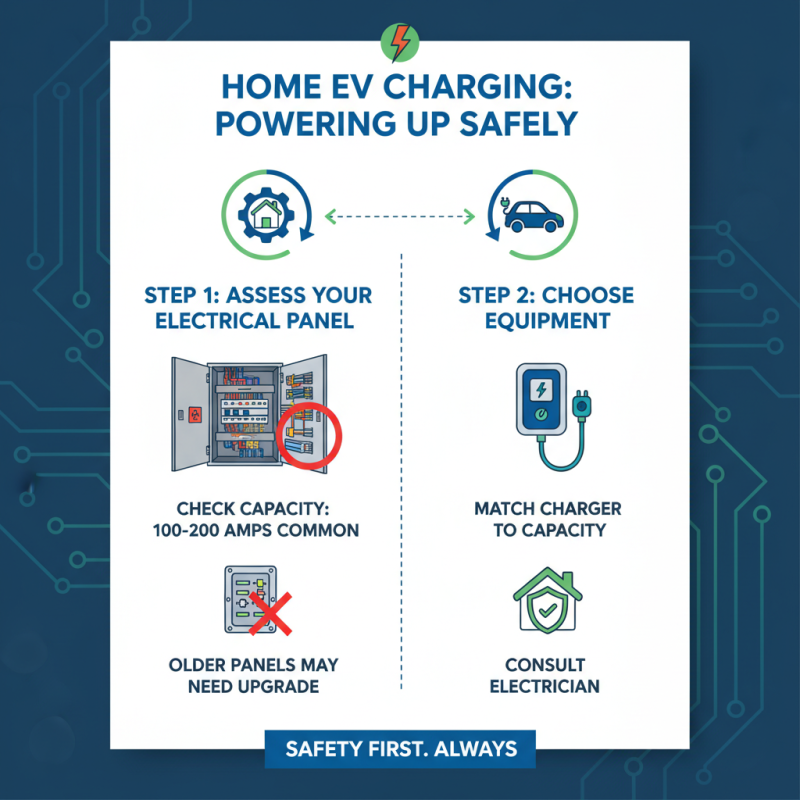
When choosing EV charging equipment for your home, it’s crucial to assess your electrical infrastructure. Begin by checking your home's current electrical capacity. Most homes have a service panel rated for 100 to 200 amps. If your panel is older, it might not handle the load.
**Tip:** Consult a professional electrician to evaluate your system. They can help determine if you need an upgrade.
Next, think about the layout of your home. The distance from your panel to the parking area matters. Longer distances may require additional wiring, which can add to costs. Consider the location of your utility connections. Access to a reliable power source is essential for efficient charging.
**Tip:** Keep charging stations accessible to avoid costly installation adjustments later.
Lastly, pay attention to your local zoning laws and codes. They may require specific permits for installation. Ignoring these can lead to delays and unexpected fines. The landscape of EV charging is rapidly evolving. Make sure you stay informed about regulations and community support programs available in your area.
Evaluating Charging Speed and Power Requirements for Your EV
Choosing the right EV charging equipment for your home can be challenging. Evaluating charging speed and power requirements is essential. The charging speed depends on your EV model and battery size. Faster charging options appeal to many users, but they may not be necessary for everyone.
Consider your daily driving habits. If you only drive short distances, a Level 1 charger might suffice. It's slower but works well for overnight charging. For those with long commutes, a Level 2 charger can replenish your battery quicker. It can save time and provide convenience when needed.
Tips: Assess your home's electrical capacity before installation. This ensures you don't overload your system. Also, think about future needs. EV technology evolves. You might upgrade your car or increase usage. Your charging equipment should adapt accordingly.
Don't forget to check your EV's specifications. Misjudging power requirements can lead to frustration. Selecting the wrong charger may slow you down when you need a quick boost. Take the time to reflect on your choices. Making informed decisions will lead to a smoother experience.
Considering Location and Accessibility for EV Charger Installation
When choosing the right EV charging equipment for your home, location and accessibility are key considerations. The placement of the charger can greatly affect its usability. Ideally, the charger should be close to your parking spot. This reduces the hassle of managing long cables and makes the charging process more convenient. You should also consider accessibility during installation. The charger needs to be placed in a way that allows for easy access without obstructions.
Think about the surroundings as well. Is the parking area well-lit? Good lighting enhances safety, especially during nighttime charging. You may want to avoid places near street traffic to reduce risks. Assessing the layout of your driveway or garage is essential. A cramped space may hinder easy parking and charging. If you find it difficult to park currently, the charger’s placement could complicate matters further.
Consider future needs too. If you plan to add more EVs, ensure there's enough space for multiple chargers. Be cautious about potential damage from environmental factors like weather or snow accumulation. Reviewing your property’s landscape might reveal areas that seem ideal but could present challenges later on. विकास आपके घर के लिए सही चार्जिंग अनुभव बनाने में महत्वपूर्ण है।
Exploring Installation Costs and Maintenance for Charging Equipment
When it comes to installing EV charging equipment at home, understanding the costs involved is crucial. Installation expenses can vary widely based on several factors. Factors include the type of charger you choose, your home’s electrical system, and local labor costs. A basic installation might cost a few hundred dollars, but more complex setups could reach thousands. It’s essential to evaluate your home’s electrical capacity before making decisions. Some homes may need upgrades, which increases costs.
Maintenance is another aspect to consider. Regular checkups are necessary to ensure everything functions properly. Many people overlook small issues until they become significant problems. Understanding the lifespan of charging equipment is also vital. Most chargers last several years, but wear and tear can shorten their life. Keeping equipment clean and well-organized can prevent unexpected repairs.
There’s also a learning curve with different systems and options. Options can be overwhelming, leading to hasty decisions. Reflect on your actual usage and the type of EV you have. Not all chargers are right for every home, and misunderstandings about compatibility can lead to regrets. Proper planning and research will save money and frustration in the long run.
EV Charging Equipment Installation Costs Comparison
This chart displays the average installation costs for different types of EV charging equipment. Level 1 chargers are the most affordable option, while DC fast chargers are the most expensive due to their complexity and faster charging capabilities.