How to Choose the Best Home Car Charger for Your Electric Vehicle
When it comes to owning an electric vehicle (EV), one of the most crucial aspects to consider is how to recharge it effectively and conveniently. A reliable Home Car Charger is an essential investment for EV owners, as it provides the ease of charging at home without the need to rely on public charging stations. However, with various options available on the market, choosing the right home car charger can be overwhelming.
In this guide, we will explore key factors to consider when selecting the best home car charger for your electric vehicle. From understanding the charging speed to evaluating compatibility with your EV, this introduction will set the stage for making an informed decision. We will also discuss the significance of charging at home and how it can enhance your overall EV ownership experience. Ultimately, a well-chosen home car charger will not only meet your charging needs but also contribute to a smoother and more efficient electric vehicle lifestyle.
Factors to Consider When Choosing a Home Car Charger for EVs
When choosing a home car charger for your electric vehicle (EV), it's essential to consider several factors to ensure optimal performance and convenience. One key aspect is the charging speed, which is influenced by the charger's power output, measured in kilowatts (kW). According to the Department of Energy, installing a Level 2 charger, typically rated between 3.3 kW to 22 kW, can significantly decrease charging time compared to a standard 120-volt outlet. For example, a Level 2 charger can fully charge an EV in 4-8 hours, making it a favored choice for homeowners.
Another critical factor is your EV's compatibility with the charger. Most EVs support common charging standards, but it’s essential to verify that any new charger you consider is compatible with your specific make and model. Additionally, consider the installation location and accessibility. Positioning the charger in a convenient location, preferably close to where the car is usually parked, can enhance ease of use and flexibility.
Tips: Before purchasing, assess your home's electrical system to ensure it can support the charger’s requirements. Engaging a certified electrician for installation is advisable, as they can offer insights on necessary upgrades to avoid overloading your home’s electrical circuit. Furthermore, exploring features like smart charging capabilities can add convenience, allowing you to schedule charging during off-peak hours for cost savings.
Understanding Different Types of Home Chargers: Level 1 vs. Level 2
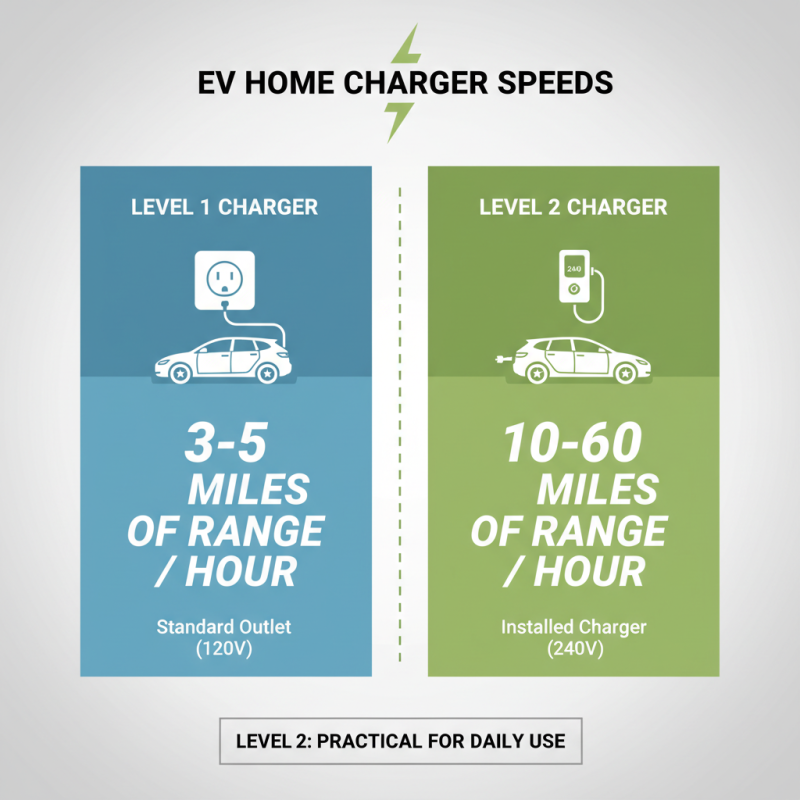
When choosing a home car charger for your electric vehicle, understanding the differences between Level 1 and Level 2 chargers is crucial. Level 1 chargers typically use a standard 120-volt outlet and can take a significant amount of time to fully charge your vehicle, often requiring overnight charging. They're convenient for those who drive shorter distances daily and prefer to plug in at home without any additional installation costs.
On the other hand, Level 2 chargers operate on a 240-volt current and provide a much faster charging speed. This means you can recharge your vehicle in a matter of hours instead of overnight, making them ideal for households with multiple electric vehicles or those who often take longer trips. While installing a Level 2 charger may involve upfront costs, the convenience and time savings can be well worth the investment.
Tips for selecting the right charger include assessing your daily driving habits—if you regularly travel long distances, a Level 2 charger will be essential. Additionally, consider the electrical capacity of your home; consulting an electrician will ensure that your electrical system can support a Level 2 charger. Finally, think about future needs; if you plan to purchase a second electric vehicle, investing in a higher-capacity charger now may be beneficial.
Evaluating Charger Speed: How Many Miles of Range Per Hour?
When selecting a home car charger for your electric vehicle (EV), one of the critical factors to consider is the charger's speed, measured in miles of range per hour. According to a study conducted by the Department of Energy, Level 2 chargers, typically providing 240 volts, can deliver anywhere from 10 to 60 miles of driving range per hour, depending on the EV model and charger specifications. This is significantly faster than standard Level 1 chargers, which usually provide only 3 to 5 miles of range per hour, making Level 2 chargers a more practical choice for everyday use.
Additionally, the speed at which a charger operates is not solely determined by its power output; it also depends on the maximum charging rate of the vehicle itself. A report by the EV Charging Infrastructure Assessment highlights that many modern electric vehicles are designed to handle higher charging capacities, allowing users to take advantage of faster charging options. For instance, vehicles that can handle 7.2 kW may gain upwards of 30 miles of range in just one hour with a compatible Level 2 charger. Understanding your vehicle's specifications is crucial for optimizing your charging experience and ensuring you can efficiently meet your daily driving needs.
Key Safety Features and Certifications for Home EV Chargers
When selecting a home car charger for your electric vehicle, prioritizing safety features and certifications is essential to ensure safe and reliable operation. First and foremost, look for chargers that comply with recognized safety standards such as UL (Underwriters Laboratories) and IEC (International Electrotechnical Commission) certifications. These certifications indicate that the charger has undergone rigorous testing for electrical safety and performance, minimizing the risk of malfunctions or hazards.
Additionally, consider chargers equipped with built-in safety features like overcurrent protection, ground fault detection, and surge protection. Overcurrent protection prevents damage to both the charger and the vehicle’s battery by limiting the electric current flow during charging. Ground fault detection is vital for preventing electrical shocks, shutting down the charger when it detects an imbalance in the electrical current. Surge protection helps to safeguard the charger from power spikes, prolonging its lifespan and ensuring consistent performance. Choosing a charger with these features can enhance safety and provide peace of mind during everyday use.
Electric Vehicle Home Charger Safety Features
Analyzing Cost-Effectiveness: Initial Investment vs. Long-Term Savings
When evaluating the cost-effectiveness of home car chargers for electric vehicles, it is crucial to weigh the initial investment against potential long-term savings. A standard Level 2 home charger costs between $500 and $2,000, not including installation fees, which can range from $300 to $1,000 depending on the complexity of the wiring and local electrical codes. While this upfront cost may seem daunting, the potential savings on fuel and maintenance can be significant. According to the U.S. Department of Energy, electric vehicles (EVs) are typically eight times more efficient than their gasoline counterparts, translating into an average savings of about $800 to $1,100 per year in fuel costs alone.
Furthermore, home charging can dramatically reduce the overall lifetime costs of EV ownership. A study by the Electric Power Research Institute indicates that consumers who charge their vehicles at home can save over $10,000 during the life of the vehicle when compared to traditional fuel vehicles when factoring in lower energy costs and reduced maintenance needs. By charging at home during off-peak hours, owners can take advantage of lower electricity rates, further enhancing their cost savings. Overall, while the initial investment in a home car charger can be significant, the long-term financial benefits—stemming from decreased fuel expenses and the convenience of home charging—can make it a wise financial decision for EV owners.
How to Choose the Best Home Car Charger for Your Electric Vehicle - Analyzing Cost-Effectiveness: Initial Investment vs. Long-Term Savings
| Charger Type |
Initial Investment ($) |
Installation Cost ($) |
Charging Speed (miles/hour) |
Annual Energy Cost ($) |
5-Year Total Cost ($) |
Estimated Savings over 5 Years ($) |
| Level 1 Charger |
300 |
150 |
3 |
150 |
2700 |
500 |
| Level 2 Charger |
600 |
300 |
10 |
120 |
2500 |
700 |
| Smart Charger |
700 |
350 |
12 |
100 |
2750 |
950 |
| Portable Charger |
400 |
100 |
5 |
180 |
1700 |
300 |