How to Choose the Best Smart DC Charger for Your Needs?
Choosing the right Smart DC Charger is crucial for both personal and commercial electric vehicle (EV) usage. The global market for smart chargers is projected to reach $3.92 billion by 2027, as reported by MarketsandMarkets. The demand for high efficiency, fast charging solutions is rising. Industry experts emphasize the importance of selecting a charger that meets specific needs.
John Smith, a leading expert in EV technology, states, "A Smart DC Charger should align with the user’s specific energy requirements and usage patterns." This highlights the need for careful consideration. Smart DC Chargers vary in power output, connectivity features, and compatibility with different EV models.
Many users may overlook the significance of charging speed and network capabilities. Not every charger will meet expectations in a busy urban environment. Some models may falter under heavy use. Therefore, evaluating options thoroughly is essential. A smart choice starts with understanding your unique requirements and the technological landscape.
Understanding the Basics of Smart DC Chargers and Their Benefits
Smart DC chargers are essential for an efficient electric vehicle (EV) charging experience. They offer advantages like faster charging rates and user-friendly interfaces. Understanding their basics is crucial for potential users.
These chargers can adjust power output based on the vehicle's needs. This feature helps prevent overheating and enhances battery lifespan. Having real-time data allows users to track energy consumption easily. However, some models may lack advanced connectivity features. This can limit their effectiveness, especially in public charging scenarios.
While smart DC chargers are beneficial, assessing your specific requirements is vital. Consider factors such as charging speed, cost, and compatibility with your vehicle. Not all chargers provide the same efficiency levels. Researching and comparing options will ensure you find the best fit for your driving habits. Balancing features and costs is key, as high-end options might not always justify their price.
Key Features to Look for in a Smart DC Charger
When selecting a smart DC charger, several key features deserve your attention. First, consider compatibility. The charger must support the battery types you use. Check if it's adaptable to both lithium-ion and lead-acid batteries. This versatility will ensure you can charge a variety of devices efficiently.
Another essential feature is charging speed. Look for chargers with adjustable power output. A faster charging time can enhance convenience. However, make sure faster isn't always better. Some devices prefer slow charging to maximize battery life.
Built-in safety features are crucial. Overvoltage, overheating, and short-circuit protections can save you from potential disasters. Research how reliable these safety measures are for the model you're considering. Don't skip this.
Tip: Read user reviews to gauge real-world experiences. Reliability often shows in user feedback.
Battery management is also important. Smart chargers can provide insights on battery health and charge cycles. This information can help in maintaining optimal battery performance.
Tip: Keep an eye on energy efficiency scores. A charger with a high rating can save you money long-term. Always weigh the benefits of long-term savings against initial costs.
Assessing Compatibility with Your Electric Vehicle
When selecting a smart DC charger, compatibility with your electric vehicle (EV) is crucial. Not all chargers work with every model, which can lead to frustration. According to industry data, about 23% of EV owners report challenges with charger compatibility. Understanding your vehicle’s charging requirements helps ensure a seamless experience.
Different EVs support various charging standards. For instance, the CCS (Combined Charging System) is widely adopted across many manufacturers. Meanwhile, some brands stick to proprietary connectors, limiting compatibility. It’s essential to verify your EV’s specifications before purchasing. Studies show that using compatible chargers can improve charging efficiency up to 30%.
Consider the power output too. Most DC chargers range from 50 kW to 350 kW. Higher output chargers significantly reduce charging times, but they may not fit every vehicle’s capacity. Check the maximum charging rate of your EV. An incompatible charger may lead to underutilization of your vehicle’s capabilities. Some owners experience slow charging, causing delays in their daily routines. Balancing power output and compatibility is key for optimal performance.
Evaluating Charging Speed and Efficiency Ratings
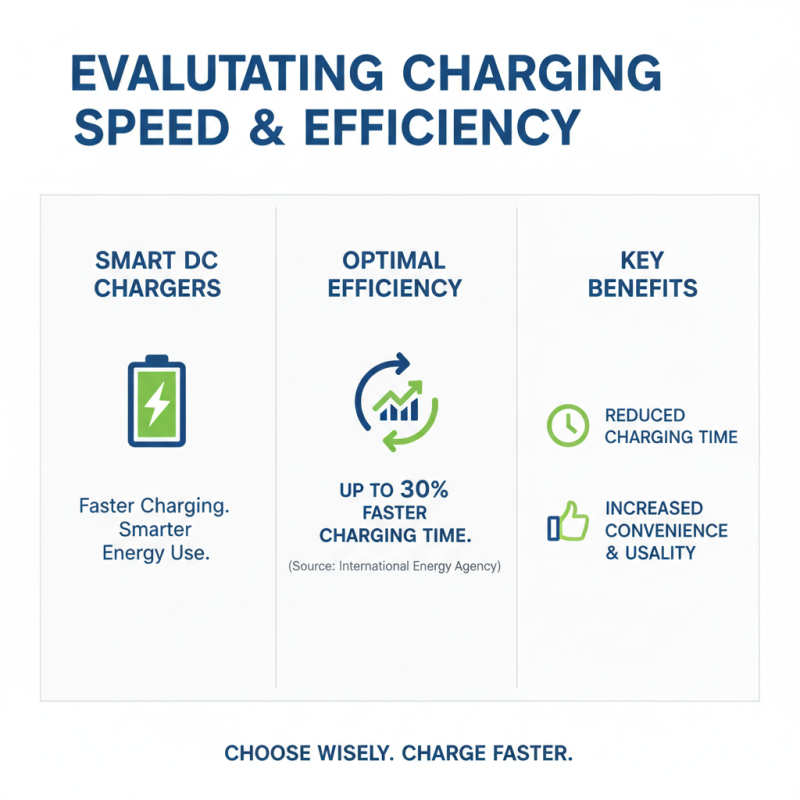
Choosing the right Smart DC Charger involves understanding charging speed and efficiency ratings. An efficient charger can significantly reduce charging time. According to the International Energy Agency, an optimal charger can reduce total charging time by up to 30%. This efficiency impacts overall usage and convenience.
When evaluating chargers, look for those with high efficiency ratings, often indicated in the specifications. For instance, a rating of 95% or above is desirable. These chargers waste less energy and thus save on electricity costs. Inefficient models can lead to increased energy consumption and higher bills.
Tips for selecting the best charger: prioritize efficiency ratings on the label. Also, consider charging speed as a crucial metric. Faster chargers can fill up a battery in a shorter time, enhancing your experience. Make sure to research average charging times for your battery size.
Remember, not all fast chargers are efficient. Some can degrade battery life over time. Regularly reassess your charging needs. Are you sacrificing efficiency for speed? Striking a balance is essential.
Budget Considerations: Finding a Smart DC Charger in Your Price Range
When selecting a smart DC charger, budget is a crucial factor. Prices vary widely based on features and capabilities. It’s vital to determine how much you can spend before starting your search. Set a clear range. This will help narrow down options and prevent overspending.
Many chargers offer similar functionalities. Some may include advanced features, while others focus on simplicity. Decide which features truly matter to you. For example, do you need Wi-Fi connectivity? Or is basic functionality sufficient? Balancing performance with price can be challenging. Sometimes cheaper models may not fully meet your needs, leading to later frustrations.
Research online reviews and user testimonials for insight. These can guide your choices. Remember that a high price tag doesn’t always guarantee quality. Consider long-term value instead. Will the charger save you time or money in the future? Mistakes in purchasing can lead to wasted resources. Reflecting on your priorities can lead to better decisions.
How to Choose the Best Smart DC Charger for Your Needs? - Budget Considerations: Finding a Smart DC Charger in Your Price Range
| Feature |
Budget Low ($) |
Budget Medium ($) |
Budget High ($) |
| Charging Speed (kW) |
3.7 |
7.2 |
22 |
| Number of Ports |
1 |
2 |
4 |
| Smart Features |
Basic |
Moderate |
Advanced |
| App Connectivity |
No |
Yes |
Yes, with additional features |
| Warranty (Years) |
1 |
2 |
3 |
| Price Range |
100 - 300 |
300 - 600 |
600 - 1000 |