How to Choose the Best Off Grid Solar EV Charger for Your Needs?
When considering the transition to an off-grid lifestyle, selecting the right Off Grid Solar EV Charger becomes crucial. Charlie Green, an expert in renewable energy systems, emphasizes, “The right charger can significantly enhance your independence and mobility.” Evaluating various factors is essential for making an informed choice.
Understanding your energy needs is the first step. Consider the size of your electric vehicle's battery and charging requirements. Not all Off Grid Solar EV Chargers are created equal. Some may not provide enough power or efficiency for certain vehicles. It's vital to analyze specific features such as charge time, solar panel compatibility, and battery backup options.
Installation is another key aspect. Many users overlook the placement of solar panels and the charger. Poor placement can lead to reduced efficiency. Reflecting on choices is important—what may seem ideal initially might not suit your lifestyle long-term. Overall, the right Off Grid Solar EV Charger can empower you to travel freely while harnessing the sun’s energy.
Understanding Off Grid Solar EV Chargers: An Overview
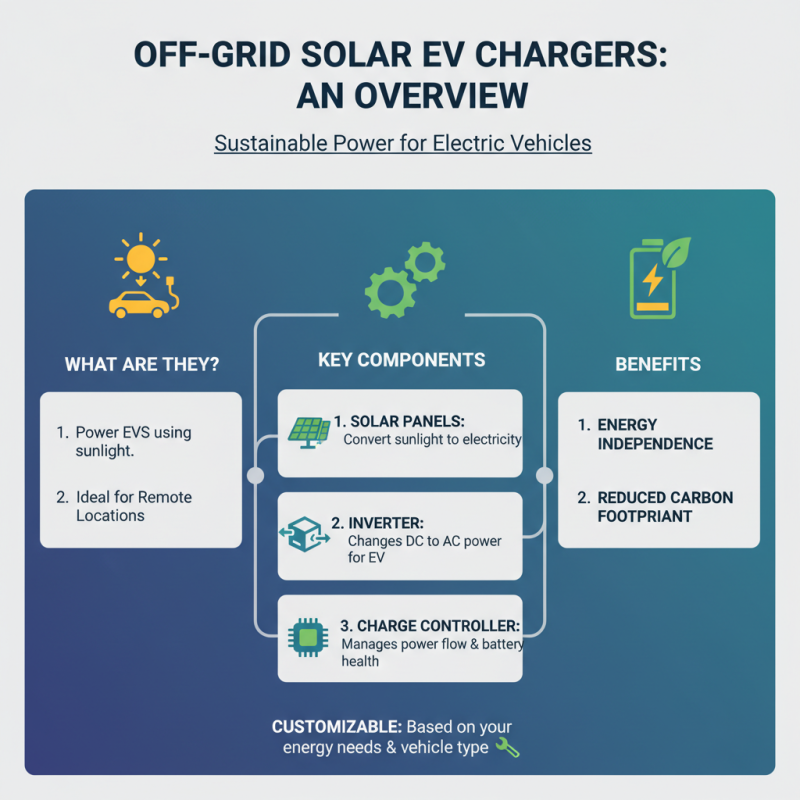
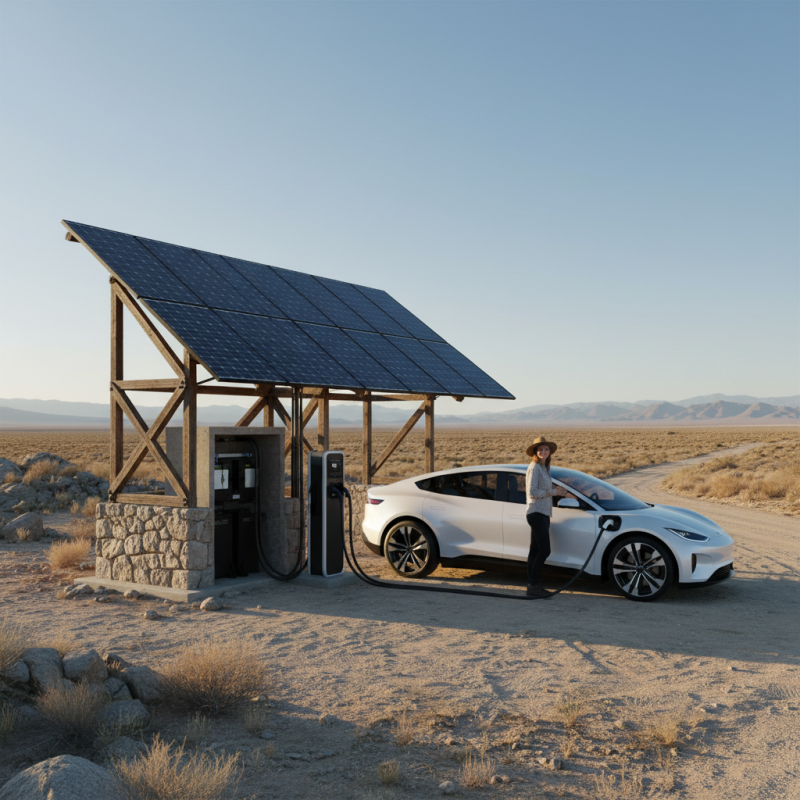
Off-grid solar EV chargers provide a sustainable solution for electric vehicle owners who seek independence from traditional power sources. These systems harness solar energy to charge your vehicle, making them ideal for remote locations. They consist of solar panels, an inverter, and a charge controller. The setup varies based on your energy needs and vehicle requirements. A proper understanding of these components is essential for effective usage.
Choosing the correct off-grid solar charger requires understanding your energy consumption. An average electric vehicle needs around 30 kWh to travel 100 miles. By calculating your daily driving habits, you can estimate how much solar energy you need. Additionally, factors such as panel efficiency and battery storage capacity come into play. It’s important to realize that not all solar chargers perform equally. Some might fall short during cloudy days or limited sunlight.
Installation can also pose challenges. Improper setup may lead to inefficiency. Consider hiring a professional if you are unsure. While many are tempted to DIY, mistakes can cost more in the long run. Battery maintenance and monitoring the system regularly are crucial for longevity and reliability. Reflecting on these aspects enables more informed decisions when selecting your solar EV charger system.
Assessing Your Power Needs for Off Grid Charging
Assessing your power needs for off grid charging is crucial. Begin by determining how much energy your electric vehicle (EV) requires. Consider your vehicle's battery size and charging capacity. Most EVs need between 10 to 20 kilowatt-hours (kWh) for a full charge. This figure will guide your solar system's design.
Next, think about your daily driving habits. Calculate the distance you typically travel each day. This assessment helps you understand how often you'll need to charge and the energy consumption involved. If you drive more than average, your solar array will need to generate more power.
Tips: Monitor the weather patterns in your area. Less sunlight means you might require a larger solar setup. Be realistic about your charging opportunities. If your usage is high, a backup generator might be wise.
Lastly, factor in other power needs. If you use additional appliances while off grid, adjust your solar calculations. Off grid living involves compromises. You may need to adapt your lifestyle or rethink your power management strategies. Balance your energy needs with available resources for optimal results.
Assessing Your Power Needs for Off Grid Charging
Key Features to Consider in Off Grid Solar EV Chargers
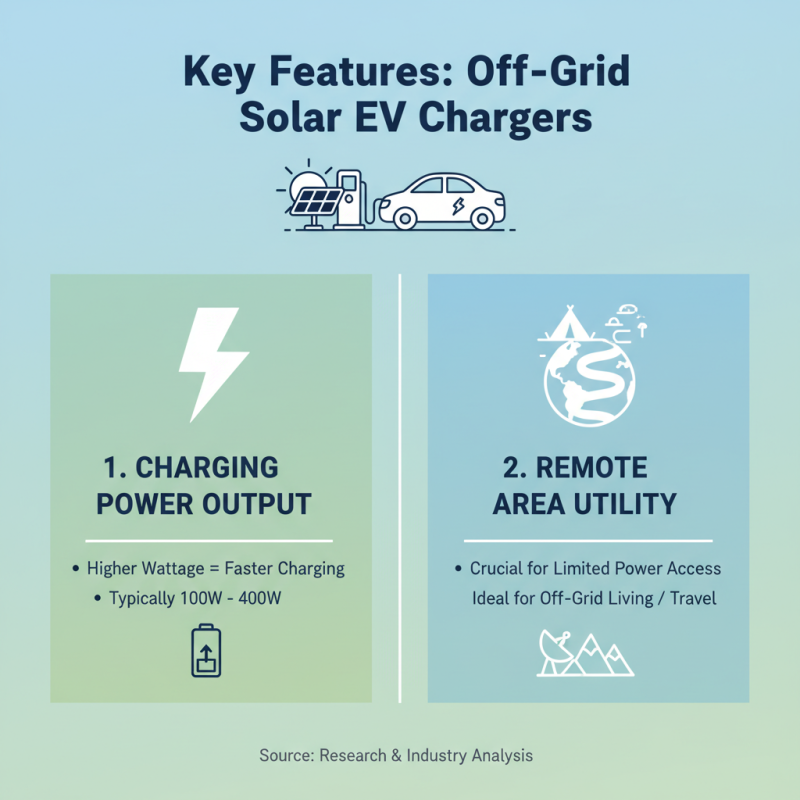
When selecting an off grid solar EV charger, it's essential to focus on key features that cater to your specific needs. One critical aspect is the charging power output. Research indicates that chargers with higher wattages, typically between 100W to 400W, can efficiently recharge your electric vehicle faster. This is particularly useful in remote areas where access to traditional power sources is limited.
Battery storage capacity also plays a significant role. Look for systems with batteries capable of storing 10 kWh or more, as this can provide sufficient energy during cloudy days or nighttime charging. Efficient energy management systems can optimize the use of stored energy. Some studies suggest that good energy management can enhance system efficiency by up to 30%.
Lastly, consider the durability and maintenance needs of the solar panels. Off grid chargers should ideally include weather-resistant materials and low-maintenance designs. Reports show that system reliability may drop if regular upkeep is neglected. However, it’s important to recognize that even the best products may have performance issues over time. Regular performance checks can help identify potential problems early, ensuring the system remains effective.
Evaluating Solar Panel Types and Efficiency Ratings
When selecting an off-grid solar EV charger, understanding solar panel types is crucial. Different solar panels offer unique efficiencies and characteristics.
Monocrystalline panels are popular for their high efficiency and space-saving design. They perform well in low-light conditions, ideal for varied weather.
Polycrystalline panels are slightly less efficient, but they are often more affordable. Thin-film panels provide flexibility but usually have lower efficiency.
Consider the efficiency ratings when choosing a panel. Higher efficiency translates to more power generation for your EV. Look for panels with 17% to 22% efficiency for optimal performance. Also, think about your charging needs. If you use your EV frequently, opting for higher-rated panels can be beneficial.
Tips: Always check for certifications. Quality certifications ensure the panels meet specific standards. Don't overlook the warranty; longer warranties often indicate manufacturers' confidence in their products. Reflect on your specific setup and charging habits. A mismatch in panel type and your EV's needs can lead to inadequate charging. Prioritize what features matter most in your off-grid lifestyle.
Costs and Installation Considerations for Off Grid Systems
When considering off-grid solar EV chargers, costs and installation play crucial roles. The initial expense varies based on system size and components. A basic setup may cost around a few thousand dollars. However, larger systems designed for multiple vehicles or higher energy needs will increase in price.
Installation requires thoughtful planning. Factors include location, solar panel orientation, and battery storage options. Ensure the area receives ample sunlight. Installation can be done DIY or professionally hired. DIY can save money, but mistakes are common. A poorly installed system may not function efficiently.
Ongoing maintenance is another concern. Regularly check connections and clean panels to ensure optimal performance. Consider the durability of equipment against weather conditions. Some users report issues with battery longevity. Choosing reliable components is essential. It’s worth researching user feedback on performance. These reflections can guide you in making well-informed choices for your off-grid solar EV setup.
How to Choose the Best Off Grid Solar EV Charger for Your Needs? - Costs and Installation Considerations for Off Grid Systems
| Feature |
Description |
Average Cost |
Installation Time |
| Charging Speed |
Varies based on solar panel wattage and battery capacity. |
$800 - $1,500 |
2 - 4 hours |
| Battery Storage |
Essential for storing energy for nighttime or cloudy days. |
$500 - $2,000 |
1 - 3 days |
| Solar Panels |
Determine the number of panels based on energy needs. |
$1,000 - $3,000 |
1 - 2 days |
| Inverter Type |
Select between pure sine wave and modified sine wave inverters. |
$300 - $1,000 |
4 - 6 hours |
| Permits and Regulations |
Check local regulations and obtain necessary permits. |
$100 - $500 |
Varies |