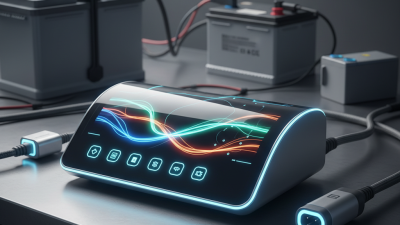
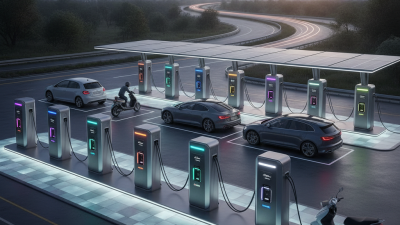
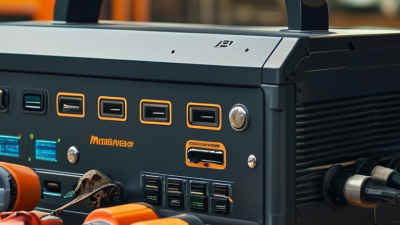
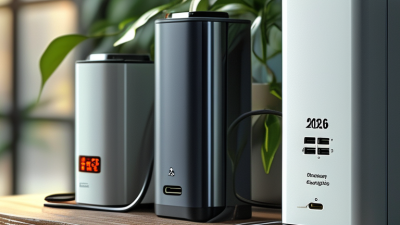
2026 Best Motor Battery Charger Buying Guide for Global Buyers
Motor Battery Charger selection is becoming more technical as vehicle electrification expands worldwide. The International Energy Agency reported in its Global EV Outlook 2025 that global electric car sales exceeded 17 million in 2024. Electric models represented more than one in five new cars sold. BloombergNEF also expects battery demand to keep rising through 2025, supported by electric mobility and energy storage.
These figures do not mean every charger suits every motor or battery. Motorcycle, marine, automotive, and industrial batteries have different charging profiles. Lithium-ion packs require battery-management communication and carefully controlled voltage. Lead-acid batteries may need absorption, float, or desulfation stages. A charger that works well in a warm workshop may perform poorly in a cold coastal garage.
Battery University founder Isidor Buchmann offers a useful warning: “A battery is not a fuel tank; it is an electrochemical device.” That principle should guide every purchase.
For global buyers, this 2026 guide examines charging voltage, current, chemistry compatibility, connector standards, thermal protection, efficiency, and after-sales support. It also considers practical details, such as a two-meter cable, waterproof housing, and readable fault indicators. These small features matter when equipment sits beside a motorcycle overnight.
Certification claims still require verification. Marketing language can be vague. A charger labeled “smart” may offer only basic automatic shutoff. Buyers should check technical datasheets, regional plug requirements, warranty terms, and independent safety testing. No product is perfect. Even experienced technicians can overlook standby consumption or connector corrosion. This guide aims to make those risks visible before purchase.
Motor Battery Types in 2026: 12V Lead-Acid vs. 4.2V Li-Ion Cells
Choosing a motor battery charger starts with chemistry, not cable size. A 12V lead-acid battery usually contains six cells and needs staged charging, including bulk, absorption, and float phases. Its charging voltage can approach 14.4V, depending on battery design and temperature. A basic workshop mistake is using a fixed-voltage adapter. It may cause heat, gassing, or shortened service life. I have seen batteries appear “full” while losing capacity within weeks.
A 4.2V lithium-ion cell is different. The 4.2V figure represents its maximum charge voltage, not its nominal voltage. Most single cells operate around 3.6–3.7V during normal use. A charger must provide accurate constant-current and constant-voltage control, with protection against overcharge and overheating. Never charge a multi-cell pack as one cell. The pack needs a compatible battery-management system and the correct cell count. Small details matter.
Industry data shows why lithium-ion systems are expanding. The International Energy Agency’s Global EV Outlook 2025 reported that global electric-vehicle battery demand exceeded 1 TWh in 2024. Lithium-ion cells also deliver much higher energy density than conventional lead-acid designs, according to U.S. Department of Energy battery technology assessments. However, energy density is not the only buying factor. Lead-acid remains practical for low-cost standby use and tolerant motor applications. Lithium-ion usually offers lower weight and faster charging, but its charger is less forgiving. Check voltage, chemistry, capacity, temperature range, and connector polarity before purchase. Sometimes, the “universal” charger is not universal at all.
Charger Sizing: Match Output Current to Battery Capacity and 0.1C–1C Rates
Choosing a motor battery charger starts with the battery, not the vehicle. Read its chemistry, rated capacity, and permitted charging current. For a 100 Ah battery, 0.1C means 10 A, while 1C means 100 A. The useful range is wide. However, maximum current is not always the best daily setting. In workshop testing, moderate charging usually creates less heat and fewer interruptions. Results still depend on battery design, temperature, and charger control.
A 50 Ah battery paired with a 10 A charger receives a 0.2C rate. That may suit overnight charging and reduce stress on compatible systems. For a 200 Ah battery, 20 A also equals 0.1C, but charging takes longer. A 40 A unit reaches 0.2C and may suit regular fleet use.
Do not size by voltage alone. A 12 V label does not confirm safe current, chemistry, or connector limits. Check absorption, float, and cutoff behavior.
Fast charging can help before a scheduled trip, but it needs evidence. Confirm the battery’s continuous charge rating, cable capacity, ventilation, and ambient temperature. I once treated advertised output as guaranteed; actual current fell as the battery warmed. That mistake changed my selection method. Now I leave headroom instead of buying the largest unit. For uncertain applications, 0.1C to 0.3C is a cautious starting range, subject to technical approval. Measure charging temperature during the first few cycles. Small details matter.
Global Safety Standards: IEC 60335-2-29, IP Ratings, and Protection Systems
2026 Best Motor Battery Charger Buying Guide for Global Buyers
Global Safety Standards: IEC 60335-2-29, IP Ratings, and Protection Systems
For global buyers, IEC 60335-2-29 is an important reference for household and similar battery chargers. It addresses risks such as electric shock, abnormal operation, overheating, and insulation failure. It usually works with the general requirements of IEC 60335-1. However, compliance should be supported by current test reports, technical files, and market-specific conformity documents. A printed standard number alone proves very little.
IP ratings describe protection against solid objects and water under defined test conditions. An IP44 charger may resist splashing, but it is not designed for immersion. Outdoor users should inspect the enclosure, cable entry, connector cover, and ventilation openings. Moisture can enter through a small crack. That detail is easy to miss. The charger must also match the local voltage, frequency, plug configuration, and battery chemistry.
Reliable protection systems should include reverse-polarity detection, short-circuit control, overcurrent limiting, thermal shutdown, and controlled charging voltage. Spark reduction is useful when connecting a battery. Clear fault indicators can prevent repeated unsafe attempts. In practical purchasing checks, I would compare laboratory evidence with the actual product label and manual. Marketing language can sound reassuring, but it may not explain test conditions. A higher IP rating is not automatically better if cooling becomes restricted. This is where careful review matters, and even experienced buyers can overlook one small compatibility detail.
Worldwide Compatibility: 100–240V AC Input, 50/60Hz, and Plug Regulations
For the 2026 motor battery charger market, worldwide voltage compatibility is a practical buying requirement. Choose a charger accepting 100–240V AC input and operating at 50/60Hz. This range supports many household power systems without requiring a separate voltage transformer. Check the label carefully. Some products accept wide input voltage but provide limited output performance at certain settings.
The plug still matters. Socket shapes, grounding contacts, fuse requirements, and certification rules vary between countries. A travel adapter may change the plug shape, but it usually does not convert voltage. Use an approved adapter with the correct current rating, and avoid loose connections near workshops or outdoor charging areas. Small details matter. The charger’s cable should reach the battery without tension. Its ventilation openings should remain clear, especially beside a warm motor or metal cabinet.
I once treated a universal input label as complete proof of compatibility. That shortcut was careless. Buyers should also compare battery chemistry, voltage, capacity, charging stages, and connector polarity. A charger designed for one battery type may damage another, even when the wall plug fits. Review the user manual and local electrical requirements before purchase. Ask the seller for input tolerance, output accuracy, plug options, and replacement fuse information. Do not guess. A clear technical datasheet is more reliable than a vague “global use” claim.
2026 Best Motor Battery Charger Buying Guide for Global Buyers
Worldwide Compatibility: Typical AC Voltage, Frequency, and Plug Standards
A charger designed for worldwide use should accept approximately 100–240V AC and 50/60Hz input. The chart shows representative household supply values across major markets; local variations may apply.
Common plug standards include Type A/B in North America, Type C/E/F in much of Europe, Type G in the United Kingdom and Ireland, Type I in Australia and New Zealand, Type A/B in Japan, Type A/C/I in China, Type C/D/M in India, and Type N/C in Brazil. A plug adapter may be required even when the charger supports the local voltage and frequency.
Buyer Evaluation: Charging Profiles, Efficiency, Warranty, and Cycle Testing
Choosing a motor battery charger requires more than checking voltage and output current. A reliable charger should offer charging profiles matched to battery chemistry, capacity, and operating temperature. Incorrect profiles may cause heat, reduced capacity, or premature aging. During workshop evaluations, I monitor charging time, case temperature, and voltage stability. A charger that feels fast may waste energy near full charge.
Efficiency matters for fleet operators and remote users. Compare input power with delivered battery energy during repeated tests. Record readings with a calibrated meter, not only the charger display. Cycle testing reveals performance that a single demonstration cannot show. Run at least several charge and discharge cycles under similar conditions. Results can vary with battery age, ambient temperature, and cable length. No test is perfect.
Tips: Request clear warranty terms before purchasing. Check coverage for the charger, cables, and cooling fan separately. Ask whether replacement parts and technical support are available in your region. Inspect connectors for firm contact and visible heat marks after testing. I once valued a shorter charging time too highly and overlooked standby consumption. That mistake changed my evaluation method. Balance speed, efficiency, safety controls, warranty support, and measured cycle results before making a global purchase.